Why PT Education Must Meet Students Where They Are
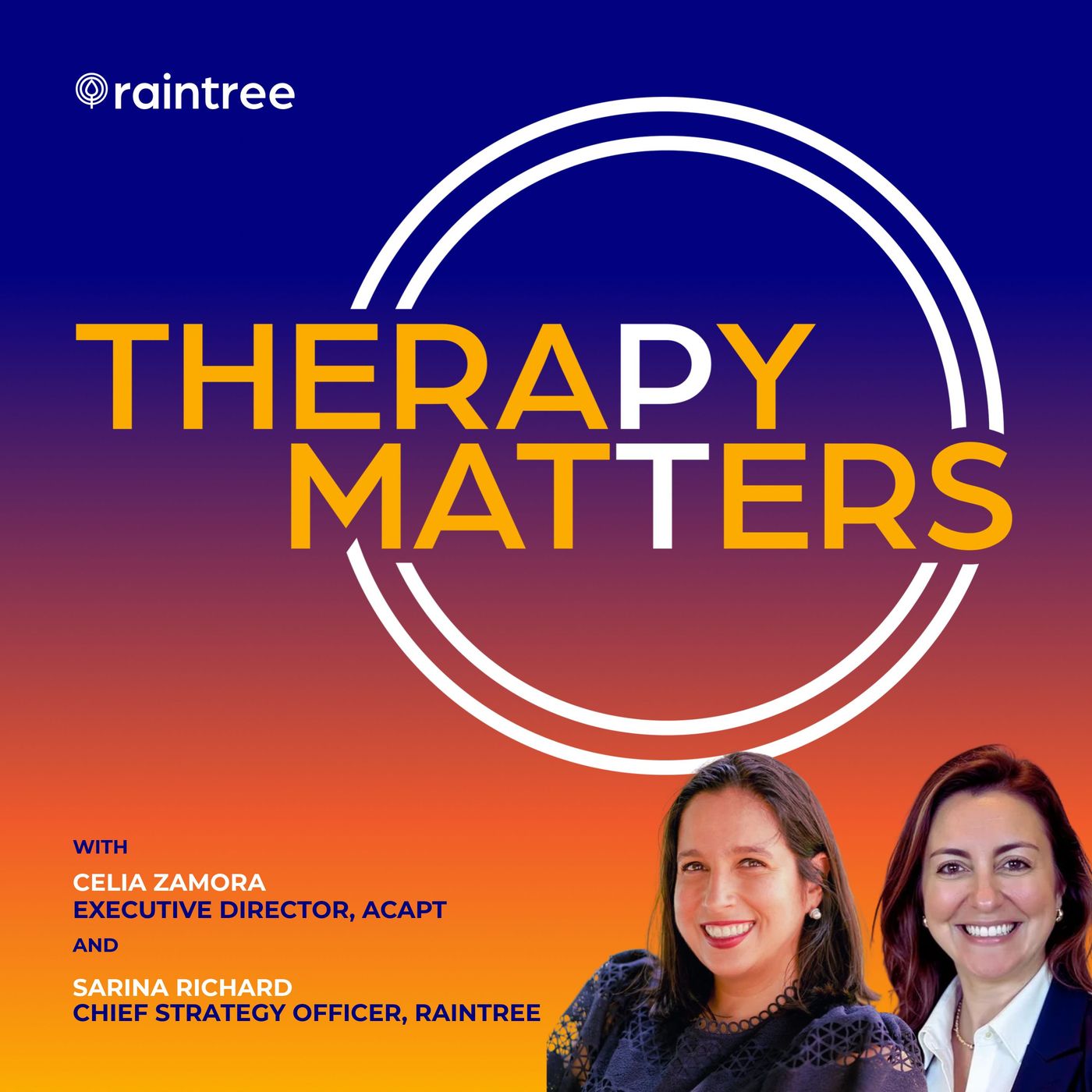


Celia Zamora has been a West Point cadet, an English teacher, a Spanish teacher, a linguist, and an association executive. Today she leads the American Council of Academic Physical Therapy (ACAPT), the organization that supports DPT programs across the country.
Sarina Richard asks whether DPT programs are preparing clinicians for the reality of practice. Celia starts with the learner: Gen Alpha thinks and processes differently, and incoming students arrive with fewer study skills, soft skills, and face-to-face conversation practice than the faculty teaching them.
Celia questions what a single licensure exam can measure and describes a triangulated alternative that pairs testing with observations, portfolios, and residency. She also explains why DPT tuition can run from $65,000 to $200,000, why students need loan education before they sign, and why a part-time DPT path could open access.
Celia's rule for AI is to be the human in the room: use AI to free up time for patients, check what a scribe writes, and keep the underlying skills sharp. She also sees new graduates arrive afraid of AI because their education treated it as taboo.
With demand for PT outpacing supply, Celia argues this is not the time to lower the bar. She points to outreach in high schools and undergraduate programs, a culture that encourages students to fail fast, and the question ACAPT's new strategic plan puts on the table: what does excellence in PT education actually mean?
Hear Celia’s clear view of what tomorrow's clinicians need from their education, and what your practice can do to help close the gap.
Celia Zamora
Executive Director, American Council of Academic Physical Therapy (ACAPT)
Celia Zamora, PhD, CAE, is the executive director of the American Council of Academic Physical Therapy (ACAPT), a role she has held since 2025. She holds a doctorate in applied linguistics from Georgetown and spent more than 15 years in education before moving into association leadership at the American Council on the Teaching of Foreign Languages (ACTFL). She earned her Certified Association Executive credential along the way. Celia is a marathon runner who leads with authenticity and a habit of finding the connection in every room.
Connect with Celia Zamora on LinkedIn: Celia Zamora on LinkedIn
Learn more about the American Council of Academic Physical Therapy
Sarina Richard
Chief Strategy Officer, Raintree Systems
Sarina Richard has spent twenty years as a Healthcare Technology Executive across the healthcare continuum, from operator to service provider to financier. At Raintree, Sarina oversees corporate strategic planning and leads cross-departmental initiatives to build best-in-class teams, systems, and processes.
Connect with Sarina Richard on LinkedIn: linkedin.com/in/sarinarichard
About Raintree
Raintree is the rehabilitation and physical therapy software of choice for enterprise and large therapy provider organizations.
Discover why Raintree is the trusted EMR and practice management platform for the largest and most ambitious rehab therapy organizations in the U.S.
Request a demo of Raintree: Request a demo
Sarina Richard (00:03):
I'm Sarina Richard and you're listening to Therapy Matters presented by Raintree. Therapy Matters explores the ideas and innovations reshaping rehab therapy. Well, Celia, thank you so much for joining me on Therapy Matters today. It's so wonderful to have you here.
Celia Zamora (00:21):
Yeah, thank you for having me. I'm excited.
Sarina Richard (00:23):
Let's first start with just who you are and what organization you're a part of.
Celia Zamora (00:28):
So my name is Celia Chamon Zamora and I am the executive director of the American Council of Academic Physical Therapy, ACAPT. And I have been in this role for a little over a year and a half.
Sarina Richard (00:39):
Nice. Congratulations.
Celia Zamora (00:40):
Thank you.
Sarina Richard (00:41):
Wonderful role. But you've had a really interesting career path. So you've been a linguist, an educator, a researcher, you did professional learning, and now you're leading ACAPT. Tell us about the journey.
Celia Zamora (00:53):
So it's been a really interesting journey, and I always like to tell my former students that part of the journey is just figuring out what you don't like as much as what you do like. So my journey started at West Point. I went to the United States Military Academy.
Sarina Richard (01:05):
So impressive.
Celia Zamora (01:07):
And it ended up just not working out. So I went back to Florida International University, did my degree in English literature with Japanese studies.
Sarina Richard (01:16):
Wow, Japanese studies?
Celia Zamora (01:17):
Yeah.
Sarina Richard (01:18):
Wow.
Celia Zamora (01:18):
So I've always just really been interested in languages because languages are what really connect people. You're able to just talk to more people in more languages. And during that, I still didn't know what I wanted to do because originally the reason I went to West Point is because I wanted to do military intelligence and eventually become Secretary of State, small goals.
Sarina Richard (01:37):
No big deal.
Celia Zamora (01:38):
And so as I was trying to figure out my new career path, one of my cousins was an educator and said, "Why don't you just go into teaching until you figure it out?" And while I was there, I found that I really loved it, but I didn't necessarily love the politics of it and teaching to test and just all of the different things that were happening in specifically English literature. And one day my principal asks me, "You speak Spanish, right? Can you teach Spanish this year?" Sure. Had no idea the pedagogy, but I just started winging and then I realized, ooh, I really like languages. And then I went for my master's in linguistics while I was working full-time, which then led me to do my doctorate at Georgetown in applied linguistics. Always the next goal, right?
Sarina Richard (02:23):
You are such an underachiever.
Celia Zamora (02:25):
Oh, very much so. Someone once told me that if there was a type A plus, that would be me. It's not even just type A.
Sarina Richard (02:32):
Yeah, I love it. We've created a whole new class just for that.
Celia Zamora (02:34):
Exactly. And I got into academia. I was there for a bit, but something just never felt that I was a hundred percent fulfilled. And eventually, as with what happens to a lot of educators, I got burned out. So in 2019, I found the American Council of Teaching Foreign Languages, ACTFL, which was my first kind of dabble into associations. And I went in as a senior manager for quality assurance right before the pandemic started. And as I started growing in that, I realized what I really, really loved, my bread and butter was leadership, leading others, investing in others, and just operations and growth. So then through that, I was able to get my certified association executive certificate, which allowed me to be an association executive director. And as I started going through the motions of, well, where do I go? ACAPT had an opening. And I remember telling my husband, "Well, I'm not a physical therapist, so what do I really do?" But they liked me enough and leadership is leadership at the end of the day. So I remember going into my final interview and I had just finished a marathon. I'm a big runner.
Sarina Richard (03:35):
Wow. Again, not an overachiever at all.
Celia Zamora (03:38):
I can't just do the half marathon. I have to do the full marathon. And I remember going to my final interview with KT tape still on and I told them, "I'm not a physical therapist, but I'm physical therapist adjacent because if it weren't for you all, I wouldn't be able to do what I do and run and all these things." And I think that's partly what kind of got me the job that I can do leadership, but also always find ways to make connections.
Sarina Richard (03:59):
Totally. And you get it because you're living it.
Celia Zamora (04:01):
Yeah, absolutely.
Sarina Richard (04:02):
Yeah. Super impressive. My goodness. I feel like any one of those chapters would've been a career in and of itself and you did 15 of those. So what was it about this chapter of physical therapy education that really pulled you in?
Celia Zamora (04:16):
I feel that physical therapists are the most passionate giving individuals. And I feel like it's very similar to why I went into education because nobody really goes necessarily into education for the money or for the prestige. So then it really is because you feel a passion to improve your community, to help others. And that's what I found here. And I was able to then couple my background in academia and research and leadership and then be able to put it into this whole new chapter. And I feel like helping the physical therapy education world really strive for excellence and thriving in this current kind of tumultuous environment.
Sarina Richard (04:55):
Wow. Yeah. And it's clear your passion, authentic relationships, needing to really love what you do. I can't imagine you would do something that you just aren't passionate about. I'm not getting that vibe.
Celia Zamora (05:09):
And you would tell. I remember the first day that I got into teaching and I never had an educational background, it was just English literature and then just thrown into the classroom. The first day somebody told me, "Here's some advice. Don't smile the first six months. Because if not, the students will just walk all over you." And that lasted a good 20 minutes. And I just started smiling and cracking jokes, and I never once had any behavioral issues in my 15 plus year of education. And I think it's because of what you said, it's that authenticity and people can feel that when you're faking it.
Sarina Richard (05:39):
They wouldn't believe you.
Celia Zamora (05:39):
Exactly.
Sarina Richard (05:40):
Yeah. It would've been fake if you were not smiling. So you've spent a lot of your career thinking about education and how we prepare people for the work that they're going to do. When you look at the physical therapy profession today, do you think our DPT programs are preparing our clinicians for the reality of the practice or are there things that we might need to rethink?
Celia Zamora (06:02):
So I will preface this by saying that there's always room for growth, always. I don't think anybody in any profession can realistically stand there and say, "We are doing everything a hundred percent right." We're starting to see that the next generations are just growing up in a completely different world. And in fact, there was a book called Wired Differently where it's really starting to show that even Gen Alpha is just starting to completely process and think so much differently than we are. So I think that the real, I guess, question or query is, are we meeting students where they are? Because if we're kind of expecting, and mind you, I'm a millennial, I've definitely done this with my own son and with students. Well, I had to pay my dues or I had to do it this way, so why can't you? I had to spend five hours studying, but that is not the culture that they're living in.
(06:54):
That is not where they are. I mean, so study skills, soft skills, communication, being able to even just have a face-to-face conversation with somebody, it is just so different. And a lot of these students coming in are not equipped for that, whether it's school that they've just been taught to pass a test. And I read recently an article that most students are graduating high school not having read a full novel. They're just reading excerpts of novels and being able to just analyze that. So of course there's a lot of great things in being able to analyze various excerpts, but when you don't have to sit down and read an entire novel, including the very boring chapters, but that kind of causes that character development, how do we expect our students to then be able to sit there and read five different articles and be able to do all of these things and critical thinking when they haven't really been taught to do that, but we were.
(07:46):
Or even just knowing that if the ultimate outcome is for them to be able to see a patient and be able to think critically and be resourceful and multitask and have a one-on-one conversation with them and be able to do all of these things, and these are not things that they have been conditioned to do earlier, then maybe we need to start putting more emphasis on those things. Before it was just we took for granted that everyone came in with resilience and grit, but maybe that's not the case anymore.
Sarina Richard (08:14):
Or conversational skills.
Celia Zamora (08:15):
Exactly.
Sarina Richard (08:16):
Yeah, that's super interesting. So there's a trend that we're seeing, which is declining test scores. What do you think that that says about what each of us should own in the process of not just maintaining but elevating the profession, especially as the demand is outpacing the supply?
Celia Zamora (08:36):
It's interesting because again, our students are being raised in this culture where everything is being taught to a test. Before, the SAT and the ACT and the GRE were great kind of measurements.
Sarina Richard (08:51):
Sure. Standardized or-
Celia Zamora (08:55):
They correlated to how well they thought you would do your first, second year of college or grad school. But then what they started seeing is that a lot of these students were being put into SAT, ACT tutoring starting in the sixth and seventh grade. So is it a real matter of that they have the ability to be successful in college or is it that they have access?
Sarina Richard (09:18):
They're really good at taking tests.
Celia Zamora (09:19):
Exactly. And we're seeing this, not just by the way, with MPTE, but across all professions, including that certificate that I said earlier about the CAE, the certified association executive. We're starting to see that more and more it takes association executives two or three or four times for them to be able to pass it. Now, does that necessarily mean that they are the best association executives because they were able to pass a test? Not so. There's so much more that goes into it, but sometimes it really is maybe taking a look at the test and seeing, are we asking the right questions? Are we teaching the right things? What really does matter for these students to be successful? And maybe starting to look at what the correlation is.
Sarina Richard (10:02):
What do you think that solution would be if you could design it from scratch?
Celia Zamora (10:09):
If I had to do it from scratch, I think it should maybe be a triangulated approach of not just maybe testing, but testing coupled with other things like observations and portfolios and a residency or whatnot.
Sarina Richard (10:24):
Yeah, based on experience.
Celia Zamora (10:25):
Exactly. But I also know that that is not the reality. And I also know that there are reasons why certain things exist and we have the licensure and we have so many things and we need to make sure that these students are able to showcase what they know and what they learned in school to then be able to be successful. But it might just have to be, I mean, I know that FSBPT does a great job in having these item writers and these committees where they really look at these questions, but even just thinking that again, our students are identifying more neurodivergent than any other generation. So maybe it is a matter of possibly looking at different ways for them to showcase what they know.
Sarina Richard (11:05):
What do you think it would take to actually make a change in the way students are tested?
Celia Zamora (11:10):
I think with all education, it's just really taking a deep hard look. Why do we do the things that we do and are these things working? And just because they've always been done a certain way doesn't necessarily mean it's the best way. But again, to really, I think COVID was a great example of that, that disruption equaled opportunity, and that's when you started seeing a rise in, for example, homeschoolers after COVID, because people saw that there were different ways of doing things. Now is it necessarily the best way? No. And are there a lot of things that need to be looked at and that you need to still tweak and have regulations over? Absolutely. But I just think that the way that things are going, eventually we're going to reach a point where it's not sustainable. I mean, we have such a paucity in physical therapists right now in the profession for so many different reasons.
(12:07):
So at what point is it going to be that we don't have enough physical therapists to meet the need of our country and what can we do about it?
Sarina Richard (12:16):
I hear a lot from practice leaders that there can be a gap sometimes between what someone learns in school and then what they actually are experiencing when they walk into a clinic. Where do you think that gap is the biggest and how do we close that?
Celia Zamora (12:31):
I think when we are in school, whether it's physical therapy or whether it's medicine or even just education period, we tend to be in this beautiful controlled bubble where everything is just A plus B equals C. And when I give you something, there is a right and a wrong answer. And unfortunately, life is not that way. So there are times that you will go in and a patient will tell you that they have this, this, and this. And so then naturally this is the answer, but then the answer doesn't work. Then what? And what we're starting to see again, talking about the new students that are coming in, not all of them are primed to think critically or to be resourceful. So then now what? The answer doesn't work, what do you do?
(13:25):
I know a lot of programs are doing such great things with simulation labs and really making sure that their students are going above and beyond. But at some point it's not fair to place the blame on the faculty or the programs because at the end of the day, they're doing the best with what they can with what they have. It's just a matter of that so many things are changing, not just the type of students that are coming in, but the education system, the politics, the culture and AI. So how do we prepare them to then be able to really think critically and be resourceful and be patient and really probe deeper versus what's something that's very in a nice little bubble?
Sarina Richard (14:05):
One of the other things I hear is another expectation versus reality gap is on pay. And it's a really controversial topic, especially because school is not cheap.
Celia Zamora (14:17):
No.
Sarina Richard (14:17):
So bridge the gap on the cost of school, the expectation of salary and then the reality of it. How do you manage that challenge?
Celia Zamora (14:29):
I think that one great way would be to really educate students before they graduate on what it means to take out loans and the fact that loans follow you forever and maybe even after that. I remember my friends and I signing these massive loans at 18 years old and at 18 years old, you don't understand finances.
Sarina Richard (14:54):
Your brain is not fully formed.
Celia Zamora (14:55):
Exactly. So I mean, I really think it's about educating, and I know there's a lot of really great programs out there educating students on, well, as of right now, this is what your salary is going to look like when you graduate. So just know that this will be your salary and then this will be your loans, and then this is the interest rate. And understanding that just because you owe 150,000 doesn't mean you're paying 150,000, you're paying that-
Sarina Richard (15:23):
Plus interest.
Celia Zamora (15:23):
And that interest. Sometimes you're paying off for more years than the loan itself. So just really educating students on these really massive decisions.
Sarina Richard (15:34):
Whose responsibility is it to educate the students on that?
Celia Zamora (15:38):
Ooh, that's a great question.
Sarina Richard (15:40):
Juicy one.
Celia Zamora (15:41):
I mean, I think it has to be the parents, but unfortunately a lot of parents are also on the same boat. I know many of my friends that are still in their forties paying off their student loans from undergrad. So it should be definitely home, but maybe having some courses. I mean, I know that a lot of people on social media are constantly complaining that the things that we teach in high school are not necessarily the things that you need. I always hear, well, why didn't we learn how to file for taxes instead of learning about -
Sarina Richard (16:15):
Life skills.
Celia Zamora (16:16):
Microeconomics or whatnot. And I know that there are some good teachers out there that do teach that, but I know that it's not necessarily part of the curriculum. So maybe it should be one of those classes that before you graduate, but sometimes even a senior year, that's already too late. You're already committed to -
Sarina Richard (16:32):
Yeah, to go down a path.
Celia Zamora (16:33):
Exactly.
Sarina Richard (16:35):
So we're having obviously a huge conversation about AI in healthcare. You can't go through any conversation now without those two little letters, but we're also seeing AI in education. So what do you think AI changes about the way we should be teaching future physical therapists? And where do you think we really should be more thoughtful about how to use it? Because the reality is it's here.
Celia Zamora (16:58):
Right. So I always tell my staff and I always tell anyone that will listen that AI is a great tool to leverage, but you need to be the human in the room. So whatever you do with AI, you need to ensure that you're using it ethically and responsibly. But AI also affords you the ability to really focus on what matters most, which is putting that human to human connection, which is what physical therapy really boils down to. So then instead of spending so much time having a document, you can instead really focus on that bedside manner and that patient to patient and being able to spend more time with your patient. So it really is how do you leverage it to make your job easier to be able to do what really matters and what you're really passionate about?
Sarina Richard (17:46):
So given the risk of teaching students how to use technology before we've taught them how to think, how do we use AI more sustainably? Where do you think it should actually enter education?
Celia Zamora (17:59):
I think that's just a very personal question because it depends. It depends on the student. It depends on the curriculum. It depends on the school. I've seen the opposite, honestly. And in fact, I just came back from an association conference where we're seeing the opposite, that myriad students that are graduating now don't know how to use AI because their high schools have made it such a taboo topic.
Sarina Richard (18:22):
Oh, interesting.
Celia Zamora (18:22):
And they are terrified of using AI because anytime that a teacher would use AI to say, "Has this student used AI?" If they automatically came out and said, yes, they were, immediately fail. And of course there's a lot of bias in AI. AI tools are not necessarily accurate. So students are coming out terrified of using AI. So now they're going into the workforce and all of us in the workforce are thinking, "Well, obviously you know how to use AI," and they don't. So it's like giving them a loaded gun without any... So I think it really just depends. If you're seeing that your students don't know how to use it or only use it to write emails, then maybe enroll them in certain courses that show them what AI is and what it isn't. And I think that's really important.
Sarina Richard (19:08):
Well, let's take it to physical therapy. So scribe, using an AI scribe to help document a lot of benefits to it. You can actually interact with patients as opposed to typing on the keyboard. A lot of times the note is a lot more accurate than it would be if you're trying to remember eight hours later after you've seen 12 patients, and then it also helps with coding. But you don't actually want the therapist to be lazy. You want them to actually know what they're doing and teach the AI as opposed to just letting the AI do the work for them. What do you think is the right balance for physical therapists, for people who are in school who are about to graduate, that don't actually have a lot of the experience as people who are starting to use AI Scribe now, for example, who have been working for a few years?
(19:55):
How should a grad student think about using AI for Scribe technology in their documentation process? Should we allow them to use it or not?
Celia Zamora (20:05):
So in order for them to be prepared, I think it is important for them to be able to use it, but maybe there's a balance of you can only use it half the time because you still need to be able to do it on your own without that help. Or it could just be that the first few months you have to do it on your own until you show proficiency in being able to do it and then go and use it. It's kind of like when you're starting to do math without calculators and then eventually you just use calculators, but you always every now and then kind of test yourself to make sure you can still do so because you're only as good as the equation you put in. So maybe even it's a matter of always doing checks and balances and going back and ensuring that you reread what is in there.
Sarina Richard (20:44):
So the other side of AI, the side that people probably are more comfortable talking about, although probably more afraid of, is the data that feeds those models. And as an educator, I'm sure you've got a lot of opinions, good and bad, about data, data usage and the impact that data can give to an answer. How do you think about how we should be using data in the right way and to have or drive the right impact that we want from a clinical standpoint?
Celia Zamora (21:14):
Data is only as good as a story it tells. So if an AI tool can help you be able to find patterns, and again, being the human in the room, because of course it'll give you some predetermined data and then it's up to you to interpret it. I think the interpretation is the most important part. So data could be used negatively or positively. So again, making sure that whatever data you're getting is being told in the right way and being able to tell a story that is useful to really drive the profession forward.
Sarina Richard (21:46):
So having guidelines, rules, governance around it.
Celia Zamora (21:49):
Right, exactly. And making sure that it's cleaned and making sure that there is no bias in the data is really important as well. Because again, if you're feeding a specific data set and you're feeding data that you haven't necessarily vetted, that can sometimes lead to a lot of biases and that can lead you to make some very erroneous decisions that would be very harmful for the community if you're not reading it correctly.
Sarina Richard (22:14):
Thinking critically about it too. Yeah, good point. So in a world where it feels like almost desperate for more practitioners, how do you balance opening up the requirements of becoming a DPT with ensuring that quality and high standards of care are maintained?
Celia Zamora (22:29):
This is not the time to just let anybody in. I think it is a matter of how do we prepare the future generations to be sure that they are able to meet the standards that we have to make sure that physical therapy continues to be excellent. So I think it's just a matter of maybe partnering and collaborating more with the undergraduate programs and with high schools. And in fact, I've started to see a lot of high schools that are offering intro to medicine programs and that they're starting to showcase all of the different paths in medicine, including physical therapy and what it takes for you to be a physical therapist. So maybe that's where we need to do a lot more outreach to prepare them so that they understand what is happening in their entire college life so that they can be prepared to meet these expectations.
Sarina Richard (23:19):
Yeah, that makes a lot of sense. Do you think that there's anything structural that needs to change about the way people are being educated, either the length of the program or the cost of the program or how the program is delivered?
Celia Zamora (23:33):
There are always ways to be innovative. I just think it takes giving a lot of ideas, and some might be good and some might be bad, but through all of those ideas, maybe that gem comes out, but we won't get that gem unless we just start spitting out all the ideas and seeing what sticks and what works and what's feasible.
Sarina Richard (23:50):
I think what's beautiful is that you have the desire to be innovative and to have those conversations and to brainstorm opportunities. And I think check done, you're at least on the path. And that's what we need is we need people who are willing to say, "I see the challenges. Let's come to the table and talk about what we should do about that." And I think that that's brilliant.
Celia Zamora (24:10):
There was a great book that I recommend if you haven't read it called Outliers.
Sarina Richard (24:13):
Oh yes.
Celia Zamora (24:14):
I mean, that's such a great book and talking about all of the wonderful things that came out of ideas that were terrible. Or I think we need to, I mean, going back to what we need to do with our students, I think we also need to give our students the ability to fail and to fail fast.
Sarina Richard (24:30):
Oh, I love that.
Celia Zamora (24:31):
Yes. Because our current culture is terrified of failing.
Sarina Richard (24:35):
Terrified.
Celia Zamora (24:36):
But even thinking about my career path, I mean, I was able to give you my career path in a minute and a half, but in that minute and a half, there were so many nos and so many fails and so many days that I sat down and cried in the car eating McDonald's french fries because I thought that I was never going to get to the next step. So it's okay to fail, but by failing is how you innovate.
Sarina Richard (24:59):
Totally. And failing leads you to the next opportunity.
Celia Zamora (25:02):
Exactly.
Sarina Richard (25:02):
It's never really a failure is how I view it. It's just the stepping stone to the next thing and it's all about framing and perspective. Yeah, that's wonderful. So ACAP's new strategic plan specifically calls for defining more flexible, scalable criteria for excellence in PT education. What does excellence actually mean?
Celia Zamora (25:22):
It's interesting because again, the ACAP board and I have had a lot of conversations about what does excellence really mean? And I think that we're still trying with all of our stakeholders to really come to a consensus as to what it means, but we're just working very hard to ensure that our programs can thrive, can continue to sustain and move forward and produce quality educators, quality physical therapists, that we continue to give back to our community, that we are holding our students and our programs to a very high standard of rigor and of research. That's how I think I would define what excellence is.
Sarina Richard (26:04):
Well, Celia, you are such an intentional leader. You're a fascinating woman. And I think you leading the charge here is going to just move mountains for what we as a community and as an industry need to do. Your ability to see a problem and be innovative, but also resilient in finding the right solution, not just the one that fits for the moment is really going to take us to the next step. So thank you so much for being on Therapy Matters and it was really lovely to talk to you.
Celia Zamora (26:33):
Thank you. It was such a wonderful conversation.
Sarina Richard (26:37):
Links to learn more about Raintree Systems and anything else mentioned on today's show are available in the show notes. To learn more, go to therapymatterspodcast.com. Follow Therapy Matters on YouTube, Apple Podcasts, Spotify, and anywhere you listen to podcasts.
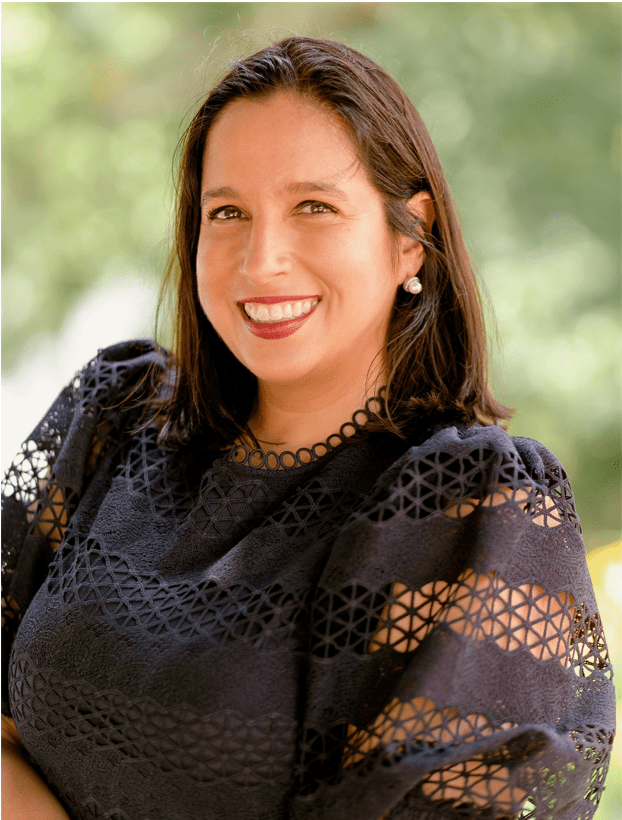
Celia Zamora, PhD, CAE, is the executive director of the American Council of Academic Physical Therapy (ACAPT), a role she has held since 2025. She holds a doctorate in applied linguistics from Georgetown and spent more than 15 years in education before moving into association leadership at the American Council on the Teaching of Foreign Languages (ACTFL). She earned her Certified Association Executive credential along the way. Celia is a marathon runner who leads with authenticity and a habit of finding the connection in every room.