The Hidden 7%: What It Really Costs to Get Paid in Rehab Therapy-and How to Reduce It


An experienced biller stuck on hold with an insurance company all afternoon is a cost many clinics quietly learn to accept.
Nick Hedges, CEO of Raintree, calls revenue cycle management the most expensive, most human-hours-lost problem in the entire industry, and his clients spend 7% or more of everything they collect just to get paid.
That number is why Raintree acquired Spike Technologies, the agentic AI company Povilas Gudzius co-founded after earning his PhD in machine learning. Hear why the fix is not more staff or cheaper offshore labor, but AI that can think its way through a payer call.
Hedges walks through why robotic process automation keeps breaking. When a payer moves one button on a portal, the bot fails and claims stop going out the door. For a business that runs on cash flow, a broken bot nobody noticed is a serious payroll problem waiting to happen.
Gudzius makes the case for what he calls objective-oriented orchestration: instead of scripting every step, you hand an AI agent a goal and let it find its own path, adapting live when a human on the other end of the phone says something unexpected. This is the difference between a system that follows rules and one that can actually hold a conversation.
The larger vision is what Hedges calls the invisible EMR, software that quietly handles the work no one went to school to do, so therapists, billers, and front-desk staff spend their time on people instead of keyboards. Both are clear that humans do not disappear; someone still has to orchestrate at the top and catch the edge cases AI cannot.
If your practice is spending 7% to collect what it is already owed, this conversation reveals exactly where that money goes and what it could look like at one percent instead.
Nick Hedges
Chief Executive Officer, Raintree Systems
Nick Hedges leads Raintree, the EMR and practice management platform trusted by many of the largest rehab therapy organizations in the country. He became CEO in 2022 after a 25-year career building high-growth software companies, including Velocify, which he led for a decade before its sale to Ellie Mae, and MomentFeed.
A veteran of Bain & Company and Accenture and a Harvard Business School graduate, he moved into healthcare looking for work that would make a real dent, and found it in rehab therapy. Today he is betting Raintree's future on becoming AI-native, so practices can spend less on administration and more on patients.
Connect with Nick Hedges on LinkedIn: https://www.linkedin.com/in/nickhedges/
Learn more about Raintree: https://www.raintreeinc.com/
Povilas Gudzius, PhD
Co-founder & CEO, Spike Technologies
Povilas Gudzius is the co-founder and CEO of Spike Technologies, an agentic AI company he built with co-founder Nikita Pajanok to bring machine-learning-grade automation to health data.
He spent seven years earning a PhD in machine learning, set on that path by Ray Kurzweil's The Singularity Is Near, and previously worked in data and AI technology sales at Bloomberg. His team's technology powers a single API connecting hundreds of wearables, devices, and medical records, and now, through Raintree, an agentic layer aimed at automating the revenue cycle across U.S. rehab therapy. He describes himself and his fellow founders as scientists who fell in love with an industry most people find impossibly complex.
Connect with Povilas Gudzius on LinkedIn: https://www.linkedin.com/in/gudzius
Learn more about Spike Technologies: https://www.spikeapi.com/
Sarina Richard
Chief Strategy Officer, Raintree Systems
Sarina Richard has spent twenty years as a Healthcare Technology Executive across the healthcare continuum, from operator to service provider to financier. At Raintree, Sarina oversees corporate strategic planning and leads cross-departmental initiatives to build best-in-class teams, systems, and processes.
Connect with Sarina Richard on LinkedIn: https://www.linkedin.com/in/sarinarichard/
About Raintree
Raintree is the rehabilitation and physical therapy software of choice for enterprise and large therapy provider organizations.
Discover why Raintree is the trusted EMR and practice management platform for the largest and most ambitious rehab therapy organizations in the U.S.
Request a demo of Raintree: https://www.raintreeinc.com/request-a-demo/
Sarina Richard (00:03):
I'm Sarina Richard, and you're listening to Therapy Matters, presented by Raintree. Therapy Matters explores the ideas and innovations reshaping rehab therapy.
Sarina Richard (00:15):
Thank you both for joining me on Therapy Matters today. I'm so excited to have you both. We are joined by two very special people, Nick Hedges and Povilas Gudzius. Would you both please just start with an intro of yourself?
Nick Hedges (00:29):
I'll go first. I'm Nick Hedges. I'm the CEO of Raintree.
Povilas Gudzius (00:35):
My name is Povilas Gudzius, and I'm the co-founder and the CEO of Spike Technologies. We are agentic AI startup between Lithuania and San Francisco and really, really building technology that's going to help revamp the industry or rehab therapy.
Sarina Richard (00:56):
So let's take a step back and go even further back before you realized that this was a problem you wanted to work on. Even before you spent seven years doing research, deep research in AI, you had a moment that was inspirational for you when you were reading a book. Take us back to what you were reading and what that moment was and how it was so transformational for you.
Povilas Gudzius (01:18):
I knew science was always the thing. My dad is a mathematician and I always was very. I thought my contribution is a lot in mathematics and logics there. And I was exploring the field of also algorithms and machine learning, et cetera. And I think I came across the book while reading into the far out future, which was by Ray Kurzweil. I think back then he was chief futurologist at Google. Now he's fairly famous as a futurologist because he guessed a lot of even the dawn of AI agents and in nanotechnology and a lot of different aspects that lead to singularity. And hence the name of the book that I read was Singularity is Nearby Ray Kurzweil. And I think there was one quote where he was summarizing these different themes of converging technologies that compound on each other. And there was a quote where he's like, "Artificial general intelligence will be the last invention that homo sapiens will make." And for me, it was mind-blowing.
(02:32):
It's like, "That's what I want to work on. Where do I start?" And then I think even not that long after that, I kicked off my seven-year-long PhD in machine learning that then led to all other paths and eventually got us here today applying the AI technology in things that can really change. Healthcare is one of the most important industries, in my opinion, out there. But yeah, very much an important-
Sarina Richard (03:02):
Important moment.
Povilas Gudzius (03:03):
Very important moment in life. Yeah.
Sarina Richard (03:06):
And Nick, before taking the reins of Raintree four years ago, you've led quite a number of successful software businesses in a multitude of industries. Did you have a similar aha moment about where the transformation of humanity was going to lead you in leading a business?
Nick Hedges (03:23):
I don't think I had as big a vision as Povilas to be completely honest.
Povilas Gudzius (03:27):
Thanks, Nick.
Nick Hedges (03:31):
I always believe that you should do things that you are differentially well-equipped to do. And I love technology, and that's why I came into technology in the first place, and I enjoyed leading businesses. I think what led me to Raintree, because I hadn't worked in healthcare before, was that I'd spent a long time, I'd been CEO of multiple companies, as you say, and they'd been very successful, but I didn't feel like I'd made a dent on the universe. And I didn't feel like I'd really helped humanity. But when I sat down after my third exit from a business, I said, "What do I want to do with the rest of my career? I love running technology businesses, but how do I combine that?" And I looked at healthcare.
(04:16):
And then as I looked at healthcare, I'm like, "What speaks to me?" Because I have never worked in healthcare before. And I had this deep abiding belief in rehab therapy. I'd received rehab therapy, people in my family had, and I knew it was something that was transformative. I could also see that it was becoming more and more necessary. I said, "How do we get into that? And that is what I want to do. I want to help transform physical therapy, rehab therapy, speech therapy, and this is the platform." And so that, I guess, was the epiphany and the sort of stars aligning really for me.
Sarina Richard (04:58):
And Povilas, you mentioned healthcare was really important to you too, but why did you double down on rehab therapy? What was it about this specific niche that excited you?
Povilas Gudzius (05:07):
So I think what Nick mentioned is it's touching a wide range of people. Secondly, it's very, very important. So you can impact a lot of people's lives if you have that industry, well, fixed or improved. And also from technology standpoint, it's very interesting because under the hood, it's actually a super complex network. It's big industry enough. There is an upside to invest in that, and it's important. It matters to us. We care about the PT industry alone. And that was for us, it's an amazing problem. We want to get into the weeds of it. And when we started, we were full-on scientists and engineers, but we fell in love with that industry. And then basically we became also RCM experts and the main experts as well. So it's just fascinating industry, and I echo what Nick said. You can really do an impact.
Sarina Richard (06:05):
Nick, if you had to describe the single most expensive, most human hours lost today in therapy, what is it?
Nick Hedges (06:15):
I mean, I think there's a few areas, but there's one that stands out more than anything else. And that is the amount of time that is spent getting paid. And what I mean by getting paid is revenue cycle management. There is just so much administration, very tedious administration, so many hours, many, many hours spent on phone trees, on hold, trying to get through to payers. And there's just an immense amount of cost to doing that.
Sarina Richard (06:51):
A real human cost.
Nick Hedges (06:52):
Human cost. The human cost in terms of what those humans could be doing other than that. And also a financial cost. It costs a lot of money to do these things, and that's not helping patients. It's not helping anyone really. It's just administration, that time. But the financial cost is real. Our clients are spending 7% or more of the amount that they claim that they get paid on just human costs and systems in order to just run their revenue cycle. So we see that as the number one pain point. In fact, when we talk to our customers, that's what they tell us too. And until now, it's just been the way that business is done. Everyone just had to accept it that we're going to change that forever.
Sarina Richard (07:47):
Put that 7% into context. Is that big? And how does that compare to the other things they're spending money on?
Nick Hedges (07:55):
I mean, it's one of the biggest costs. Obviously, there's costs of running an organization, there's clinical costs and so on. The clinician's always going to be a necessary part, of course. That's at the center of the patient care. There's real estate costs. But when you look at the administration, the operations, this is really the biggest cost that a rehab therapy business has. So yeah, it's a very real cost.
Sarina Richard (08:24):
And you live it every day being a CEO of this business. You hear about it every day from your clients. This is the number one problem. Povilas, you were solving this problem from the outside before Raintree came coming. So what did it look like from your seat? What were practices actually doing to cope with this huge burden?
Povilas Gudzius (08:46):
So I mean, I'll echo what Nick mentioned in regards to the standard mode of operation before the technology is now capable in solving that. It was the human labor, human cost, and not just financial costs, but you have a lot of hidden costs of running these revenue cycle management processes by humans. And those costs could be knowledge transfer, could be time, could be human errors. And I think that's one of the reasons when we launched Spike with the technology that we have, our mission was the quality of health data combined with machine learning. Agentic AI now it's called when we started was still machine learning models. Combined quality data with AI should solve these problems at scale. And when we realized how it's done by humans, our realization, this shouldn't be done by people.
Sarina Richard (09:51):
You hit on a key point, which is the multimodality requirement, because this industry is so complex and every payer is different from one another. Every patient, what their insurance says they can get is different. And as you mentioned, you can't just go to a phone tree or you can't just go to a portal. For some, you have to do all. And for some you do have to sit on the phone and call, and you don't really know that until you get into the system. And so Nick, I want to hear about when you understood the dynamics of this. And so when you're looking at a solution, how were you thinking about this? Were you thinking of multimodality? Were you thinking we should just start with one and grow into more? How were you thinking about how to actually solve this problem?
Nick Hedges (10:38):
I mean, I think we looked at it every which way. The most broken part of rehab therapy is the revenue cycle. So we knew that was the biggest problem, as we talked about before. We knew it was complicated. And we said, "Well, how are people trying to fix it today? And how should it be fixed?" And what we saw was there had been an evolution. So if you go back 10 years ago, it was a lot of people based in the US doing everything manually. And people were like, "This is way too expensive. So we're going to move offshore to lower cost geographies." And then after that had exhausted itself in terms of, well, it's still too expensive and it's still just as manual. People brought robotic process automation to bear. And so we looked at that and we said, "Okay, well, can we use linear logic to solve this problem, which is what robotic process automation is?" And people were doing it and they were being successful, and some of our clients were significantly reducing the cost.
(11:45):
But what we saw was it was incredibly brittle. Every time a payer changes a rule or a phone tree changes or really on a day-to-day basis, these RPA systems, robotic process automation systems were breaking.
Sarina Richard (12:00):
Just break. Right.
Nick Hedges (12:01):
We shouldn't do that. That solves a part of the problem, but it doesn't seem like the long term. But AI at the time when we were looking at this was becoming more of a reality. People were starting to release very intelligent large language models, LLMs. And Agentic was studied to be talked about by the scientists and so on, but it wasn't entirely a thing. But we could see if Agentic AI really takes off here, which it must, that's the solution. So we said, okay, we know where this is going. RCM is going to become highly automated because it just doesn't make sense to have so many people doing so many manual things. Agentic AI is going to be the solution. And then we found Spike and we're like, this is it. This is the best kept secret in rehab therapy because they're doing this for real. And we were both there. We were so excited and we saw what they were doing.
Sarina Richard (13:05):
You mentioned this concept of breaking.
Nick Hedges (13:08):
Yeah.
Sarina Richard (13:08):
And I don't want everyone to just assume what that means or assume the impact of a bot breaking. Can you both talk about what is the impact financial, human to a bot breaking to someone's business?
Nick Hedges (13:28):
I mean, I think it depends how long it takes you to discover it and fix it, right?
Sarina Richard (13:32):
Bingo. Yeah.
Nick Hedges (13:34):
Because at its most simple level, let's take a RPA that you create, which is actually quite complicated and tedious to create that just scrapes a page. So it logs into the portal, scrapes the page, and it gets information from the portal. A lot of engineers can do that. But then the portal changes one pixel on the screen. It breaks. So if you don't have the monitoring systems to know that it's broken, how long does it not work for? How long a claim is not being processed for? I mean, that's a huge amount of money. Even if you discover it, it's going to take time to fix. So it's hard to quantify, but it's very substantial. You do not want to run your entire financial system based on a system that can break.
Sarina Richard (14:22):
Because they rely on that for payroll and to keep their businesses running.
Nick Hedges (14:26):
The lifeblood of the business, right?
Sarina Richard (14:27):
The lifeblood of the business.
Nick Hedges (14:28):
Unfortunately, businesses run on having money.
Sarina Richard (14:34):
And Povilas, you made the decision not to just go with RPA, but really to build this orchestration agentic model. Can you point to a moment or the moments when you and your team decided we've got to have an agentic model versus just this rules-based, which probably would've been simpler to make? Why did you guys not choose the easy button?
Povilas Gudzius (14:58):
I don't think it was even a choice. Honestly, I remember we had this conversation sometime back. I was like, we did not even think that that's a path because we just already understood how diverse and complex the problem spaces and the industry is. Meaning you could do that for one customer, but then to maintain the connections and those custom integrations or RPAs would be so siloed and you would end up being a service company. Our mission's way harder, way bigger than that. We want to solve the autonomous RCM. We really doubled down on this and we knew it's possible. And being experts in our field, we understood that that's not the way you build systems and solutions for that big problem, which basically solving autonomous RCM on all of the United States of America stage, not for one customer. So for us, it wasn't a no-brainer.
(15:58):
But again, we were solving a much bigger problem. And I think that's what stands out. We made that investment and that decision, which was very natural to us, go after the solution rather than the batched way. And then yes, you can go and maybe do a replica of decision tree, phone tree kind of logic and have the rule-based system, but it changes.
(16:24):
Payers have all the autonomy to make any improvements, change things or even blocks of, so even if you do that and do that well, tomorrow you might need to repurpose all of your team to fix that because it changed because of that.
Sarina Richard (16:42):
Not scalable.
Povilas Gudzius (16:43):
Not scalable at all, not maintainable. And it's just way too risky for the business. If you're a good customer and then you're like, what happened? You cannot go through to certain pairs using your voice AI agents for a day that could kill your business.
Nick Hedges (16:56):
Once you get into a human conversation, rules don't cut it because a human can say pretty much anything, even in a kind of relatively standard call. And you need a system that's able to adapt to whatever's being said back to it.
Povilas Gudzius (17:11):
And that's what, to add on Nick's point, that's how we coined the term objective-oriented orchestration. So I have an agent like an orchestrator that has an objective in mind and then it's a very dynamic and then has different ways and path and constellation of agents that go after the goal rather than a prescribed path of how to get there. That's the key differentiator. And we didn't even touch on the technical implementation side. Procuring someone like Spike outside of the EMR if it was not native, implementing it, getting people to learn to use it and stuff. Now it's native. So that is a big piece as well.
Sarina Richard (17:55):
And fundamentally, the AI is as good as the data that feeds it. And so 40 years of data. And Nick, do you think though, just where AI is going and what it can do, do you think there's a world where this type of technology could just sit as a layer on top of an EMR or alongside it? Or does it really have to be embedded?
Nick Hedges (18:16):
I think it has to be embedded. I mean, it depends what angle you take that from. I do foresee our vision is an invisible EMR, and what does that mean? It means that everyone gets to do the job that they wanted to do. And the EMR without having to tap on a keyboard does the things that people don't want to do because their time is better spent elsewhere. So I foresee a world where you have an orchestration agent across all of the tiers, not just RCM, not just patient, not just front office, but all of the tiers with the humans doing the things that humans do with a view into what's happening. But agentic AI can do a great deal of most things. So I do see that AI is going to layer over the top from a kind of usability perspective, but it needs to be native because it needs access to all of the data points that get created around that process.
Sarina Richard (19:15):
But there's still a lot of healthy fear in the market right now about what AI can actually do and what it can't. So where does this go wrong? Or where could this create a potentially new problem?
Nick Hedges (19:30):
I mean, I think there's a couple of areas. I mean, first of all, humans don't go away. So anyone who naively thinks, oh, my whole billing team, I don't need them anymore. That's not true. There needs to be a human in the loop. There needs to be humans who are orchestrating at the highest level. And there will be occasions we see it in a very small percentage of time where there's an edge case that AI currently can't handle. So I think people who don't plan to have a human in the loop as it were, or humans in the loop is probably going to hit some level of issues. So I think that is probably what I would caution people about.
Povilas Gudzius (20:18):
I agree with Nick. I think it's already proven it can be solved. I think what we still don't know is the speed of solving the tail. And that's a bit linked into your human in the loop component because there are some edge cases and some things that you just, as an engineer, you don't want to take that risk of having such a wide degree of freedom for agentic orchestration to operate in. There are some aspects like human interaction still matters a lot. And that will be a new challenge if you have all the front desk conversations all automated. Can the clinic in New York versus clinic in Austin have a different flavor style?
Sarina Richard (21:02):
And every interaction is unique as the person that they're interacting with and every human is different.
Povilas Gudzius (21:07):
So I'm just speculating here on that future. But I think these components, like human interaction, still very much important in the PT industry.
Sarina Richard (21:15):
What did you guys learn to admire the most about one another?
Nick Hedges (21:22):
I'm always in awe of entrepreneurs who start from nothing. I've done it once myself and I know how hard that is. I think what's super admirable about Povilas and Nikita, his founding partner, is that not only did they have the audacity to start a company, but they took on the most difficult challenge in the whole of healthcare with technology that was frontier technology at the time, and they made it incredibly successful. So perseverance, I don't know, blind stupidity is probably an admirable quality.
Povilas Gudzius (22:02):
Yes, for sure. Founders have to have that.
Nick Hedges (22:04):
Yeah. But in order to be successful at something like that, you have to have boundless energy, optimism, positivity, willingness to innovate just constantly. And that's what Povilas has. It's the X-Factor that differentiates people who want to be founders to people who really build something valuable.
Povilas Gudzius (22:30):
Thank you, Nick. It's very kind. And I think the way you run Raintree obviously doesn't feel like just a CEO. Now we are sitting here because you are double downing on Raintree being AI native, super leader in the industry on innovation. You made us into innovative, forward-looking Ferrari kind of thing. And I think it's not just the execution piece, which obviously comes from your guys' background, but I think also what I admire about you, Nick, is that personal, honest touch of the people that you hire. They are genuine. Everyone's hardworking. You have to be to follow that innovative path. You have to be certain person to be able to drag others like that and follow that path, which was basically on a different trajectory. So you were able to achieve that being who you are, and I think that's a huge reflection on who you are.
Sarina Richard (23:35):
Well, you both are very strong visionaries, but you're also both executors. And so if this works the way we know it will, what does a rehab therapy practice look like in five years from now?
Nick Hedges (23:52):
I mean, I think quite different. I think therapy practices today have a lot of struggles because reimbursements have come down and down. Costs have gone up because of inflation and for a variety of other reasons. And it's a very difficult business to run today. Really hard. It's an industry that's struggling, which is terrible because it's transformative to humanity, and yet it's struggling. Economically, it's a difficult business. You have to be an excellent operator to create a viable business. I'm sure it's not going to become vastly easier, but that dynamic will shift. I do see the cost genuinely coming down because of automation, which not only is good for the businesses. I don't see business becoming wildly profitable, but I do see them being more viable and being able to serve more patients as a consequence. So I think there's a huge net benefit to humanity.
(25:03):
I also think the role of people who work within rehab therapy will change for the better. We're already seeing it. I stood up last year and talked at our conference TherapyCon, which we're holding this year in August. And I said, "There's a lot of PTs, a lot of OTs and STs here. Hands up. Who spent a lot of money and time being educated to do what you did because you wanted to spend time tapping on a keyboard in an EMR?" Obviously no hands went up. Today, 60% of our customers, therapists aren't doing that.
(25:50):
The note gets written for them and they get to spend better time, higher quality time providing care. And so their job is much better. The patient experience is much better, the outcomes are better. And so maybe I'm a huge optimist, but I don't see any reason not to be optimistic that every role within a therapy practice is going to become more interesting and more what someone set out to be able to do when they join the industry, whether they're front office, RCM, billing, clinician. I think everything becomes more interesting because we are taking out the things that are just repetitive and not that interesting.
Sarina Richard (26:34):
And earlier in the conversation, you mentioned the 7% cost right now, which is exceptionally high. Do you have a goal of what you think that cost could be?
Nick Hedges (26:44):
Yeah. I mean, these are big numbers. If you look at the amount of claims that go through Raintree, I won't give a precise number, but it's nearly $20 billion a year. You take 7% of that, which is what they're spending. Anyone can do the math. That would be like $1.4 billion. If you can get that 7% down to one and a half or one, that's a lot of economic value that is currently just being wasted for everyone, for the patient, for the payer, for the practice. And I do think that's possible. When we look at the economics of AI, AI is not cheap to deliver. The cost is coming down over time. And it's certainly cheaper than humans. And so I do believe that we'll be able to get to the one, one and a half percent on RCM and see similar kind of economics in the front office as well.
Sarina Richard (27:45):
And imagine what you can do with that extra five, six bips in your business.
Nick Hedges (27:48):
Oh, it's transformative. Now they get to invest it in other areas to deliver better care and that kind of thing. Yeah.
Sarina Richard (27:56):
Focus on the reason that they got in business in the first place.
Nick Hedges (27:59):
Right.
Sarina Richard (28:00):
And Povilas, there's a whole category of these standalone AI point solutions trying to serve this market right now. What do you think this deal means in terms of the shift that's going to happen in this industry and specifically the world that you play in?
Povilas Gudzius (28:18):
There is emotional component of each patient. And that's, from an engineering standpoint, is super complex problem. Not just the voice itself, but was the logic and agentic orchestration underneath that. So I think current state of the art does a lot of that, but it's still some way to go. And we are very excited about that because we'll be one of the first ones to deploy that. Emotional intelligence, things like that. It's coming. I think that's one of the big frontiers. And then they still familiarize with that new donor, autonomous agents interacting with their people, their staff. And there are some, I think, steps of the industry that has to evolve and a bit adapt to that new age, both from the commercial partnership side and also maybe even regulatory side, that it's still some steps to go.
(29:17):
In five years time, the clinics will understand that the role of technology and role of EMR is no longer a system of records like, oh, where is my patient name and policy ID and date of birth or whatever other need to check them in? It's going to become an absolutely intrinsic component of how they run the business. The really successful clinics will be double downing on that. And the others will see when they succeed that it's the only way to move forward to get that margin, which as discussed about, and frankly, to be competitive, to stay competitive in the industry. And I think the expectation of EMR, electronic medical records platform being the operating system almost of the whole industry with agentic layer, that's going to be an expectation.
Sarina Richard (30:23):
Well, I want to thank you both for joining me on today's episode. There's a lot of similarities between both of you. You're both incredible visionaries, innovators, executors. I think you said blindingly stupid at one point. I wouldn't agree with that, but I do think you have to have a little bit of crazy to go all in on something.
Povilas Gudzius (30:44):
Yeah, that's better definition.
Nick Hedges (30:45):
I agree with you.
Sarina Richard (30:46):
But go on something that's not proven or take the road less traveled is very hard. And for both of you, it was a no-brainer. So I just want to say thank you so much. It's been really incredible to hear the story. I've obviously been living right next to it for this whole time.
Nick Hedges (31:01):
Oh yeah.
Sarina Richard (31:02):
But genuinely to hear the story and to share in this vision and excitement about what we're going to be able to do. So thank you both very much.
Sarina Richard (31:11):
Links to learn more about Raintree systems and anything else mentioned on today's show are available in the show notes. To learn more, go to therapymatterspodcast.com. Follow Therapy Matters on YouTube, Apple Podcasts, Spotify, and anywhere you listen to podcasts.
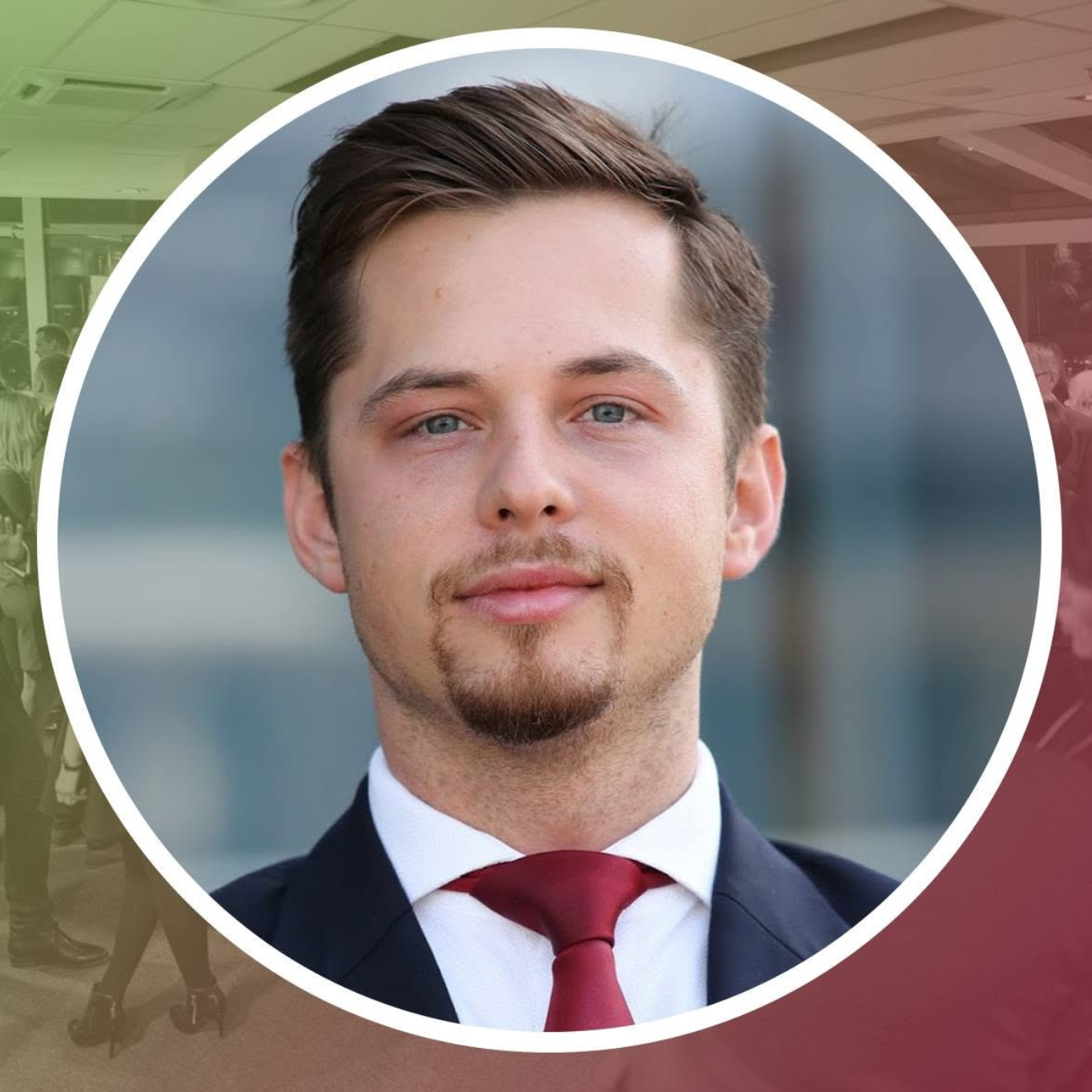
Povilas Gudzius is the co-founder and CEO of Spike Technologies, an agentic AI company he built with co-founder Nikita Pajanok to bring machine-learning-grade automation to health data. He spent seven years earning a PhD in machine learning, set on that path by Ray Kurzweil's The Singularity Is Near, and previously worked in data and AI technology sales at Bloomberg. His team's technology powers a single API connecting hundreds of wearables, devices, and medical records, and now, through Raintree, an agentic layer aimed at automating the revenue cycle across U.S. rehab therapy. He describes himself and his fellow founders as scientists who fell in love with an industry most people find impossibly complex.
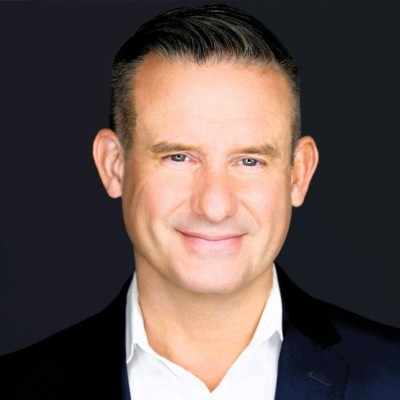
Nick Hedges leads Raintree, the EMR and practice management platform trusted by many of the largest rehab therapy organizations in the country. He became CEO in 2022 after a 25-year career building high-growth software companies, including Velocify, which he led for a decade before its sale to Ellie Mae, and MomentFeed. A veteran of Bain & Company and Accenture and a Harvard Business School graduate, he moved into healthcare looking for work that would make a real dent, and found it in rehab therapy. Today he is betting Raintree's future on becoming AI-native, so practices can spend less on administration and more on patients.