The Heart & Hustle of PT: How People-First Leadership Builds Stronger Teams



An injury in high school introduced Tony Mikla to physical therapy—but it was the frustration of that experience that sparked his lifelong mission to help athletes recover faster and perform at their best.
Today, as a leading voice in sports orthopedics with clinics across Sacramento, Reno, and Las Vegas, Tony has built a model of care that redefines what a thriving workplace looks like in healthcare.
Tony’s path from injured athlete to clinic founder wasn’t just about mastering rehabilitation—it was building a people-first company that attracts passionate talent, brings in fresh ideas from outside healthcare, and thrives even in the tough world of insurance and reimbursement.
With new technology, Tony believes AI is the key to bringing the human element back to healthcare, using AI to slash documentation time and shift more focus to patients.
Whether you’re a clinic owner, physical therapist, or just curious about the future of sports medicine, Tony offers practical lessons on building culture, embracing innovation, and leading with purpose.
Tony Mikla, DPT, CSCS, XPS
Physical Therapist, Strength Coach & Founder of KIME Performance
Tony is a leading sports physical therapist, performance coach, and researcher. He speaks and teaches nationally on sports physical therapy and regularly publishes research in international journals. Tony previously served as the Physical Therapy Manager at the world-renowned EXOS in Phoenix, AZ, working with some of the best athletes in the world. He was the Medical Director for the Sacramento Sports Commission and adjunct faculty in Physical Therapy at Sacramento State University and Northern AZ University. In 2015, Tony was named a finalist for the NSCA Sports Medicine Specialist of the Year and was awarded the 40 Under 40 Award from the Sacramento Business Journal in 2017.
Connect with Tony Mikla on LinkedIn
Learn more about KIME Performance
Follow KIME on Instagram @kimeperformancept
Listen to KIME’s podcast, KIMEcast
Sarina Richard
Chief Strategy Officer, Raintree Systems
Sarina Richard has spent twenty years as a Healthcare Technology Executive across the healthcare continuum, from operator to service provider to financier. At Raintree, Sarina oversees corporate strategic planning and leads cross-departmental initiatives to build best-in-class teams, systems, and processes.
Connect with Sarina Richard on LinkedIn
About Raintree
Raintree is the rehabilitation and physical therapy software of choice for enterprise and large therapy provider organizations.
Discover why Raintree is the trusted EMR and practice management platform for the largest and most ambitious rehab therapy organizations in the U.S.
Request a demo of Raintree
Sarina Richard (00:03):
I am Sarina Richard, and you're listening to Therapy Matters presented by Raintree. Therapy Matters explores the ideas and innovations reshaping rehab therapy. All right. Well, Tony, thank you so much for joining me today. Welcome to Therapy Matters, and I'd love if you could just give us your name and what organization you're with, and then we can go through your background.
Tony Mikla (00:29):
Awesome. Well, thanks for having me first off. It's great to be here. Always exciting. So my name's Tony Mikla, physical therapist, strength coach. I've been doing it for 20 something years. We started KIME Performance Physical Therapy based out of Sacramento, and we have offices in Nevada as well in Reno and Vegas. So we started that nine years ago this month.
Sarina Richard (00:48):
Congratulations.
Tony Mikla (00:48):
Yeah, so it's been a fun run. We've had great growth throughout the process, but our intention in starting that was to really serve the athletic population.
(00:58):
I think it's something that we all hope for in PT as we come out. Everybody, not everybody, but some who want to be sports physical therapy. So we really strive to actually deliver what we hope to deliver as a clinician. There's so many things that put stumbling blocks in the way as a clinician, whether it be documentation or insurance or different restrictions that we all complain about as therapists, but we try to do our best job to really modify those efficiencies so that the therapists can really put themselves forward and do what I think they're trained to do and be the best at.
Sarina Richard (01:29):
Yeah. How did you get started in the industry?
Tony Mikla (01:31):
Yeah, so it's been a journey. So I got injured in high school, went through a little bit of a rehab process, was frustrated by it like most people, I think, frustrated that it took too long, wanting to get back to play. It was my senior year, I was missing games and I was playing basketball, so I was really frustrated. So I was like, man, there's got to be a better way. There's got to be a faster way to accomplish my goals and get this process going. Why can't I heal faster? And that's motivated me from that day is that same idea, is how can I help other people get back faster and use the best that science has to offer, maximize the body's potential to get back to where they want to be. So that's the driving force. So that's when I got started, and then I had some great opportunities.
(02:16):
I went to the University of Arizona and was with the basketball team there and the men's basketball team, which was really, really a top caliber group. We were top five in the country my entire time there with them. So that allowed me to see what elite performance and professional athleticism look like. I think we had about 15 or 16 guys go to the NBA from that group. So it really showed me, wow, this is what elite athletes do, how they train, what it is. And that just kind of further indoctrinated me and got me excited about what the body can do and what the potential is. So that's always been my chase is like, how can we do it better? How can we get the most out of the body?
Sarina Richard (02:52):
That's interesting because a lot of times you think about PT as something happened and need to go get fixed, and you've got a little bit of a different frame of reference, which is how do I optimize my performance and how do I make my body better faster? So it's more of a proactive approach to your body.
Tony Mikla (03:12):
Oh, a hundred percent. So I mean, in the field as I studied movement and performance and obviously injury, they're really one and the same. Injury prevention is actually the same as rehab for the most part, in my opinion. You start looking at why does injury happen and the causes are maybe more poor movement if it's non-contact, poor movement, quality, fatigue, a couple different factors. So if you can train from performance standpoint to mitigate them of those problems, we can prolong someone's career ability to play. So yeah, I'm on both sides of the equation all the time. We actually started a nonprofit this last year that focuses on working with high schools and working with youth athletes as well, as well as any tactical operator, so like firefighter, police, et cetera. So we do a process where we evaluate athletes, teams, tactical groups and evaluate their guys and say, here's your risk. Here's a risk profile based on the evaluations that we do. So it's really nice to be like, hey, we can avoid some of the terrible things that happen. Put myself out of a job hopefully and say, here's some of the terrible things that go on and let's see if we can get in front of them.
Sarina Richard (04:20):
Proactive health is such a hot topic right now. We need to find a way to get the proactive PT to get that reimbursed because I think it'd make a huge difference.
Tony Mikla (04:31):
Yeah, it does. I mean, it takes a motivated clientele for sure, but if you look at, I had some opportunities in my time to work with special forces and the Navy SEAL teams and then certainly work with pro teams and stuff. And when you're working with those groups, that's what it's all about. When you talk about performance, it's about what can we do to maximize performance, make sure the mind is sharp, maximize healing potential, decrease injury risk. So that's where a lot of these things come from. Sleep's been a hot topic, and then of course the effects of stress, all the different recovery modalities, which a lot of them have taken from our industry is like, Hey, we're using all these different things to help people recover so they can perform at an optimal level, and we've been using them to rehab people's injuries. So it's fun to be on both sides, and I think that we can have greater impact that way. That's one of the things that's kind of wild in our field. Obviously it's a one-on-one delivery model. So if we can work with 12 patients in a day, that's amazing. But if I can work with the team and have 20 people on the team and impact 20 people in an hour compared to one person in an hour as a reach from a passion and from a impact standpoint, that's
(05:40):
Super fun and really rewarding.
Sarina Richard (05:42):
Yeah, that's cool. Do you use the ability to work with athletes or thinking about this proactive care? Do you use that as a recruiting pitch?
Tony Mikla (05:51):
Well, yeah. Well, it's not a pitch. It's the reality. I'm a big fan of let's be authentic, let's have integrity and be authentic and be who we are. And we don't have a problem with that in this field. Everybody wants to help people and wants to do the right thing. But I think it's a difficult field at times because what we get paid to do and where the money is, is not always in that space. But so many therapists or clinicians want to want to work with athletes. It's fun. Oh, they're so much fun and it's exciting and all the new stuff is in that space. Not that there's not other great things in other spaces, but people get excited about it, including me. I think it's awesome. So what we've done is create a model where that can happen, where the therapist can actually deliver the care that the person deserves at the right time, in the right moment with the least amount of barriers to do so. Yeah, people are attracted to that. They want to come work with us. They're like, well, I want that. I was hoping for that when I went to school. Maybe they've worked somewhere else and they didn't get it. So they look for that opportunity or just right out of school, they see it as an opportunity to actually act on what they really hoped to do and have the impact they have. The tricky thing that people don't realize is that might be the most demanding customer
(07:07):
In the world. They ask really an athlete ask some really difficult questions. The question is, I got hurt today and what's today Thursday, and I want to play on Saturday, can I? And how, that's a really tricky question on a lot of fronts. Your evaluation skills have to be unbelievably sharp, your understanding of healing and all the variables. It's a really difficult thing to do, but it's a fun challenge. Whereas there's other things that are easier in the profession. You can have a little more of a passive position. So I would say that in our company at KIME, we really demand excellence because the customer demands excellence. So if that's something that people are chasing as well, that seems to be something that they come find us with. So we have a really, really high performance group of clinicians that are super interested in leading the charge, being that go-to person, continuing to foster their education development and all that. We have all that stuff to support it all the developmental education process, onboarding, continuing education stuff.
Sarina Richard (08:11):
Love that. I mean, it resonates, right? You seem to have a really great culture and you have a great reputation for your workforce. What are some of the things that you have found? So besides the kind of obvious benefits and who you get to work with, what are some of the things that you have found to really help drive your success? Or maybe also what hasn't worked?
Tony Mikla (08:31):
Obviously from a company you have, there has to be financial income, so there has to be revenue. So the obvious thing everybody wants to talk about is like, well, we get quality of care, time with the patient. So we've protected all those things and made them really sharp. But then to get what we really are after, which is to help get the clinician paid a premium dollar amount so they can have a real life. I think that's a real issue in this industry is can you be a PT and actually live in California? In my case is a real question.
(09:01):
The way we've organized operations is that you have to incentivize excellence, but you have to be very, very careful on how we do that, or we don't want to incentivize performance with the expectation they just see more volume. So it comes down to quality. Can they do a certain amount of quality work? Does that reputation improve, which then drives new referrals, new business, new growth. So we have multiple layers of strategy to reward that type of behavior. So obviously there's individual behavior of like, hey, in the clinic you're killing it, seeing a good volume of people, not overworked but you're solid and you're really having great outcomes, then that's going to spread to more people wanting to come either see you or see one of your colleagues because you're doing things that are unprecedented and uncommon in the industry. So then that attracts more people to the business, which allows the business to grow.
(09:50):
And as it grows, then that allows there to be more financial sharing because the cost of doing business goes down relatively right from an operational standpoint. So we have ways to incentivize the team, not only what exactly work they do, but also how much impact they have on the company improvement. So kind of a couple different tiers of reward I think is really, really critical. It eliminates a lot of the problems that are common and discussed at a PT conference or in PT chat rooms. It is like, oh, reimbursement sucks and insurance authorization is terrible and documentation is the worst and these types of things, and we don't really have those problems because yes, they're there and we've developed a system where we minimize their impact and maximize performance and reward performance in a different way. So I think our entire approach or view is very flipped.
(10:47):
It's a bit non-traditional in that way. That was my intention. All of our administrative people did not work in healthcare previously, and I intentionally want it that way. The last thing I wanted was someone who's been in admin doing insurance authorization or customer service and scheduling or whatever the role is. I didn't want them to come from some large hospital system or some chain or some other thing because that is the constant message of that group is like, it's hard and it sucks. And the culture is just very, I've never seen a great culture. I try to find people that are new to the industry that do want to help people in the way that we do and have them bring new ideas and have a fresh look like maybe we don't have to do this the way we've done it for decades in the industry. So we are always looking for ways to, is there a new idea or a new way to do it better? One to promote internally, more positive culture, more innovation, and then at the end of the day, can we serve the customer better?
Sarina Richard (11:46):
As long as they have that core mission of wanting to help the end patient, how you get there, you can be creative and do something different which can benefit you.
Tony Mikla (11:56):
Yeah, they've got to learn a ton. They got to want to learn, right? Because it's learning a different language. Here's how you talk insurance. It's a totally different language. But yeah, once they get that, I think they feel a sense of accomplishment and then develop a passion for the process they developed to maybe make it a little bit better or not just get into these ruts that we can get into in that space.
Sarina Richard (12:18):
Well, you've built a really unique business. Do you have a milestone that you're trying to reach or what's your end goal?
Tony Mikla (12:26):
Yeah, that's a great business question. So I get asked that a lot. I think. So the goal for me is impact. The goal for me is about legacy. So can we have an impact? Can we impact people's lives in a positive way? And like I said from the beginning, can I teach other people how to take care of their body in such a way or maximize healing or improve? So they get back to what they love to do, and that's our slogan is get back to you. If we can do that, then I want us to grow to the largest reach that we can. But that's going to have to come down to the people that are on our team. How big do they want to take it? How much do they want to grow? What kind of impact do they want to have? Obviously, it's not going to be just what I want.
(13:03):
So I don't have a financial, Hey, we should be doing 10 million or 20 million. Obviously we have soft goals to say that if we continue this projection of growth, we should be at this level. But that comes down to did you do the right thing for the patient in the moment? Have we onboarded, developed and retained our staff in an effective way? We rewarded them properly so that they continue to stay with us and foster further growth? Then those things will happen as a secondary thing. The other big question is how many locations do you want to have? I don't really set a number at that. I feel like sometimes as a CEO and as a company, you set a certain goal and you can get hung up on, I have to get that goal. Even if it's not the best choice.
(13:49):
You kind of get hung up in a situation where, hey, in three or four years we decided we want to set this goal. And then if you start to not hit it, then you kind of feel like rushed to maybe make some bad decisions so that you can still hit it. But then you start to lose yourself in that process. I think you have to be really, really careful with that in the level of service-based industry that we have with a capitated financial number where you can only generate so much revenue per visit, and then the quality of the service at the end of the day is really what defines. That's what we want to define what we do. We don't really base our business growth off of signing a contract with a hospital company or an insurance company to be like, hey, if we sign this contract, we're going to get 10,000 new patients.
(14:29):
We really don't want to grow that way as a business. So I don't really seek out those opportunities. They come to us and we investigate them, and if it makes sense and it fits our model and our culture and we want to do, then phenomenal. Where our big focus is developing our own leadership team, developing our internal strength as a business so that we could maybe take on some of those steps. So if we have a strong enough leadership group that can accelerate growth or continued growth and sticking to the values that we have and what we're trying to do, then that would be great.
Sarina Richard (15:01):
Love that. Is there anything, as you've grown and scaled, is there anything that you started doing in the early days of your business that a ritual or something that you have maintained over the years or that your team would tell you they never want you to stop doing?
Tony Mikla (15:18):
Oh, that's a good one. I can tell you this. We set this up in the beginning that our two biggest objectives for my partner and I were to be to treat general population like pro athletes. So treat the patient with world-class care was one objective, and then create an opportunity where employees could have a career and not just work at the local PT clinic and put in hours, but actually develop a career, generate enough revenue to take care of their family and have a retirement and those types of things. So that was in that order. Number one was patient, number two was employee, and then we knew if we do those things well, then we would grow. But that's shifted now where we have the same three strategic objectives, but we shifted it. Now we're actually the number one priority now is team members, which is just a development and a growth for me to realize that the better our team is, the more our team's rewarded, the more they're educated, the more they're developed, the more that we put into them, then the more they can put into their client or to their teammate who eventually ends up touching and treating the client and delivering the service.
(16:20):
So that's been a bit of a flip, which is I think our employees really like that, that they're number one on the list. Any way we can take care of them gets them excited. So they probably don't want me to stop doing that, putting them in the first position. So I think that's up there.
Sarina Richard (16:36):
So you can't have a conversation these days without using those two little letters, AI. From a scale of being super excited, you're all in. Let's just do everything AI to, I'm super skeptical. I'm not really sure. I'm not ready for it. Where would you fall on that spectrum?
Tony Mikla (16:55):
Probably a 10 as far as let's go.
Sarina Richard (16:57):
Okay.
Tony Mikla (16:58):
Yeah. So I think that there's tremendous opportunity in this space. Healthcare is typically 10 years, 15 years behind the technology of anyone else's using technology. We're just always very behind. A lot of that I think is due to regulation and HIPAA and difficult things that it requires it to be much more robust. I also think that our industry doesn't have a ton of capital. We operate in such thin margin, specifically the rehab community. So I think technology wise it's phenomenal. So this last, some of the early AI stuff, we use AI all the time in the clinic already. We've been using it very, very heavily from our first inception of it over a year, year and a half ago. Certainly using Chat GPT, and the basic stuff, and we use it tremendously for research. What are current trends? What's going on in a certain area, maybe for even how to organize structure of our corporate stuff or any variety of things, things that usually would take a long time to learn or do research in. We used a tool really, really aggressively early on to take that information and funnel it down really quickly into a review, like a one pager, be like, Hey, this is some stuff you should look at. This is really valuable. And it's just, man, that's unbelievable how fast you can go from not knowing anything to having a pretty good summary
(18:15):
And then having resources to go to. So we've been using it extensively for that. And then day-to-day actually in the clinic improvements we're seeing, we've been using a Scribe function AI tool for the last year, which has been a total game changer. I think it's going to be a huge game changer for healthcare. So I think for us, our notes are better. Our team is amazing with note writing in the first place as far as timeliness, but they all love it. It's gotten better. They've gotten more time back to themselves, where now they don't have to do it at the end of the day or first in the morning or whatever. So there are days of work have gotten actually shorter, and we've always had this value as a company that it would be the therapist working directly with the customer, and I hate this idea. There's a computer in between the two people. I've just despised it. But now with the AI tools, with the listening features that they have, you can have the computer just listen to the conversation and really take that documentation and really filter it down for you and then give you some things to approve. So write an evaluation note. Used to take us 10 minutes and now we can write an evaluation note in one to two minutes because it's really written. We've just got to click the box
(19:22):
And approve it, which I think is great, but I think that's going to really revolutionize honestly, healthcare.
Sarina Richard (19:26):
I agree.
Tony Mikla (19:27):
Who likes to go to the doctor and the doctor's talking to the computer.
Sarina Richard (19:31):
It's so impersonal for such a personal moment. Why close the door if you're not even going to look at me?
Tony Mikla (19:37):
Right? It's painful. But I think now with this change that all of a sudden the doctor and the therapist can all of a sudden turn to the patient and really engage and in a way that they obviously wanted to. So I think that's going to be really, really epic.
(19:48):
Because of the way that our industry of healthcare is that we always have a capitated income opportunity where what you get paid doesn't really matter what your quality is, which is unfortunate but real, where if I saw a patient for a visit and I charged a certain amount of codes, any provider in the country could basically do exactly the same thing and get paid relatively exactly the same number of dollars. There's no way to make those dollars go up. There's ways to make it go down,
(20:18):
But there's not really ways to make up. So it's somewhat capitated as to what you can make. It's very well highly regulated. So for then, we built KIME in the beginning and every day since then on how can we be the most efficient, but yet deliver the best product to the consumer. So AI I think is phenomenal for this, and certainly it's going to be huge in the billing world. Being able to work through claims in a more efficient way will require us to have less staff in that space because we can have really highly skilled staff members that can get better to do what they do, which I think is huge for them, but be able to manage many more claims or many more dollars of revenue per person. So it allows 'em to get paid more, get rewarded more, and interact with the technology in a positive way. I think the same thing's true on the front office side or intake and authorizations and the things that go into scheduling the person and getting them started. That process is lengthy, and I think that can be really, really shortened down with different tools now with some of the tools that are emerging.
Sarina Richard (21:18):
Perfect. So to bring this full circle, some of the topics that we've talked about of you've been really intentional about building your culture, your employees are your top priority, and now you are an AI super user, you're all in. What advice would you give to clinic owners who maybe are not as excited about AI and there's fear, there's fear of operational change, either with themselves or with their teams. How do you combat that?
Tony Mikla (21:49):
Yeah. Well, I do think it's going to come down to leadership and how they frame it and how it's utilized. I do think culture's are really, really big here. That's just not a catch word, but what's your culture as a leader of the company that you're running? And if you are doing ancient based strategies, then I think it could be pretty disruptive for you, and you have to really spend some time on how you frame that. It could make your team much more efficient and it should, right? So what we've done with our team is I think everyone in certain roles, and certainly in administrative roles, I think as PTs we feel pretty protected. Like, Hey, AI is not going to really take my job. I could challenge that, but from an administrative standpoint, there's some fear. I could see AI taking some of my job if it's very task oriented and such, but our position has been like, Hey, we're going to continue to grow as a company. So I have two options. As a leader, I can either hire more people,
(22:47):
which is going to cost more money and take more profitability off the table, which means that I can't reward other team members as well. Or you can get better at using the technology in an advantaged way, and now all of a sudden you become more valuable because now you have the skills you have, plus you can now use AI. So now whatever you could do before, maybe you're doing one and a half x or two x or five x, what you were doing before. And I mean, that's the play. That's what we should all be trying to do. That's what I'm trying to do, and that's what's exciting about it. So I'm not a big fan of thinking of it from a job elimination standpoint, even though it's certainly going to be a much more efficient tool. The opportunity is for the employee to learn how to engage with technology in a way that makes them more valuable, which that word is associated with more pay, more revenue, whatever it might be for them.
(23:42):
But on the PT front, I'll just speak to that for a second. I do think as an industry, I think that there's a shift in attention, or should be, because I'll give you an example. So we had a patient come in that shifted to us from another therapy experience. The reason why they left is because the therapist was working with this person and it was an ACL reconstruction, so nothing straightforward, but fairly routine type of approach. And the therapist was kind of bragging to the patient from the other place, like, look, hey, watch, I can use AI to guide what to do with you today. So they would use Chat GPT and say, Hey, so you're three weeks out of your ACL, what should the exercises be for the day? And it provided the answer. And then the therapist is like, yeah, check it out. And the patient's like, yeah, I can do that. But the therapist didn't realize for some reason that that was a problem, which is the scary thought because we've been doing this for the last year asking AI questions, and when you ask it questions that usually we would have to answer that a patient would ask, they come to the clinic and they say, Hey, I've hurt my back. What should I do? We've all known, we've been against Google for the last 20 years on what Google says to do for your back, which is relatively superficial. It's not anymore. If you search that topic and say, what should I do for this? It's unbelievably accurate. It's very close to what I would do.
(25:17):
So I think that the threat to our industry is if you are just handing out exercise sheets and you're just operating off of routine care, I think that anything routine is replaceable
(25:31):
And what you're going to be having and what's going to happen is that patients are going to be coming to the office with information. Say, I was told to do all of this, and you might be like, yes, yes, yes, no. So I think that as a skillset, as a clinician, we have to become better and sharper at knowing when to do what, not just what to do. Because typically I see it all too often in the industry that, oh, you're six weeks out, you should be doing these exercises. That's now automatic, that's now on the phone. There's no reason for you to come to the clinic and pay a copay for that anymore. So we have to get really good at evaluating the person, understanding the timelines, understanding all the variables in their healing process, understanding their health, understanding all of these things, and then saying, yes, this is actually the protocol.
(26:18):
But, you should be ahead of the protocol by a few weeks and doing these things. Or you're actually a little behind, so we don't really want to push you that far. We want to focus on these things, or maybe we need to be on something just a little bit different because you have these variables that we should account for, and that level of expertise is why we have a doctorate degree and we better start using it.
Sarina Richard (26:39):
Yeah,
(26:40):
I love that.
Tony Mikla (26:41):
Compared to what's out there.
Sarina Richard (26:43):
Great framing a great mindset and making sure that you don't lose the human. The human is actually enhanced with AI. You have to be smarter. You have to be faster. Building that relationship, which AI cannot do, and really understanding the nuances of what is going on with that particular patient. That's where we win. AI cannot replace that.
Tony Mikla (27:04):
Yeah, all day. People still want a coach. They need to know if they're on schedule and on track. And even if they see it in paper, and of course maybe in 10 years they'll believe it more. But there's still a lack of faith at the moment. But yeah, I do think as a clinician, you have to put yourself in a position where you have to continue to be sharp on the knowledge front and your evaluation skills and your personal skills have got to rise.
Sarina Richard (27:28):
Yeah, for sure. I love that. Well, to end, you've got a podcast.
Tony Mikla (27:32):
We do.
Sarina Richard (27:32):
Will you tell us who's on it, what's it called and where can we go to listen?
Tony Mikla (27:38):
Yeah, absolutely. So it's called KIMEcast, so K-I-M-E, KIMEcast, that's the name of our company. So yeah, we talk. It's me and my founding partner, so me and Russ are on there. And we talk everything from physical therapy, like treatment strategies and interventions, talk about performance a lot, talk about intervention and what we're doing with our nonprofit and impacts on teams, and we talk business about what's going on in the industry, how the different things we can combat some of what we've talked about here today. So those are the main topics we'll have guests on as well. A lot of times we'll bring on physicians. We've had some great doctors that have come through and talked about whatever's going on in orthopedic surgery or what they're seeing in their ORs, what they're seeing in their treatment rooms, and talk and shop that way. So we'll do some occasional guests and then our other team members that have expertise. We have expertise in baseball or we work a lot with the UFC in those groups. So we will talk a lot about specialty cases and scenarios in that situation.
Sarina Richard (28:34):
Very exciting,
Tony Mikla (28:35):
Fun.
Sarina Richard (28:35):
Good for you. Awesome. Well, Tony, thank you so much for joining me today on Therapy Matters. It's been a pleasure getting to know you and learning more about your business and your leadership style, and very inspirational, how you frame and your mindset around AI. So thank you very much for your time.
Tony Mikla (28:50):
Yeah, Sarina, thanks for having me. It's been great. It's awesome.
Sarina Richard (28:52):
Alright, awesome. Thank you. Links to learn more about Raintree Systems and anything else mentioned on today's show are available in the show notes. To learn more, go to Therapymatterspodcast.com. Follow Therapy Matters on YouTube, Apple Podcasts, Spotify, and anywhere you listen to podcasts.
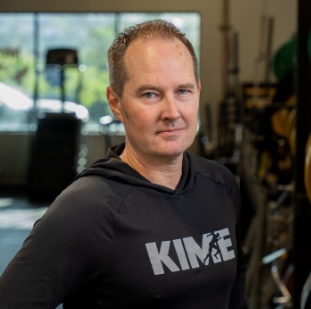
Physical Therapist, Strength Coach & Founder of KIME Performance
Tony is a leading sports physical therapist, performance coach, and researcher. He speaks and teaches nationally on sports physical therapy and regularly publishes research in international journals. Tony previously served as the Physical Therapy Manager at the world-renowned EXOS in Phoenix, AZ, working with some of the best athletes in the world. He was the Medical Director for the Sacramento Sports Commission and adjunct faculty in Physical Therapy at Sacramento State University and Northern AZ University. In 2015, Tony was named a finalist for the NSCA Sports Medicine Specialist of the Year and was awarded the 40 Under 40 Award from the Sacramento Business Journal in 2017.