The Career Curveball That Turned a Small PT Clinic Into a Market Leader
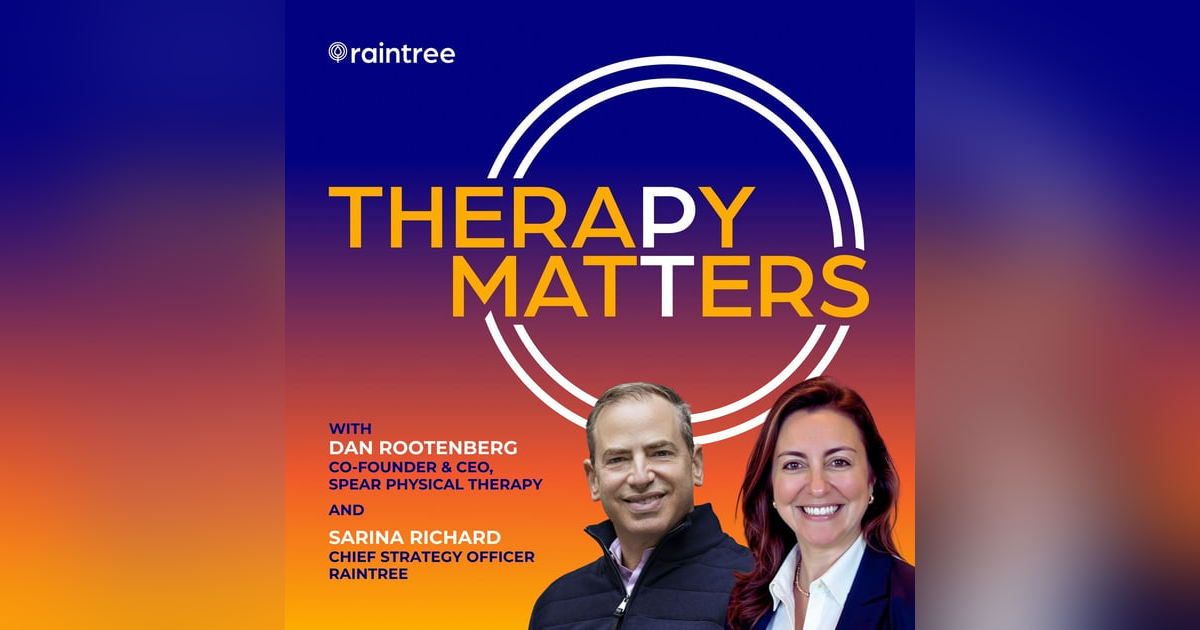


Dan Rootenberg’s career changed course not because of a big win—but because a dream fell apart. On track for a professional baseball career, the 1994 MLB strike ended his dreams in an instant and forced him to rethink his future.
When another student no-showed on the first day of PT school, a last-minute acceptance led Dan to find his footing in physical therapy.
With just $6000, he co-founded Spear Physical Therapy in 1999 in a rented room inside a gym with the belief that clinical excellence and five-star service should go hand in hand for patients and staff alike.
That people-first philosophy fueled their growth, from data-driven hiring and leadership development to bold pandemic decisions like signing new leases, refusing layoffs, and cutting executive pay to zero. After COVID, these decisions helped Spear emerge as the clear market leader in NYC.
Dan shares how his leadership evolved from hustle to clarity, why a CEO’s real job is being a “sense maker,” and what it takes to build a culture strong enough to scale and survive.
GUEST
Dan Rootenberg
Co-Founder & CEO, Spear Physical Therapy
Dan Rootenberg is the CEO of Spear, the only two-time National Practice of the Year award winner. Dan co-founded Spear in 1999, working out of a small treatment room in midtown Manhattan. He had a singular vision for combining clinical excellence with a five-star customer service experience. Spear has since grown to 77 locations throughout NYC, Westchester, Long Island, New Jersey and CT, employing over 1100 people currently and is continuing to expand further.
Connect with Dan Rootenberg on LinkedIn
Learn more about Spear Physical Therapy
Sarina Richard
Chief Strategy Officer, Raintree Systems
Sarina Richard has spent twenty years as a Healthcare Technology Executive across the healthcare continuum, from operator to service provider to financier. At Raintree, Sarina oversees corporate strategic planning and leads cross-departmental initiatives to build best-in-class teams, systems, and processes.
Connect with Sarina Richard on LinkedIn
About Raintree
Raintree is the rehabilitation and physical therapy software of choice for enterprise and large therapy provider organizations.
Discover why Raintree is the trusted EMR and practice management platform for the largest and most ambitious rehab therapy organizations in the U.S.
Request a demo of Raintree
Sarina Richard (00:03):
I'm Sarina Richard and you're listening to Therapy Matters, presented by Raintree. Therapy Matters explores the ideas and innovations reshaping rehab therapy. Dan, thank you so much for being here with me. It's great to have you.
Dan Rootenberg (00:22):
Sarina, it's a pleasure and an honor to be with you.
Sarina Richard (00:25):
Well, tell us about yourself. Just share who you are, what your role is, and what organization you're with.
Dan Rootenberg (00:32):
Sure. Dan Rootenberg, co-founder and CEO of Spear. And we are in New York primarily, New Jersey, and we opened up our first location in Connecticut and not that long ago.
Sarina Richard (00:47):
Nice. Well, we're really excited to have you on today's podcast, and I'm excited to talk to you about your journey and building Spear into the really world-renowned organization that it is today. I'd like to start first with your background. How did you get into this profession?
Dan Rootenberg (01:04):
Well, it's interesting. My first dream was playing professional baseball. That's what I wanted to do since I was three years old. And I was playing at Binghamton University as a freshman. And baseball really saved me in a lot of ways. My dad passed away my freshman year suddenly.
(01:30):
Had a brain aneurysm. And it just really threw me, but baseball kept me so grounded and gave me something to focus on. And by my senior year, I was team captain and just my game had never been better and I wanted to play. I wanted to fulfill that dream. And it just so happened 1994, the year I graduated was the only year in the last hundred that there was no World Series, no baseball. There was a baseball strike and they weren't signing free agents. Now, if I was Derek Jeter, believe me, they would've found me. But it was one of those things. I had a great tryout with the Phillies and he said to me, "I was going to draft you and I was going to sign you, but we can't sign any free agents."
Sarina Richard (02:24):
Wow.
Dan Rootenberg (02:25):
And so I wanted to take a year off and then just do a whole bunch of different tryouts. But my mom had other plans. My mom said to me, "Danny, I need you to be on your own two feet. I need you to get off my credit card and I need you to get on the right track." And so I applied to physical therapy school somewhat reluctantly because where I was always trying to reach peak performance for myself and to help others do that was very aligned and would be an easy lift, if you will. And so when I was wait-listed from every PT school I applied to, I was actually relieved.
Sarina Richard (03:10):
Wow.
Dan Rootenberg (03:11):
Yeah. And I got a phone call at 10:00 AM. It woke me up. As you can imagine, I was 20 years old or 21, and it was Toro College. And they said, "Is this Dan Rootenberg?" I said, "Yes. Someone did not show up to anatomy class. Do you want that slot?"
Sarina Richard (03:33):
Wow.
Dan Rootenberg (03:36):
And I didn't respond. And she repeated. She's like, "Did you hear what I just said to you? " And I was just picturing my baseball dream floating away. And I sort of snapped to and I said, "Yes, thank you. Where should I be? " And my mom's voice was in my head. And so I accepted this spot and that's how I got into PT school because someone failed to show up the first day.
Sarina Richard (04:05):
Wow. That's amazing. I'm curious, did you have a favorite baseball player growing up?
Dan Rootenberg (04:10):
I did. And it was Keith Hernandez. Growing up in New York, and I played first base, although in high school, and Keith Hernandez, Don Mattingly were my heroes. And I just met them both last week at the Gold Glove Awards, actually, in New York City. So that was kind of-
Sarina Richard (04:28):
Come full circle.
Dan Rootenberg (04:29):
... even asked that question.
Sarina Richard (04:30):
Yeah, that's really special. And I'm sure all of those PT schools are kicking themselves now, seeing where you are.
Dan Rootenberg (04:36):
Well, maybe they are because with Toro being the only school that gave me my shot, I have returned the favor. And I actually, coming full circle, was invited to give the keynote at graduation last year in front of my family and my three kids and my wife. It was really an amazing feeling. And we have a Spear Scholarship where we've given $350,000 to the school to perpetuate the ability of the next generation to have a great PT experience, et cetera.
Sarina Richard (05:12):
Well, that's amazing. And that's a great story of how you got started. Yeah. I want to hear about the journey from being a clinician to being a business owner. What gave the idea and why did you decide to go out on your own and start Spear?
Dan Rootenberg (05:28):
Well, I got my dream job at HSS, Hospital for Special Surgery. And what I saw there and what I was learning there was just clinical excellence at its best. I saw that day in, day out. And where I saw an opening was to combine that with a five-star customer service experience in the private practice world. And that's what the thesis for Spear was, to really pull those two things together. And the way we got our first start was very typical. I had talked to my buddy from Toro from PT school, Dave Endres, and I said, "Why don't we start a private practice?" And he said, "Sure." So I was always very high tech and the high tech thing to do in 1999 was to go to Staples and print your own business cards. I belonged to Equinox at the time, and there was an orthopedic surgeon talking about ski injuries.
(06:31):
Dave's this expert skier. I'm adequate enough. I said, "Let's just go and talk to him." And that's when I went to Staples and I got these business cards. And we didn't have a name or anything. I just came up with Spear Sports Performance Enhancement and Rehabilitation is the acronym and a good trivia answer at any of our picnics and printed the business cards with ... Well, I lived on the Upper East Side and Dave lived on the Upper West Side. So I just put our home addresses on there. And then we went to Equinox that night. I had given Dave the business cards on the way in and the doc talked about ski conditioning and injuries. And then at the end, we went up to him and introduced ourselves and he said, "Oh, this is great. I need PTs I can trust. Do you have any business cards?" He says
Sarina Richard (07:23):
Stop.
(07:24):
So I said, "We do. " I do. Yeah. And I winked at Dave and Dave gave him his business card and I gave him mine with our home addresses on it. And he looks at it like this. He says, "Oh, this is great. Two locations." And we didn't even have one.
(07:41):
Oh my gosh. That's amazing.
Dan Rootenberg (07:42):
Yeah. And he sent us his first patient that weekend and we scrambled to rent space in a personal training gym of someone that Dave had known.
Sarina Richard (07:52):
That's incredible.
Dan Rootenberg (07:53):
And that's how we treated our first patient.
Sarina Richard (07:55):
Wow. Fake it till you make it, right? Right. That's right. I love that. Yes. There's something you said earlier about why you started Spear and you wanted to create this experience of a five-star customer service. It's really unique that that's sort of the beginning reason of why you wanted this different experience and why you built the business. Why is that so important to you? Is there something that you experienced in your life to make you feel like this customer experience has to be at the core?
Dan Rootenberg (08:21):
I would say yes. And it's a customer service experience, not just for our patients, but it's a customer service experience also for our team members. I'd been in companies that did not care about my needs as a person. I remember asking for time off from one of my managers because one of my good friends was getting into the Binghamton Sports Hall of Fame on a Friday. And my manager said to me, "Well, sorry, but someone already asked for the day off." And I said, "I know, but I don't want to miss this event. I want to be there for my friend."
Sarina Richard (09:01):
Once in a lifetime. Yeah.
Dan Rootenberg (09:02):
And she said, "Sorry, and walked away." And that stuck with me and they lost me in that moment. I didn't leave right away, but they lost me. And I always remembered that. And so when I say five star customer service, it really is. I think if you take care of your team members, they will take care of your customers. And that's really the direction of and the orientation we have to
(09:26):
This day.
Sarina Richard (09:27):
Yeah, I love that. As you grow and scale an organization, sometimes you can lose some of those reasons of why you started the business in the first place. And I'm not saying everybody does that, but it is hard to keep that core going. What has been the reason behind the success of being able to continue that five star, the reasons why you started Spear? Spear is known for that today. So as you grew and scale the company, what have been the reasons for that success?
Dan Rootenberg (09:58):
I mean, a few things come to mind, personal and professional growth being one. So it's not just growth of the company, but it's growth of our team members. And I've seen such incredible growth in everyone on our leadership team because they all started with us. And to see how they went from being new grads or very recent grads to the leaders that they are, I think there's something special about that. I don't think we're just put on this earth to be who we are. I think we're put on this earth to ascend and evolve and learn. And that's what I think is so wonderful and beautiful about our team. And the other thing that I marvel at is the community. The Spear community to me is amazing and the friendships between the team members, they go through life events together, getting married, having children. It's super personal and meaningful.
(11:11):
And there is a palpable bond that exists that is hard to describe.
Sarina Richard (11:21):
I love that. Do you remember, what was the first step that you took to really build and grow and scale Spear?
Dan Rootenberg (11:30):
Well, interestingly, when we really started to take off was when I was able to focus on the business in a way that I never did before. And when we started, I mentioned that Dave had a friend in the gym business who gave us a start. He gave us six months of free rent to start. We started this business
Sarina Richard (11:54):
Generous. ...
Dan Rootenberg (11:55):
on $6,000 total.That's all we had to put in ever, but there's no such thing as a free lunch. So he gave us a start, but then started to grow increasingly jealous of Dave and I and the business and how we were growing and his personal training business was shrinking. One example I'll give you because I still have this aversion to green towels. I will never
(12:24):
Ever lift a green towel. And the gym, his personal training gym had green towels and we had white towels. So under our tables with the white towels, well, if one of our patients accidentally picked up a green towel, he would confront them. So I had this 88-year-old woman on a recumbent bike and this football player comes over to her, "What are you doing with that green towel?"
Sarina Richard (12:52):
Oh my God.
Dan Rootenberg (12:52):
Why do you have that green ... But I will tell you, it was the biggest learning experience of my life. I learned how to negotiate with a street fighter type. Every time I had to go in there to negotiate something, I prepared so diligently. I read every negotiation book. And so it was an adversary that made me so much better. And so if I see him on the street, I give him a hug today.
(13:21):
It just forced me to
(13:23):
prepare for every one of those conversations. And in the end, we got kicked out. We did. So that's when we started to grow. So after four years, it just got to a breaking point and I thought we were going to lose the business. We were close and we found a place just around the corner. I remember the postcards were moving, but just around the corner. And in that first year, it was probably year four, no year five of our existence. And that first year we grew 35%.
Sarina Richard (13:56):
Wow.
Dan Rootenberg (13:57):
And then the next year we grew 35% again. And I was like, wow, I can't believe how much of my energy was going into this. So no need to tolerate any of these distractions as a business owner. Sometimes you don't realize the agency you have. It was a good lesson for me because once we got that distraction out of the way, we just started blossoming.
Sarina Richard (14:20):
What's interesting though is that distraction, I mean, what a visceral example of everything that you did not want to be. So this concept of five star customer service was that you were experiencing the opposite of that every day in that gym. And so it almost, I can imagine, just helped strengthen your concept of what you wanted that experience to be for your patients, but also for your team by having this adversary, as you call it, every single day, and you are living the opposite of that.
Dan Rootenberg (14:49):
Absolutely. I still have my notes somewhere. I always thought I'd pull them all together because there were so many lessons in there.
Sarina Richard (14:55):
That's good. You've done a phenomenal job of hiring, and Spear is really well known for the talent that you've been able to bring on and cultivate. What is your approach to recruiting? Do you have any special secret sauce that you could share with everybody?
Dan Rootenberg (15:11):
Well, we have a great talent acquisition team led by Amir Rand. We also use a few different methods. I am a big fan of the book Who-
Sarina Richard (15:24):
Oh yeah. Yes. We use that at Raintree, actually. Yeah.
Dan Rootenberg (15:26):
And so especially when I have to hire for new positions, that's always the hardest. As an executive, if I have to hire someone that's not a physical therapist,
(15:37):
That makes it more difficult. But a few things that we do, first of all, we've created an algorithm for hiring so that we don't get surprised. And our regional directors were challenged on one of our offsites to come up with the algorithm of what we're looking for, and whether it's coachability, execution, and really honing in on these things. We've also put the gut feeling, which is really important, right? You trust your gut, but we put it in a different point. We changed the sequence, and that's when it's most powerful. You see, the way gut is usually used is at the front at the beginning. Someone walks in and you all automatically have judged something about that interaction. And so we train to do the opposite. Don't judge at all. Don't even think about your gut feeling in an interview until the end. And then once you've gone through the behavioral interview questions and the algorithm that we think is important, then you can close your eyes, maybe the person's already out of the room, close your eyes and picture, is this a, in our case, a Spear person?
(16:56):
Will this person fit your culture? Will this person be a great fit for your company? And if you put it later, then it's powerful.
Sarina Richard (17:04):
Well, it's really fair too, because some people interview really well and some people just don't interview well. So it gives the candidate the opportunity to show you who they really are before you let that almost emotional side of the interview take over.
Dan Rootenberg (17:17):
The other thing we use that I really like personally is the Big Five personality test. It's research-based, it's free on the internet, and the people that do the best in our company are therapists that are high on conscientiousness and agreeableness. Those two things make for a great, productive, happy therapist.
Sarina Richard (17:44):
Awesome. And you can't apply that to every business, but you know in your business, those two are the ones that you find most successful. I love the data-driven element here because hiring can be so emotional. And like you said, people use that gut thought as the initial answer, whether they want to bring someone on. It sounds like you guys have been able to incorporate that. You don't ignore it, but you've done a lot more data-driven analysis on what is actually going to be successful for your business. So retention and culture are pretty key differentiators in rehab therapy. It's a pretty hot topic here. What would you say are the top things you've done that have truly made people want to stay at Spear?
Dan Rootenberg (18:23):
Besides the day-to-day work environment and community that's created around everybody, we really try to put ourselves in our teammates' shoes. We've created a leadership program, the Spear Future Leader Program. We call it the SFLP that is by far the best thing we do. And it's really how we turn physical therapists and occupational therapists into leaders. It's a one-year program. We got 80 applicants for this next class.
Sarina Richard (18:58):
Can anybody apply?
Dan Rootenberg (18:59):
Anyone can apply and we'll probably hold 48 is the max that we'll hold every year. And it doesn't guarantee a promotion. We're clear on that. But what it does is it gives them an education in what we think leads to professional and personal development. I hear it all the time and I get people telling me, "Wow, it's something I use at home." These communication skills, there's a lot of soft skills. So we've been doing soft skills, emotional intelligence, leadership coaching, conversational capacity for a very long time. Before it was cool. And now I think a lot of people are talking about it, but that
Sarina Richard (19:45):
High EQ. Yeah.
Dan Rootenberg (19:47):
Yes, yes. And that was really important. And we start with that. The other things, the typical teaching of KPI or budget creation, business development is part of it and important, but it's the human component. We talk about having quick nunchi, which is a concept that I picked up in South Korea, one of my baseball trips, where
(20:16):
In Korea, they talk about this concept of quick nunchi, and to me was the best way to describe what makes a leader, a manager, successful. And what quick nunchi is when you enter a room, can you feel the energy of everyone in that room? Can you feel, can you just take with one look, can you see if the person at your front desk had a late night for some reason? Can you see how engaged people are? Are you noticing all the people around you? And we talk about it and we train it and some of it is a talent, but some of it's also awareness. You can make yourself better at that.
Sarina Richard (21:04):
I love that. Intentional awareness really ties in nicely with this five-star customer experience. It's so intentional, what you have built. That's really cool. I love that you picked that up and that you've managed to create that culture in your team. Spirits had a lot of successes, and truly congratulations to you and your partner for everything you guys have been able to do, but growing and scaling a business is hard. Were there any near misses or moments where you felt like, I don't know if we're going to make it another day?
Dan Rootenberg (21:40):
There were probably two times. And first was interestingly 2016, and we had eight locations, but we were getting noticed by the profession. We were in a national ad campaign from Mission Main Street with Chase Bank and JP Morgan, who had helped fund our needs with debt at the time, although I was always very averse to debt, didn't have much. And we rang the opening belt, the New York Stock Exchange-
Sarina Richard (22:13):
Cool. That's amazing.
Dan Rootenberg (22:14):
on May 4th, 2016 during Small Business Week. And then we got the APTA's Practice of the Year Award that same year. I remember being on the stage at this conference, and it was the honor of a lifetime. And as I accepted that award, I knew I was absolutely drowning and that I would not have been able to
(22:43):
Open up any more clinics or do any ... I was tapped out. We were doing just too much. We didn't have middle management because I was a kid from Brooklyn. I would just hustle more. And so I think this is important for some of the listeners where practice owners were doing so many things and wearing so many hats. And so the answer in my head was always just work harder. And that sure led to a lot of great things, but it also was burning me out. And our third child, Abby, was born and she wasn't sleeping through the night and I hadn't slept in a year through the night and I just knew. And on the way back from, this was in Vegas from that conference, I called up a speaker I had seen at Vistage and I said, "I'd like to work with you.
(23:40):
I want to grow and scale, but not at the personal toll it's taking out of me. " And so that's what led to changes, positive changes. Bob came down, Bob Prosum was great. He came down to our Fide office. We had a whiteboard and, "What are the things you're doing? Put all the things that I was doing on the whiteboard." And he said, "Well, you need middle management." And that's how we promoted our most talented clinical directors into regional director roles. We also hired a director of marketing and a Director of HR and Business Development, Chief Business Development Officer. You need to bring talent in around you to be successful in this business.
Sarina Richard (24:28):
And make it sustainable too, right?
Dan Rootenberg (24:29):
That's right.
Sarina Richard (24:30):
Good for you for recognizing and being self-aware that you were burning out and that you needed help and then asking for that help. So many people don't actually take that next step and asking for help. They just continue on the path. So that's really honorable that you did that.
Dan Rootenberg (24:44):
Yeah. So I'll tell you, I asked for help, I received help. And one thing that all the consultants I've ever used said about me, Dan, you more than anybody else did what you said you were going to do. You followed what the advice was. And I didn't have a dad, I didn't have a safety net, I didn't have a big brother in the profession, so I really did. I said, I'm not going to let that lack of safety net hold me down and I would very liberally hire consultants that I thought were great. And so we climbed from that moment, that was 2016. And from 2016 to 2019, we went from eight clinics to 22 clinics, and we became number two in the marketplace, and I was thrilled to be number two. I mean, we were competing against PE-backed groups, and it was a really energizing time, and then COVID hit.
Sarina Richard (25:46):
So is this the second?
Dan Rootenberg (25:48):
This Is the second
(25:48):
Big bump. And this was New York City.
Sarina Richard (25:53):
Yeah. Gosh.
Dan Rootenberg (25:54):
People were online at Trader Joe's with gas masks. It was-
Sarina Richard (26:00):
That was such a crazy time, wasn't it?
Dan Rootenberg (26:02):
Yeah. Yeah, it was. And it seems like so long ago, but it
(26:05):
Wasn't not long ago.
Sarina Richard (26:05):
It wasn't. No.
Dan Rootenberg (26:07):
So we did three things during COVID, three decisions that were very fateful. The first one, people were giving handing keys back to landlords and the financial district. People were just like, "This is not going to work." Everyone had left. And I took a different tack and I said, "I'm actually going to sign leases and got incredible real estate deals, Grand Central, Park Slope, Brooklyn." We were just betting on ourselves and betting on New York
Sarina Richard (26:41):
That's wild to come back. Because if you think about that time, nobody knew what was going on. No one knew how long it was going to last. No one even really knew what it was. And you went the opposite way, what everyone else was doing. Why did you do that?
Dan Rootenberg (26:55):
I just had a gut feeling as the ... No, I don't know. I had faith. I had faith that we are resilient people and we have a great thing going. Us, like everybody else, we came very close to losing the business. 80% of our visits evaporated.
(27:13):
We knew what was going to happen. So it was taking a risk. The second thing we did, and I didn't know if I was a fool for doing it. We didn't furlough a single therapist.
Sarina Richard (27:24):
Wow.
Dan Rootenberg (27:24):
Others around us certainly had to. We did not. And there was not work for them to do.
(27:32):
We didn't have patience, but we didn't furlough anyone. Ownership decided to cut our salaries to zero in order to be able to do it. We took down the line of credit that we had and made sure that we had liquidity by just maxing out those loans. And this is the piece that I was really nervous about, but I just had a feeling and I said, okay. I said to my CDs, "Hire the best talent that's out there. We know it's a fight for talent. Right now it's not, but it's going to be. Let's do it. " And so we started hiring. And again, some people were not seeing any patients. And I'll tell you, the third thing was we rebranded and to reflect externally the incredible magic that was happening in the four walls. And we did these free seminars to the public. We were getting on these webinars, 3000 people.
Sarina Richard (28:35):
Wow.
Dan Rootenberg (28:35):
I couldn't believe it. Yeah. Some of these were like low back pain. Some of these were pelvic health webinars, and we did this every week for 52 weeks. Wow. We would get hundreds on some, and we got thousands on many.
Sarina Richard (28:52):
Wow, that's incredible.
Dan Rootenberg (28:53):
So we came out of the pandemic. The idea was when the market is small, we're going to take market share, and then when the market comes back, we'll be in a great position, and the strategy actually worked. So we came out of the pandemic number one in the market.
Sarina Richard (29:09):
Nice.
Dan Rootenberg (29:10):
2.6 times greater than number two.
Sarina Richard (29:12):
Congratulations. Yeah. Yeah. You really doubled down on yourself, your team, and your future, and that stuff doesn't happen overnight. And I'm sure it was really scary for you. What do you feel like your role during that time period was?
Dan Rootenberg (29:27):
It changed for me. I realized the power of communication. I realized that I didn't have a safety net, but I knew that I was the safety net for others, and I felt that for the first time. It sounds strange for me to even say it, but I went from my energy being hustle to love. Yeah, I really felt that. And I realized the role of the CEO was It was different than I ever knew it to be. And it was one of sensemaker and chief explainer.
Sarina Richard (30:07):
Love that.
Dan Rootenberg (30:08):
Yeah. And we were talking all the time about what we were going to do next and how we're going to handle things with limited amounts of data. And so people didn't know what to even think at these moments. And so the communication that we had, the town halls, which were daily for a long time, then they became weekly and then biweekly and then monthly, just to keep everyone on the same page and retain everybody. And so it was a realization that during polarizing times where people don't trust their politicians, all of a sudden we as CEOs have a different role now.
Sarina Richard (30:51):
Yeah, that's brilliant. And in a time when there's so much fear and so much unknown, the lack of information only makes that fear worse. And so it sounds like you really stood up and you said, "I'm going to be that guiding light for us. Here's the information I know. This is what we're going to do about it. " And that gives people that safety net, as you call it. The sense of community, sense of care. Somebody's got me, so I don't need to worry about that. And that I think is truly unique and clearly a reason that you've been so successful. As you've scaled, what sort of systems or processes have you put in place to really make sure that that scale, the reasons why you started Spear in the first place, that you've been able to grow and scale successfully, but also sustainably?
Dan Rootenberg (31:37):
Well, actually during this time, I wanted to make sure it was productive time. And I did bring in another consultant to install the EOS system where we have L10 meetings, level 10 meetings. And we had always ... So we now have level 10 meetings at every level.
Sarina Richard (31:56):
Can you explain what that is?
Dan Rootenberg (31:57):
A level 10 meeting is that people rate it as a 10, at a 10, but you have an agenda. You go through a good news check-in, personal and professional best. Then you go through people headlines in the entire company like what's happening. It's important to know. You have to- dos that are week-to-week to- dos, but then you also have rocks. And rocks are like quarterly rocks. And what are the things that you're doing from quarter to quarter so that we can really keep moving the business forward? And then we have IDS actually. Identify, discuss and solve what are the big issues and making sure that we do discuss the big issues to the business.
Sarina Richard (32:40):
You are so intentional about how you have built your company, your culture, and grown in scale. And it's really inspirational, hearing how you started, where you came from, and then what you've been able to build Spear into. If you had to give one piece of advice to someone who's maybe a clinician right now thinking about opening their own business, but not really sure what to do, what would that advice be?
Dan Rootenberg (33:03):
The advice is simple to say, but hard to execute, which is get great people around you. Get smarter people than you, better than you. Whatever it is, bring talent around you. You cannot do it yourself. And there's great magic when you can be multipliers for people around you. Our leadership team is absolutely phenomenal. Our clinical directors are superb. They are making it happen every day. And I have found that the more I let go of things, the better it gets. And that takes trust.
Sarina Richard (33:48):
It's hard.
Dan Rootenberg (33:49):
Yeah. You do have to have the right people, and we certainly do. That's what makes it all run. It's not me. It's the team and how well they work together in a thoughtful way that's very much culturally aligned.
Sarina Richard (34:07):
Dan, you are such a humble, authentic, and inspiring leader. I really want to thank you for the time that you've spent with me coming on here, sharing your story. I think a lot of people are really thankful that you didn't end up going into baseball because you've really made a significant impact on a lot of people's lives and taught me a lot about leadership personally too. So thank you so much for your time and for sharing yourself with us.
Dan Rootenberg (34:31):
That means a lot, Sarina. Thank you so much. This was really great.
Sarina Richard (34:34):
Thanks. Awesome. Links to learn more about Raintree Systems and anything else mentioned on today's show are available in the show notes. To learn more, go to therapymatterspodcast.com. Follow Therapy Matters on YouTube, Apple Podcasts, Spotify, and anywhere you listen to podcasts.