Retention, Reimbursement, and Rewriting the Playbook for PT with David DeGumbia
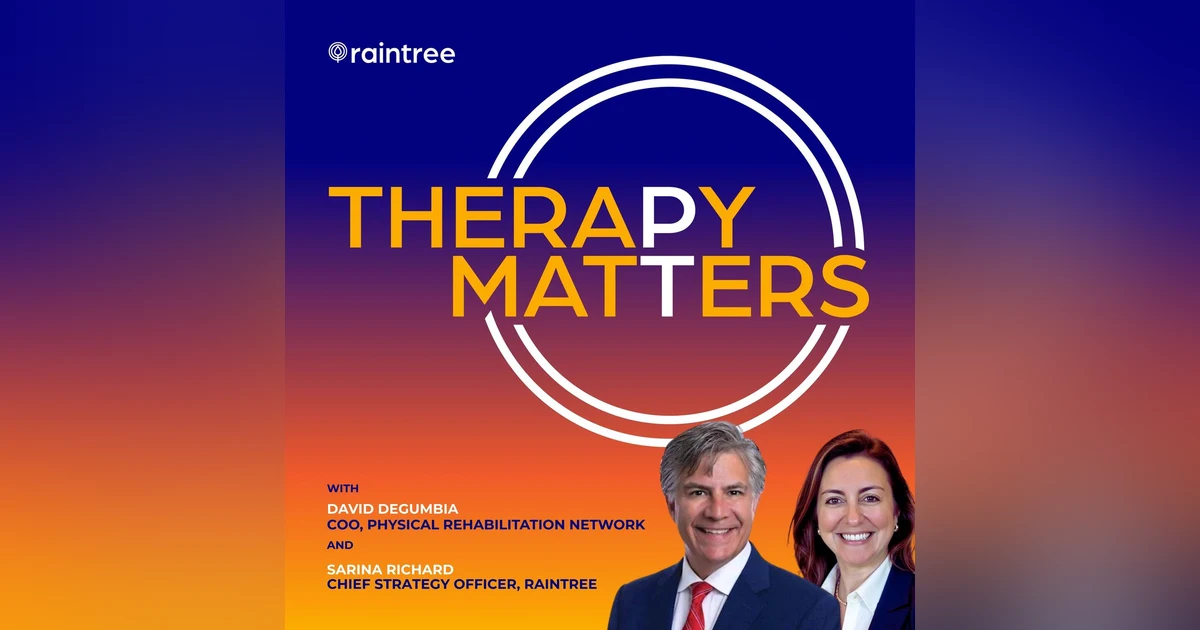


Physical therapy is at a crossroads. Clinicians are leaving the profession faster than schools can replace them, reimbursement has not kept pace with a seven-year training pathway, and the job title of “doctor” sometimes lands on a workday that looks very different from what students expected.David DeGumbia has spent nearly three decades inside outpatient PT — from athletic training with the Miami Dolphins to leading multi-site operations at HealthSouth and Select Medical, and now as Chief Operating Officer at Physical Rehabilitation Network.Speaking honestly about the workforce crisis the profession helped create, David makes the case that universities and clinical sites need to close the gap between what students learn and what a full day of hands-on patient care actually demands, and that PT owners who want to be an employer of choice have to keep knocking on insurers’ doors until fair reimbursement follows outcomes.He also frames AI not as the thing coming for jobs, but as an intelligence multiplier giving us our first real chance in the profession’s history to strip out administrative overhead and reroute those dollars to clinicians.The through-line is relationships with clinicians, insurers, patients, and especially the young Gen Z therapists David says the profession absolutely needs. If PT gets the next decade right, he sees a bigger role in the broader healthcare ecosystem, better paid clinicians, and a workforce that stays.
Questions answered by this episode:
- Did the move to the DPT degree actually serve the physical therapy profession?
- Why are physical therapists leaving the profession, and is comp really the reason?
- Are PT schools overproducing clinicians if half are gone in a few years?
- How will AI actually change physical therapy operations day to day?
- Will AI take front office and back office jobs in a PT clinic?
- What can a practice owner do right now to move reimbursement forward?
- Is digital musculoskeletal care a threat to in-person physical therapy?
- What makes a PT practice an “employer of choice” for clinicians?
About David DeGumbia
David DeGumbia is the Chief Operating Officer at Physical Rehabilitation Network, a leading operator of outpatient physical therapy clinics across the United States. A physical therapist by training with more than 25 years of leadership experience, David held senior operations roles at HealthSouth and Select Medical before joining PRN. He is known in the profession for building teams around relationships, mentorship, and honest conversations with insurers about the fair value of physical therapy.
Connect with David on LinkedIn.
Sarina Richard
Chief Strategy Officer, Raintree Systems
Sarina Richard has spent twenty years as a Healthcare Technology Executive across the healthcare continuum, from operator to service provider to financier. At Raintree, Sarina oversees corporate strategic planning and leads cross-departmental initiatives to build best-in-class teams, systems, and processes.
Connect with Sarina Richard on LinkedIn.
About Raintree
Raintree is the rehabilitation and physical therapy software of choice for enterprise and large therapy provider organizations.Discover why Raintree is the trusted EMR and practice management platform for the largest and most ambitious rehab therapy organizations in the U.S.
Request a demo of Raintree.
Sarina Richard (00:03):
I'm Sarina Richard, and you're listening to Therapy Matters presented by Raintree. Therapy Matters explores the ideas and innovations reshaping rehab therapy. Well, David, thank you so much for being with me today on Therapy Matters. I appreciate you joining. Thank you. Well, first, just love to hear about your story. How did you get into the industry and then how did you transition onto the operations side?
David DeGumbia (00:30):
So Sarina, I grew up in Connecticut, still live in Connecticut, went to PT school at the University of Connecticut, and I got into physical therapy similar to most people. They had an experience with a particular patient, and that patient was my dad who was an amputee. And so as a middle schooler, I was able to spend time with him in a rehabilitation facility as they were training him to use a prosthetic and be able to do activities of daily living. So that's where my passion started, and it went in a similar fashion to a lot of people. I sort of fell in love with the sports side of things. I started off as an athletic trainer. I spent a little bit of time in the NFL and then went to physical therapy school and then ended up in private practice. And so the story goes like that. So very similar to a lot of people. I followed a pretty straight path. I knew where I wanted to go, and I went in that direction and accomplished a lot of goals. Although early on, I did go back and worked on my PhD at NYU, but fell in love with growing and developing teams and leading and advancing the field of physical therapy. So I did not end up going that direction.
(02:04):
I've always been pretty driven and my children always look at me and say, "Dad, geez, you knew where you wanted to go." And I tell them that's not normal, right? It's like if you've ever sailed a boat, you have to tack left, you have to tack right. I sort of went in a straight line and went after what I did. And for most of my career, I was with a private practice in Connecticut. We sold to HealthSouth. I grew with HealthSouth and managed multiple sites, multiple states. And then we were acquired by Select Medical and I went over to Select as well. And so I was basically with my same business for almost 30 years.
Sarina Richard (02:46):
Yeah. You're really lucky in the sense that you knew exactly what you wanted to do. And of course it started because of an unfortunate experience with your dad. However, growing and building that into a love and a career I think is very special and unique. And you've had a lot of different flavors too. So tell us how it was working with the NFL really.
David DeGumbia (03:03):
So I worked with the NFL early on when the amount of money was not there. It was very different. When I was with the Miami Dolphins, the facilities were on the campus of a small college there called St. Thomas University.
Sarina Richard (03:22):
It's very different nowadays.
David DeGumbia (03:23):
It's so different. And we lived in dorms. The fields were outside and the facilities were, I would call them subpar. And so even when athletes came in, I remember an athlete from LSU that was a draft pick and him looking around saying, "This place is a dump," but it was very different. And then after that, big money started to roll in.
Sarina Richard (03:48):
I can't imagine any athlete would be okay with a dorm.
David DeGumbia (03:51):
I had the same experience. That first year they played in the Orange Bowl and the Orange Bowl was an absolute dump. It was horrible, but they next year moved into Joe Robbie Stadium, which was sort of state of the art at that time. So I was early on and the real difference is there were two athletic trainers and a junior athletic trainer. I was the junior. Now there's 15 sports medicine specialists that are running that whole operation. So it was very different then. And college was the same way where athletic trainers took care of multiple sports. Now athletic trainers are dialed into just one particular sport.
Sarina Richard (04:41):
Yeah. That must have been a really great experience for you to be able to get that though. I mean, it was like one to many versus now you're focused on the specific.
David DeGumbia (04:48):
Yeah, very fun.
Sarina Richard (04:50):
Very cool experience. Nice. And then you mentioned you realized you had a love for developing and training and leading teams. Was there a single moment in time that created that realization for you?
David DeGumbia (05:04):
I just always wanted to create a great experience for the people that I worked with and worked for and the people that worked for me. And so I just started putting together teams and started to realize I could positively influence these people and create a situation where they loved what they did, they loved who they were working for and sort of, I guess I'd call employer of choice. I didn't use those words back then. It was all trying to do the right thing for the employee and for patients and helping people develop in their own leadership style, whether it was clinical or whether it was managing clinics or specific programs. So really sort of got into it that way and realized I enjoyed that and liked that. And then started managing 10 sites, a hundred sites, a thousand sites, whatever it is.
Sarina Richard (06:05):
Yeah. And that's when you started moving more into the operations side?
David DeGumbia (06:08):
Correct.
Sarina Richard (06:08):
Yeah. What keeps you up at night as an operator?
David DeGumbia (06:12):
Retention of our clinicians keeps me up. It just hits home and it bothers me that people are leaving the profession. It bothers me that people are jumping around, and it bothers me that people are not realizing how great it is to develop a name for yourself as a musculoskeletal physical therapist expert and be in that community. It bothers me that there's not more people that want to do that. And I think there are, I think we're missing that. I think we have to open those doors and show people how they can thrive and have an unbelievable career and do a great job at taking care of the community that they live in.
Sarina Richard (07:01):
Some people will say that we're in a bit of a crisis right now, and I think the challenge or the headwind that you shared around retention is you can't really look at it in a vacuum because you've got reimbursement issues, people just don't want to enter into this field anymore. School takes a really long time. It's really expensive. The expectations of the job are different than what they experience when they come out. I mean, there's just so many things that you're facing. So if you think about this, let's call it therapy workforce crisis, is the profession the victim of external forces or did we somehow create this problem ourselves?
David DeGumbia (07:39):
We created it. I think so. That's my opinion that we created this. I've loved what we've done. You and I have had conversations in the past about the DPT program. I personally lobbied for the entry level master's program and the DPT. Coming from Connecticut, we have a longstanding physical therapy program set up in the early 1950s at the University of Connecticut, and that's a state run school. It's funded in part by the state, so it's run by the boards of higher education. And so when I was helping to lobby to get, because you have to get those programs approved through the boards of higher ed. And so I distinctly remember being in a policy meeting with them and lobbying for that and the questions that they were asking me, why does this make sense? Why would you want to add that much cost to a student's education when you have operated for 50 years with a baccalaureate?
(08:43):
Why aren't you continuing with that and advancing an advanced type degree? We're confused about that. And so I gave them the best. I laid it out. We need direct access, evidence-based practice. We need to continue to push the research side. We need to get to the point where we are functioning as the musculoskeletal primary care physician. So I laid it all out and they smiled and said, "Yeah, make sense, maybe. We still think you should be doing that without adding more cost to our students."
(09:26):
And so the question came that I couldn't answer, and the question was, "Well, that's great. Now you're going from four years to seven years, you're going to take the same exam. They're going to be licensed the same. How are you going to convince insurance companies to pay you more?" And I couldn't answer the question. They ended up approving it. I knew it was going to continue. It was going to pass. We can't go backwards. So we need to figure out how to create less costs for these students.
Sarina Richard (10:00):
So on that note of PT school is the seven-year commitment. It's one of the most expensive graduate programs in healthcare. Did the move to the doctoral degree actually serve the profession? Do you think that was the right call?
David DeGumbia (10:14):
I think it was the right call. I just think the unintended consequences we did not think about. It helped push direct access forward. It helped push evidence-based practice forward. It did a lot of good things, but what we didn't realize was schools are a business and they're going to jump all over that, and they did. It's not their fault, but we could debate all day long all the new buildings and landscaping and great spaces that all these universities are investing all this money in. Is that the right place? But it's not their fault. Unintended consequence of that. And then from an insurance standpoint, a reimbursement, we didn't really think through that.
Sarina Richard (11:07):
Do you think that PT programs are over or under producing clinicians, and does it even matter if the base graduate count is leaving the profession in a few years?
David DeGumbia (11:19):
My concern is retention. So if we keep overproducing only to end up with a net zero in the profession because people are leaving, it's a problem. We're focused on the wrong thing. We need to focus on retaining these people that spent seven years in learning and working through this profession. We need to figure out how to create a better situation for them. And I hate to go to the comp side right away, but we need to go to the comp side. We need to figure that out.
Sarina Richard (11:59):
Well, let's go there. So I think comp's obviously one reason of why graduates are leaving the profession, but why else are people leaving, and then ultimately whose responsibility is that you think to fix it?
David DeGumbia (12:12):
From what I see anecdotally, from working with young clinicians day in and day out, as much as we have clinicals and lots of experience, I find some clinicians, I think we're more enamored with the title of doctor as well as the profession because you're really doing great stuff for people. But then when they had to jump in and realized that most of the physical therapy's in person, and in order to be a great healthcare practitioner, you have to meet people where they are, which means you can't just see patients between the hours of nine and three. Some people can, but it's demanding. And I don't know that some of those people were ready to understand the demands. And there's no question COVID changed things.
Sarina Richard (13:06):
Sure.
David DeGumbia (13:09):
As you can see, I have a lot of gray hair, which means working from home was not something that I ever did. And I'm one of those people that love being in a clinic with people or love being in an office with people. I get overwhelmed with nine to 10 hours a day of Zoom calls and video calls. Besides having a look at this face for all that time, it's exhausting. And PTs are relationship people, so it's hard for me to work from home, but people see their friends and family working from home having that flexibility, and there's somewhat of a lack of flexibility in treating patients and taking care of the community that you're serving. We need to work through that in schools. We need to spend, I think, more time with helping people work through that and understand how they could still be efficient in their lives and still have what we call work-life balance.
(14:21):
I hear that a lot now, and it doesn't bother some people. It doesn't bother me. It was just called something different. I'm Gen X, you're a millennial, I'm sure. My children are Gen Zs. I think we're all the same, by the way.
Sarina Richard (14:36):
Yeah, we are.
David DeGumbia (14:36):
We use different terminology.
Sarina Richard (14:39):
Totally.
David DeGumbia (14:40):
And by the way, I love working with Gen Zs.
Sarina Richard (14:43):
What's your favorite thing about working with Gen Z?
David DeGumbia (14:45):
My kids roll their eyes all the time at me like, "You don't know what you're talking about, dad." But they care about what's going on. I just love, I don't want to call it mentoring. It's building relationships and showing them, "Hey, there's more to this than you're thinking about." I just feel a huge responsibility to this profession. It's near and dear and it's served me well. And we have such an impact on patients and the musculoskeletal world, and it's only going to continue to grow as the demographics get older. I'm told by Sam Altman from OpenAI that AI is going to increase our lifespan by 10 to 15 years, and he's pretty confident about that. But if that does happen, it is so critical. I look at not just the outpatient side, because there's more to physical therapy than just outpatient. I spent time in the home care world near and dear to my heart.
(15:57):
As we get older, we need to figure out how to prevent falls and keep people thriving in their homes because that's where they want to be.
Sarina Richard (16:09):
That's where they want to be.
David DeGumbia (16:09):
And physical therapy is at the top of that list of impacting that whole cohort of people.
Sarina Richard (16:21):
It'll be pretty existential if we can't retain, as you said.
David DeGumbia (16:24):
And the Gen Zs, we need them. And the tail end of the millennials, we need this group because they are special people. And so I'm not disillusioned at all. I just think we've sort of lost some of our way. And part of that's only because of the pressures of managing this, whether you're not-for-profit, and I spent a lot of time with not-for-profit physical therapy on the outpatient and inpatient side, it's the same. We're facing the same problems now. So I think some of those headwinds create some negativity and slow us down from actually advancing our beautiful profession.
Sarina Richard (17:12):
So on the closing the gap in expectation and reality for students, I heard you say the universities need to take ownership of that. Is there anyone else that you think could play a part in helping close that gap?
David DeGumbia (17:27):
I believe that the universities in combination with all the sites that are participating in the clinical education, the rotations, the fellowships that the students have to go through, I believe they all need to get on the same page and be working in concert with helping these students become efficient, helping them to become very productive because we have to work harder now. It's just the way it is with the headwinds and helping them treat the entire body, the mind, because clinicians are just not treating the musculoskeletal side. There's a behavioral side. Absolutely. And so we play a big part in that. And unfortunately, a lot of times, I hate to use the word burnout, but I think that's where clinicians get fatigued, and there's so many strategies to help clinicians work through that. And I think it's a combination of what's happening in school in the universities.
(18:39):
Obviously, we need the research side, we need the theoretical side, but there's a pragmatic side of putting your hands on patients and dealing with patients day in and day out that needs to be considered, and we need to marry those two together and optimize that whole educational structure. Because one of the things that, I'll say it, 30 years ago, I heard mentoring. I need more mentoring. In fact, with the DPT program, I hear it twice as much today where these are very smart students that spent seven years and they're saying, "I need more mentoring, more, more, more, more, more."
Sarina Richard (19:26):
What's missing? Why are they saying that now more than ever?
David DeGumbia (19:30):
From my anecdotal experience in talking to them, I don't think the training has prepared them. They're smart. They know the treatments, they know the diagnoses, they know the anatomy, they know the physiology, they know everything. But now you have to go out and actually treat a real human being who's in pain, who may be having or have other co-morbidities, but also have other things going on in their lives.
Sarina Richard (20:00):
So we can't get through a conversation without those two little letters, AI. Everyone's talking about AI and physical therapy. Are we thinking about it right or are we completely wrong about where AI is actually going to fit?
David DeGumbia (20:13):
We need to reduce costs in healthcare, all of healthcare. I'll get the physical therapy, but we need to reduce costs. Approximately 18% of our GDP in this country goes to healthcare, $5 trillion, escalating 10% a year.
Sarina Richard (20:30):
Untenable.
David DeGumbia (20:31):
Something's going to break at some point. Let me give you these numbers. In 1970 to today, there's been about a hundred percent increase in physicians looking at the healthcare ecosystem, 100% increase, 1970 to today. Administrators, there's been a 4,000% increase. Healthcare has become addicted to labor.
Sarina Richard (21:01):
Oh, that's an interesting way to put it.
David DeGumbia (21:03):
AI is going to solve that problem. Here's how I think about AI. It's going to automate, augment, or eliminate routine tasks. And at the same time, it's an intelligence multiplier. So we are in one of the most exciting times in history. We lived through the internet. That was one of the milestones, but we know how long it took to adopt the internet. It took a while. It took 10 years, I think, for 150 million people to adopt the internet. It took 10 days for 150 million people to adopt AI. ChatGPT, yeah. So I believe for the first time in our history, AI is going to create a deflationary effect on healthcare by reducing tasks that can be automated, augmented or eliminated. And so when you take a look at the ecosystem of healthcare, physical therapy is there. The demand is going to continue to increase. Our outcomes are strong. We are low cost in the big picture. We're reducing musculoskeletal surgeries. We're reducing falls. We're doing all kinds of amazing things.
Sarina Richard (22:36):
Yeah, reducing addiction to opioids.
David DeGumbia (22:39):
A hundred percent. And guess what? We need to do more, and we can do more. Now, let me drive it down to physical therapy. My objective is, I work for PRN, but my objective is to be the employer of choice. And one of the requirements to be an employer of choice is to have the best compensation. And so here's how I believe we can do that with AI, because we're going to be able to automate a lot of RCM costs that are expensive and unnecessary, insurance authorization, re-auths, denials, all that stuff we're going to be able to automate. And then the scheduling side, so we're going to reduce a lot of front office and a lot of overhead to operate this business, which is going to be able to reposition our dollars to the people that are waking up every day, rolling up their sleeves, and taking care of our community from a musculoskeletal standpoint. So I think it's one of the most exciting times in our history.
Sarina Richard (23:50):
What's your thought on, from a clinician standpoint, front office, back office person? Will AI actually take their jobs?
David DeGumbia (23:57):
There's going to be a shift. Jobs will go away. New jobs will be created just as it did with the internet. It may move a little bit quicker with AI. So I can't predict what's coming, but I can predict we will be automating jobs that can be automated and we have to do it. We need to figure out where folks are going to go, and I believe we will figure that out. Could there be some short-term pain for some of our team members? Yes. Because I'll tell you what I tell my employees, the people that work for me, I need you to do three times more work than you're doing today. And they look at me like I'm crazy and I say, "I need you to use AI."
Sarina Richard (24:53):
Yeah, use AI.
David DeGumbia (24:56):
It's an intelligence multiplier. And so I don't really mean three times more work, but I want them to challenge themselves to say, "In eight hours, how can I do 24 hours worth of work?" So it's a fun challenge. I challenge myself as well. And also, I challenge people and myself to hire and better use of my time because I'm doing a lot of tasks sometimes. I'm spending a lot of time on stuff where I could be spending more important time. It's no different than the ambient listening technology that you guys have rolled out, which I've had clinicians in tears who see a lot of new patients where they're like, "You've given me time back because a good eval, it used to take me 20 minutes, a good eval. Now it's being done in five, six minutes, and the evals are good. As soon as you get used to using that scribe technology, it's impressive.
(26:03):
So that's the start of it. We can do more and be able to spend more time impacting patient's life rather than typing.
Sarina Richard (26:13):
So we've talked about some of the problems with the workforce, and there's some long-term solutions, advocacy. Unfortunately, it shouldn't, but it does take some time, maybe curriculum changes potentially. But what can practitioners and practice owners do right now to move things forward?
David DeGumbia (26:34):
Take a look at AI, one. Look how you can become more efficient to be able to create better access and better care for patients, first and foremost, dig into that. Second thing on the reimbursement front, we need to be vigilant about going back to our insurers, showing our outcomes, and knocking on their door until they give us an increase. And I tell people all the time, this doesn't need to be adversarial. I spend a lot of time with insurance companies. I tell them right up front, I'm biased. So just know I'm biased. I'm a physical therapist. I care about those patients and I care about the people that are delivering the care every day, and I want you guys to pay a fair price for the services that we're delivering to the patients that you serve. So let's partner. Partner with that insurance company, get to know those people, develop relationships.
(27:37):
And if you need to go up a level or you need to ask the people, listen, I don't feel like I'm getting anywhere. Please, we have to do this for our community. Send me up to who you work for because we need to get this done. So I would tell people, get on that. Do not let that go. It's a lot of work. I think that needs to be done. And then we need to spend time with our clinicians. We need to understand why they're fatigued mentally. How can they get done with their day and be proud of what they did and how they serve the people they're treating? So that's the elephant in the room with all healthcare, whether it be bedside nursing, whether it be physicians, it's the same thing.
Sarina Richard (28:29):
I'm hearing a common theme in everything that you are saying, which resonates because I know you are authentically having relationships is very important to you, and leadership development training is something that you're really known for. And what I'm hearing is you need the same thing with the clinicians, you need the same thing with the patients, you need the same thing with the insurance companies. It all goes back to the relationship, and that really seems to be the crux and core of who you are, but also just how you engage with the different parties in your ecosystem.
David DeGumbia (29:02):
I love it. That's why I became a physical therapist. I like to work with people. I like different people. And I tell a story to all our younger clinicians. When I first started, I worked with an orthopedic surgeon and he grabbed me in his office and he said, "I want you to spend an afternoon with me." And before we got started, he pulled me into his front desk. And back then the physician offices are closed off with a little window that they slide back and forth. So he had his front desk person open the window and he goes, "Look out there." And classic orthopedic office filled. I'm like, "You're going to see all these patients right now?" He goes, "I want you to take a good look out there because you're just starting off as a clinician.
(29:53):
I want you to look hard and you will be successful if you believe That every one of those patients that walk through the door, that it's an honor and a privilege for you to see them, no matter their race, their creed, their size, their hair color, their personality, whatever. If you believe that, you will be incredibly successful. And that just young clinician impressionable. And I just looked up to him because I watched how he treated every patient and he treated everybody the same and with the best of his ability and care. And if he couldn't handle it, he would refer it out to another orthopedist.
Sarina Richard (30:42):
You had the humility to say, "I can take you this far, but then I need help."
David DeGumbia (30:46):
100%.
Sarina Richard (30:48):
So if the profession gets this right over the next decade, what does physical therapy look like in 10 years? And what happens if we get it wrong?
David DeGumbia (30:59):
I believe we're going to figure out retention and we're going to continue to produce strong physical therapists. We're always going to have some attrition, but I think our retention numbers are going to get better. We need to figure out how to compensate our clinicians better. And that's got to happen pretty soon. And I think AI is going to help that dramatically. I think we're going to continue to play a bigger role in that broader healthcare ecosystem. Ambulatory care, outpatient services continue to expand. Our population demographics continues to get older. And so it's up to us to. We can't blame somebody else. We can't point fingers. We need to come together and -
Sarina Richard (31:53):
Figure out how to meet that demand.
David DeGumbia (31:55):
I challenged the room today to look at, we need to get our academics, our idealists, our pragmatists in the same room. And we need to find common ground and we need to compromise. Each group is not going to get everything they want, but we need to compromise in the name of our physical therapists and the patients that we're going to continue to treat. You want to go down the road of online digital musculoskeletal care?
Sarina Richard (32:35):
Yeah, there we go. Let's go.
David DeGumbia (32:37):
So I spent a fair amount of time there. I've spent time with the biggest online musculoskeletal provider. And so why did that business grow? Access. We have not been able to get people in quick enough. I've seen their stats. They get people in within 24 hours and that's legit. They get them in within 24 hours. What do people like about digital MSK care? Convenience. They can do these exercises at three in the morning, they can do them at seven at night. So there's some advantages to that. And so I think there was some fear in our profession that they were going to take that digital musculoskeletal care was going to take patients away. I think it's going to only increase the demand for in-person. It serves its niche. Those companies have gone after large self-insured employers. And so it works within that model because the self-insured employer pays a prescription fee.
(33:50):
There's no copays, there's no co-insurance, it's a subscription. And so people use that, but they only see the physical therapist once or twice and then they're on a self-directed digital exercise plan. Doesn't include in-depth education. It doesn't include manual therapy. It doesn't include any of that, which happens in person. So in-person demand's not going to go away. And maybe we as outpatient providers need to adopt some of that technology and drive it the way we think makes the most sense.
Sarina Richard (34:31):
It's the same theme around AI. AI is not, and these digital therapy companies are not going to take the place of the in-person because it's about the relationship. That relationship you have with your therapist, it's so intimate. They know so much about you, your personal life, your journey, your goals, your fears. You can't do that with AI. You can't really build that relationship. You're not going to tell that digital therapist that detail about your spouse or your friends, and it's just not the same. It's not the same kind of relationship. So as the COO of PRN, I'm sure you've got a lot of goals and things that you'd like to execute for your organization and also for the broader industry. What is the goal?
David DeGumbia (35:13):
With PRN, I have two main goals. One, I want to be the employer choice, and two, I want to be able to leave that business in a better place than when I found it. And how I mean in a better place, a better place for the communities that we serve, better patient care, better opportunities for our clinicians and our employees. And I have a number of other goals. I'm a continuous improvement guy. My team will fault me for that because I'm always pushing. We can do better. Let's challenge this. And so I love leadership. I am still learning today how to become a better leader. And so I want to have the best in class leadership team in our industry. And that's not comparing myself to anybody else. That's our own goals to push ourselves to become the best at all costs.
Sarina Richard (36:25):
Yeah. Well, David, it is clear how passionate you are about this industry and about doing the right thing for each piece of the puzzle. And we talked about a lot of problems. We also talked about a lot of solutions today. So advocacy, making sure you are fighting for what we should be fighting for on the hill, mentorship, leadership, really taking that class of physicians and showing them what it means to be intentional and to have that relationship with their patients, the authentic relationships, and then also having the hard conversations with insurance companies, keeping them accountable, not giving up on that. And you are doing all three. So very impressive and intentional leader that you are. I appreciate you sharing your insights and thoughts with us and thank you very much for joining us.
David DeGumbia (37:11):
Yeah, you're welcome. Let's come back in a year and let's see what-
Sarina Richard (37:13):
See what happens.
David DeGumbia (37:14):
Where technology has changed things.
Sarina Richard (37:16):
I love that. Thank you.
David DeGumbia (37:18):
Thank you, Sarina.
Sarina Richard (37:20):
Links to learn more about Raintree Systems and anything else mentioned on today's show are available in the show notes. To learn more, go to therapymatterspodcast.com. Follow Therapy Matters on YouTube, Apple Podcasts, Spotify, and anywhere you listen to podcasts.