PT Leadership Against the Current: AI, Access, and the Fight for a Better PT Model



Simon Hargus turned a small family clinic into a 50-location practice serving rural Ohio and West Virginia without losing the heart of hands-on, patient-first care.
He leads with intention, focusing on culture over scale. By creating individualized career paths and flexible opportunities, Simon helps therapists build meaningful, lasting careers instead of following a one-size-fits-all model.
He opens up about the journey behind First Settlement Physical Therapy—how he built a place people want to grow, what it takes to recruit in a post-COVID world, and how to keep quality care alive when volume often wins.
Hear why he believes advocacy, creativity, and a touch of innovation are key to securing the future of physical therapy.
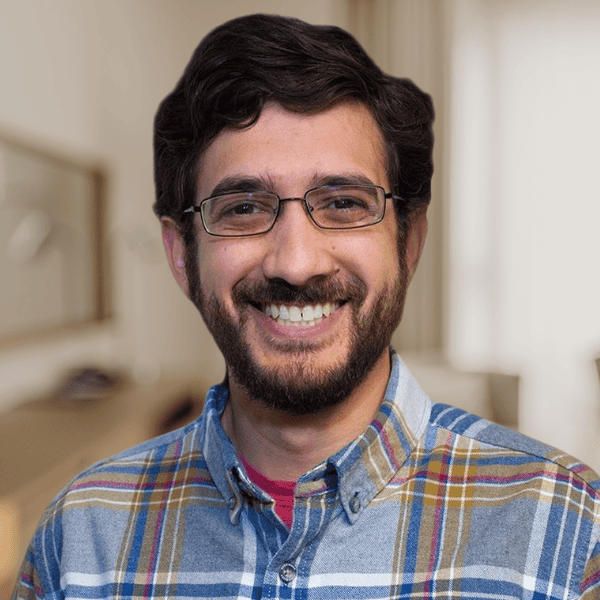
Simon Hargus
Owner and CEO of First Settlement Physical Therapy
Simon Hargus is the owner of First Settlement Physical Therapy, a family-run practice that’s grown to about 50 clinics and 300 employees serving rural Ohio and West Virginia. A PT who moved from the clinic to the C‑suite, he’s known for building a people‑first culture, long‑form patient care, and individualized career paths to curb burnout. He’s active in advocacy, pushing for state‑level wins and a stronger political voice for PT, and he embraces practical tech like AI scribe tools where they deliver real ROI.
Learn more about First Settlement Physical Therapy
Connect with Simon Hargus on LinkedIn
Sarina Richard
Chief Strategy Officer, Raintree Systems
Sarina Richard has spent twenty years as a Healthcare Technology Executive across the healthcare continuum, from operator to service provider to financier. At Raintree, Sarina oversees corporate strategic planning and leads cross-departmental initiatives to build best-in-class teams, systems, and processes.
Connect with Sarina Richard on LinkedIn
About Raintree
Raintree is the rehabilitation and physical therapy software of choice for enterprise and large therapy provider organizations.
Discover why Raintree is the trusted EMR and practice management platform for the largest and most ambitious rehab therapy organizations in the U.S.
Request a demo of Raintree
Sarina Richard (00:03):
I am Sarina Richard, and you're listening to Therapy Matters presented by Raintree. Therapy Matters explores the ideas and innovations reshaping rehab therapy. Well, Simon, thank you so much for joining us on Therapy Matters. I'm so pleased to have you as a guest. I'd love for you to just share who you are, what organization you're with, and then we'll get into your background and how you got started.
Simon Hargus (00:31):
Sure. I really appreciate it. It's always awesome talking to you. So I am a owner of First Settlement Physical Therapy. It's family owned practice. My mom started it a little over 25 years ago, just one place in Marietta. Marietta, Ohio is the first settlement in the Western territory. So that's where the name comes from and I have to explain that a lot as soon as you get out of Marietta. Over the years, I took over about 10 years ago. A PT by trade, I only practiced maybe four years and then took over the family practice and we're up to about 50 clinics, about 300 employees, and it's very rural. We're southeast Ohio, West Virginia. So I mean in certain parts it's suburban, but it's very rural.
Sarina Richard (01:16):
So PT has been in your blood. This is just what you were meant to do,
Simon Hargus (01:20):
Meant to do. Maybe it's just easy thing to do. I can remember some of my very first memories are waiting on my mom to finish her notes, playing in the parallel bars. My very first job was erasing tape decks for transcription services and sticking sticky notes in paper charts. So it's been the family conversation on Sundays like PT operations, like, oh, what's grandma doing? And let's talk about units per visit. I've just heard it since I was three.
Sarina Richard (01:53):
Yeah, that's really cool. And you mentioned you're sort of in this rural era, regional focus. Curious how you look at retention and culture and hiring. And if you think about supply and demand for any market, so supply of supply of therapists, supply of people who work in your clinic, demand for your services, what are some of the dynamics that you are facing that you feel like are maybe different or unique than what some of your other competitors or friends are also going through?
Simon Hargus (02:28):
Sure. Yeah, and I think that's in general unique about the PT space is often competitors are still willing to work together in everything other than
(02:39):
Finding
(02:40):
Other patients.
Sarina Richard (02:40):
It's the most interesting dynamic. I've been in healthcare for a couple decades and this is the only specialty where people are friends with each other but also competitors and they call each other up and tell each other everything. It's fascinating. It's cool.
Simon Hargus (02:52):
And I think it's actually moving in that direction even more so because especially since COVID, we are all finding ourselves in a similar place of supply, not matching demand. That really didn't use to be the case for a decade before COVID. It was about visit generation and SEO talks and marketing and conversion rates on free screens. How do we get that next visit? And we're just having completely different conversations because all of us have more demand than the supply. So I've been used to that in a rural area because supply of staff has always been an issue and that's not necessarily how it's been the metropolitan area, but I think that's bringing us together because we're really, we all have more patients than we have supply. But I think some of the things that are unique about a rural area is, I mean it's led me to think that having a theme from who you're recruiting to what their career pathway looks like to good retention and culture, you can have different themes, but if it's thematically consistent, you'll be in good shape.
(04:02):
Often I categorize PTs and I love PTs. My wife's a pt, my mom's a pt, I've been around PTs my whole life. A lot of 'em are working, looking for life, work, balance, family at home. And then you have a segment of PTs that are looking to get an A in the class, climb a ladder, be given structure and have a real pathway to X, Y, Z. And there's always a spread between those types. And there's PTs that are just good at sales. Even if you have a variation in that archetype is, how do you take that person and put 'em on a track that gives 'em the structure they want to feel comfortable. And especially with the newer generation, I think that structure is really important. And then it's not all the same destination. That destination can still be, I want life work balance and what does that look like?
(04:53):
Or I want to be a director in two years, or I want to have this certification. It's more about identifying after a certain amount of time where they want that structure to be and making them feel comfortable and thematically matching kind of their personality and the type of peop their archetype with the structure you're giving them. And I think that goes to burnout too. People always ask about burnout and a lot of the time, I think what gets skipped over is people will only have very rigid pathways for folks and they're matching it with the wrong person. And that's more of the source of burnout than you couldn't have
(05:32):
Gotten
(05:32):
Them there. You're trying to make somebody that it wants to be a staff PT, raise a family and is at some point going to transition to part-time somebody who is going to be motivated by volume and incentives. It's just not the same person.
Sarina Richard (05:48):
Square peg, round hole is never going to fit.
Simon Hargus (05:51):
So we try to be really cognizant of having those conversations early. What drives you? What's your goals? And it doesn't have to be five-year conversations. What do you want to do in the next six months? What do you want to do in six months after that? And if you make it consistent with those conversations, I think you get a lot less burnout. And what I find about the PT demographic is we are traditionally like, Hey, we're sciencey people. We wanted to be in medicine but we didn't want to work 60 hours a week. That's our base, that's our roots. This tension between tuition and salary has driven folks in this other direction. I think our roots are often not just that category, but everybody gravitates to that category for productivity reasons. So I often find the retention conversation more about helping the person find the track they're comfortable with more than trying to have one track and not be recruiting people who fit it.
Sarina Richard (06:49):
Well. It's kind of like what physical therapy is. You're finding a very individualized care plan and those care plans are not going to match every person. So why would it be any different for your employees?
Simon Hargus (07:02):
That's a great analogy.
Sarina Richard (07:03):
Very, very thoughtful and mindful way of thinking about retention. That's great. So in your market, do you have trouble finding people and hiring? Do you have any kind of special playbook or tactics you use to get people into your door?
Simon Hargus (07:22):
Yeah, it's an all above strategy. I'm in a similar boat as plenty of folks. Yes, I could more demand than supply in our market. The nice thing is cost of living is low and once people are there, they're usually starting families and that's why they're there and that's why they're moving there because their parents are there and it's a place where people are setting roots and probably already have roots. So that helps with retention. But it also means the pool is very small,
(07:53):
So you have to be very careful about burning bridges because the next person isn't necessarily available. It's definitely led us to probably skew towards having a heavier PTA workforce than some folks have. I think that's helped. I think the company average is one PT to every one and a half PTAs. That's because we have a hard time hiring. You know strategies are, we try to have really strong relationships with our feeder universities. And when I say strong relationships, I mean somebody is in there on their first year guest lecturing a course and they see somebody from our company from the second year and they see somebody from our company in the third year before they even graduate. We're talking to them about the benefits of doing rotations with us. We incentivize it. We offer free housing. We do $500 stipends if you're in lost rotation. So you incentivize access, you take the type of rotations that nobody wants. There are some schools where we take 60% of the class for their ice rotations just to get exposure to FSPT.
Sarina Richard (08:56):
That's a great recruiting tool for you too.
Simon Hargus (08:58):
Yeah, and we're very careful with that data, right? Much like pre COVID, you take all these classes on reactivation of a patient and those funneling messaging cycles, we treat those students in those same funnels where it's like, Hey, here's some benefits or you want to have a conversation. We designate people to take almost every student and their last rotation out to launch or dinner. You're just doing that kind of work. That's really helpful. And I think the other cultural shift when I came in, there is a reticence to take a lot of students and we really erase that where hey, it's expected you take students, they aren't counted in our productivity measures. So hey, if you want to see this many patients and you have a student, it's just way easier to get there. You have to give them the time and space to actually do a pretty good job at a CI instead of just chucking them visits. So I think that that's another big part of getting the staff to the point where they're excited to take the next student rather, gosh, one more student, can this be the only one I take this year? Because you just need to be out there and have as many contracts as possible take. And that's new graduate, you know I think not the new graduate is some novel things we've done that not everybody can do. They're expensive. We're pretty flexible on when people get benefits. So 24 hours with us is all it takes to get health insurance.
Sarina Richard (10:28):
That's amazing.
Simon Hargus (10:29):
One of the things that helps me recruit and helps me have a kind of zeitgeist of the system and I tell my people, do all the interviews, we always have ads up, even if we're not hiring, I take any and all any resume that comes through. I interview the person even if they're not in an area that I don't want to be, even if their resume screams like this isn't a right fit for us, A to introduce them to us to spread word of mouth. These are small communities, they likely have a family member.
Sarina Richard (10:57):
Reputation matters.
Simon Hargus (10:58):
But the other thing is to learn what's going on in their settings. One of the things we're encountering not being able to have enough supply of workforce. It's like I have to figure out how to recruit out of health systems, skilled and home health be able to have enough PTs. Yes, a hundred percent. Does it take a long time to train them? Yes. Are they behind in their skills? Yes. If you think they're going to be ready on not day one, like week three, no they're not. This is an experience-based thing and their experience is really different, but that's how bad the supply issue is. So after doing all these interviews and talking to 'em, that was the big key thing. We don't clock people in and out when we get cancels and we have a low threshold for them, the benefits, and that lets me compete with that workforce out of a skilled setting because fundamentally their complaints in a skilled setting is, Hey, I get payed a rate I cannot pay. I can't compete on price from a skilled, but I can compete on stability. And that kind of led me to this belief of you just constantly are talking to people to understand what's on their mind because it changes and it lets you know about the work environment and that's how you compete for it. And so fundamentally, my approach to out of those settings is to contrast stability versus not stability. But it also goes back to the previous conversation is the more conversations you have, the more you can tailor the pitch to the person.
(12:28):
Because you get to know those types. And the other thing that always drives me about recruitment strategies is the scale doesn't matter. We started off small, we have 50 clinics, 300 employees, and that's medium. There are folks that are literally more than an order of magnitude bigger. But it always baffles me when I hear about complicated interview processes and recruitment processes. So I'm a big believer in the first interview, the person doing that interview needs to have their parameters and the authority to say yes at the end of their interview or at least offer the job. So I try very hard to, if I'm not doing the interview, which I can't do 'em all anymore, is the person doing it has the authority to make the decision immediately if they've come across somebody they like, because the timing is often really important in these conversations and they're talking to somebody that has done that job before.
Sarina Richard (13:27):
You've got a very human centered way of recruiting, but then also keeping a pulse on the market in the way that you're talking to potential candidates about what matters to them and what's going on with them. It's very interesting to have that frame as opposed to what could happen, which is let's just see what FSPT can get out of this. You're taking it on a very human individualized basis, which I think is very unique. What is your goal for settlement? What do you want to build your business into?
Simon Hargus (14:02):
It's funny, you get asked that question a lot when you get to a certain size and you're still self owned and we have no debt. I own 85%. My mother who lives across the street who hates business, she would be out on a corner doing PT for free. She's 70, she is 76 and still works three half day treating hands because it's part of her identity and she's an expert. She's O-C-S-C-H-T. All we used to, before I started taking over, we had this competition on who could get the most clinical initials and she loved it. And the only reason I got all this,
Sarina Richard (14:37):
So who has more you or your mom?
Simon Hargus (14:38):
Oh, I can't. She knows more about clinical
(14:42):
PT treatment in her pinky than I do. So my goal for our company is very much have this love for the PT workforce, both PTs, PTAs, what we do, the impact on lives. So it's really to create an environment where this old form, and I don't mean clinically, we're using the cutting edge research and all that kind, but this long form of PT where you're treating somebody for an hour, you're not seeing a million patients a day, how do you have that model and it still be sustainable? And it's not easy when we take all insurances. So there's a bit of counterculture. I take a lot of pride, probably listen to too much punk music in running a business that's kind of swimming against the stream in terms of having this thing that I grew up with that is a reasonable productivity with long form treatments and taking all insurance as a point of pride. How do you solve that problem and make it something that can grow that's not losing money, that's sustainable, that's going to be thriving in 10 years and 20 years and the people still love working there. That's kind of the problem I'm really interested in solving
(15:54):
And what that looks like in 10 years. Success would be some form of that being preserved in an environment that's making it hard to preserve and the people still working there and it being PT owned, family owned. If I'm the one making the day-to-day decisions, that's not great. I'll have a team of people doing that.
Sarina Richard (16:20):
So what are you driven by? Why do you wake up every day? What gets you out of bed?
Simon Hargus (16:26):
I'm a competitive person by nature and I'm also by nature somebody who's uncomfortable with what if everybody is walking in a particular direction, I'm usually uncomfortable walking in that direction.
Sarina Richard (16:41):
You're the one looking around saying, wait, should we be going the other way?
Simon Hargus (16:44):
Yeah. Even if it's not a good idea, it's like, and it's something I got from my dad. We're both have this odd genetic disorder where we like to do the opposite of what the crowd is doing. We're both built that way. So it's a convenient problem for me to solve. Having seen this business model that is increasingly difficult to have thrive and the world telling it, it's difficult and possible that suits my personality to begin with. It's just like, oh great. Let me do something that everybody else is slowly giving up on.
Sarina Richard (17:19):
So that makes a lot of sense. Now, given the really in-depth work you do in advocacy and policy for our industries women upstream is you just have to have a special level of patience to do that. Tell us a little bit about what you do. Why is it important to you? And then if there's one thing that you want the industry to be focused on as together, what would that be?
Simon Hargus (17:51):
So a lot of it goes back to this admiration and love and almost, it's probably a little more paternalistic than it should be of this physical therapy demographic of people. They're folks that are just so good natured, they're in it to help folks, but they get taken advantage of and they're getting taken advantage of in terms of they have very little leverage and power when it comes to regulations, what they get paid this political environment. So I think I'm driven in a lot of those ways to stick up for them. And again, I don't want to sound too paternalistic, but they don't have a lot of people sticking up for them in most budgets. Let's take a health system.
Sarina Richard (18:41):
Why Is that?
Simon Hargus (18:43):
We're just a rounding error to most healthcare budgets. Yes, we're an important part of MSK spend and we can make that argument, but if you look at a hospital, if you had a wildly successful PT rehab department or wildly unsuccessful one financially, it's still going to be a rounding error to their budget. One MRI is still probably doing what that one clinic could never do.
(19:10):
So our financial impact limits sometimes our political power. And that's the unfortunate part about that going to the MSK part is we have awesome financial downstream impact when it comes to MSK spend. We should be front and center of the poster child of, okay, we have a US healthcare economy that's not sustainable. We need to increase access but decrease cost. Often those two things are going in opposite directions and we're a service line that can hit that out of the park. So some of the frustration is like, oh, we have this awesome narrative, but it doesn't land and it doesn't land in part because we don't have a lot of power. So going to the second half of your question, it's so funny, I think especially in private practice, especially in outpatient because I don't always get the sense in the other settings. We spend our clinical days talking a lot about different types of metrics that are result oriented.
(20:16):
We want these outcomes for our patients and we do the surveys and we get the outcome measures and it's really important to us. We want to be evidence-based and that's what's good care and let's have a productivity conversation around metrics. And that mindset drives that quality of care or that at great productivity, but it's this results oriented pay attention to the data. So I would suggest if I could pick one thing for everybody to focus on is to both demand and start paying attention about the inadequacy of the power we have. It's one of the reasons that we don't have that power is because we are not noticing it, not talking about it, not expecting it and not disappointed that it's not there. It's kind of seen as this is the way it is. I've also been around politics my whole life. We're just very political family. I've helped with campaigns, I've run for office before. And I think as even if you compare our profession to other professions and forget the money aspect, you just look at the number of members we have in our association and stuff. There's some real comparables there. But the thing that's lacking is our expectation, our bar of what should be happening is so much lower than everybody else's, but you should have high enough expectations to pay attention and realize we're the outlier.
(21:47):
We are not doing a good job at this. And I think the second we reach a mass expectation and pushing back on whoever's actually influencing this stuff, we get a little more angry about it and meet that threshold, that general frustration out there. But it always means like, yeah, but we can't do anything about it. We don't do politics well as an industry and we should expect better.
Sarina Richard (22:11):
I love that. And there's the emotional side of getting angry and knowing that hey, look, this isn't right. Something needs to change here. There's also the data-driven approach, which organizations like APTQI do an excellent job of bringing the data of how this industry is actually helping save money, not add to the expensive burden that healthcare is creating on our country. And I think the two go really hand in hand with each other because I think at the core of it might be a belief challenge, maybe they don't understand where they are, the importance of where they are in the patient journey. We're the only part of that patient journey which is perfectly suited to align on outcomes and to track those outcomes and to see exactly how what you are doing is benefiting that patient. And so it feels like there's a belief plus a data support challenge that maybe everybody needs to start aligning and swimming in the same direction even if it is upstream. But do you think that there's something there?
Simon Hargus (23:10):
Yeah, no, we have such a fantastic narrative. So I do a lot of meetings and I've been on Capitol Hill plenty and one of my favorite things to just see the light switch flip, usually you're talking to aids, not the actual elected official, but I've talked to them too, is we are incredibly frontline and we are incredibly low cost. And so one of the examples I give them is, in my hometown, you can't really get a MRI for less than 2000 bucks. And that's diagnostic. You haven't even begun to treat anybody. 2000 bucks for us is like six weeks of PT.
Sarina Richard (23:40):
Yeah, that's incredible.
Simon Hargus (23:41):
Two or three times a week. And so when you walk 'em through that very simple example there, wait a minute, six weeks of interaction of real intervention before you get this very expensive diagnostic care and imagine them put shots on that or some surgeries or even in readmission rates post surgery. We are so low cost, our value proposition is really easy to explain
(24:10):
And it's really powerful. And that's where I go back to, it's not that we're well positioned as an industry to solve a really, really, really big problem, which is the US healthcare economy is not sustainable. That fundamentally they're going to be forced to take money out of the system. We won't be able to afford it. And typically that means decreasing access. So there's just not many folks that are going to be positions to say, we can increase access and decrease spend. Wow, that's an awesome place to be at. And I think as an industry we honestly, that's where the frustration comes. Most of us get that part. Where I'm disappointed is that we have been very, very, very bad at delivering that message.
Sarina Richard (24:58):
So what's the solution? What would you give advice to someone who is listening, who's in a practice and an organization, what can they do?
Simon Hargus (25:09):
So I think on the state level, if you really want to see immediate returns, that's where a lot of the wins are happening. And that's also where people are really accessible, especially if you're in a rural state, it's ridiculously easy to get in front of elected official on a state level and come up with ideas. In our own state, just in the last few years, we've passed copay legislation. We're talking about credentialing legislation, we've altered the rules of synchronous and asynchronous care and what is physical therapy on the state level? You just keep hearing win after win. Now I will say in a lot of those states, they're rural states, right? It is much heavier lift to do something like that in Texas or California versus, but you want to do in in all the rural states and it'll build, our association needs to get better at politics.
(25:58):
This is Simon Hargus talking. My personal assessment is they need to be told that they're bad at this. They need to be told you are not meeting our expectations and you need to change. Because I view our industry level advocacy work for the last 15 years as largely performative. Their goal has been to convince us that they are doing advocacy work, but it's not been results oriented. And it's so weird because so much of the rest of our day is results oriented, but we give them a free pass when it's not results oriented on the advocacy side. And then in comparison it's like, well, maybe politics is just hard and nobody can be results oriented. It's not the case. It really isn't when you start doing comparisons to other industries.
Sarina Richard (26:45):
Yeah.
(26:46):
Interesting. Well, I want to circle back to something that you alluded to earlier on in our conversation when you were talking about when you were growing up and you watched your mom doing notes at the dinner table or at the breakfast table. And you also alluded to later on the conversation around burnout when we were talking about retention and culture, I'm curious, you were one of the early adopters of AI Scribe, tell me the story of how, I mean, AI is such a, if you don't talk about AI are you even in an executive, but it's pretty polarizing right now cause there's a lot we still don't know about it. How do you think about AI and then what made you just decide, you know what, we're going to do it. We're going to try it.
Simon Hargus (27:29):
So I think some of the polarization is the term and it getting used in goofy ways. And I enter in that conversation usually as a skeptic, right? Hey, this again, paternalistic instinct of the workforce. But I also have been around long enough to have gone through some really interesting transitions in the profession of how we communicate and how we document. So the last time and only 41, but the last time I saw a full caseload, we were paper.
Sarina Richard (28:04):
Wow.
Simon Hargus (28:04):
I've never done a full caseload even in EMR right? Now I've practiced managed and trained people. And even before that I've designed our own notes, but I remember the peak of efficiency was this dictation that then got sent off to a transcriptionist and then it get mailed back. And we had all these folders and sticking in those notes and man, that was efficient. And then we got into designing our own notes and paper. So I've seen all these transitions from different ways of documentation and communication. And along with that, the parallel to documentation is also how you're communicating with the outside world and from mailing HCFA forms to faxing them to. So it's been fun to be around it long enough to see those transitions. So there's something comical and reminiscent about that transcription time period when I started to look at Scribe. But the funny part of the story was I got this cold email saying like, Hey, put your profile online and people would just email you and talk to you for your expertise.
(29:08):
And that's goofy and silly, but whatever. And I filled it out and I ended up getting this cold email from these guys from a company called Yumi just saying, Hey, we want to talk to industry experts and we're a medium-sized practice in a rural market. I don't want to run around saying I'm an industry expert. I've just been around it a while. But I was like, I've never done this before. I signed it up. So I had this cold call with these folks and they want to talk about RTM and they want to talk about Scribe. And then I hadn't been totally introduced to the idea and entering it with some healthy skepticism, but they didn't know much about the industry. So I was telling 'em a little of history and that we hit it off and they called me up later and like, Hey, you sound interested this stuff and I'm a curious person.
(29:47):
So it's like just be an advisor and help us guide these waters. And fast forward it was you, me and Raintree picked them up and I convinced them to come to their PPS. We don't know what PPS is. It's like let's introduce you to some folks, I think. But in that process, I use it a few times. And I think when it comes specific to scribes, and this is what has everybody so excited about AI, but that excitement sometimes then lets them assume the application can be to all things before they work out the details. The magic of this thing did a thing that I don't totally understand. My human brain couldn't do. All of a sudden it listened to me and wrote a better note than I have ever written in my entire life. I'm not the world's best. When I was a clinician and I did some evals myself, so I wanted to see it, you click the button and 10 seconds later you have something that feels like magic or is really impressive.
(30:39):
It's like, oh, this is doing some pattern recognition stuff that intuitively I wouldn't have guessed it could have done. And that's where you get this amazing next tier of time savings. And when I viewed it, I think that the recipe for success for some of this stuff is when we implemented it compared to let's say RTM. RTM had a really high administrative burden to get to a lot of volume. But I think when you have a real win of efficiency, the adoption of it is pretty organic after you have somebody use it the first time and their ROI is even pretty organic. If it's that big of a change, those things don't need to be forced or have this giant administrative kind of threshold to happen. I think you immediately see that with Scribe. So we were pretty early adopter. We're probably up to 70, 80% of our clinical staff being if not using it on every eval exposed to it.
(31:37):
But I mean the goal is even by the end of the year to use it on every eval. And as a practice manager, the reason I'm so gung-ho about that implementation is because the ROI and the satisfaction with it is so organic. And that's kind of one of the lessons I learned from RTM is like you only have so much bandwidth. But then I think that's also one of the, when you go back to, hey, the term AI and how it's applied, and sometimes where there's justified skepticism is AI is being applied in ways where that magic happens. And the gain is very organic and it's awesome. And because of the enthusiasm born out of that, they're like, let's just sprinkle it on everything. And I was comparing it that I was talking to my wife about it and it's like, man, I like pepper on my eggs, but it's not always an easy fit that sprinkling pepper on everything's a natural thing. So I think that some of the engineers when they'll have winds in this have to be careful about, hey, there is probably a way what it can do can be applied to a different problem and get that awesome solution. But too often that next version of it I think is misapplied
(32:54):
And they skip the institutional knowledge it requires to apply it smartly,
Sarina Richard (33:00):
And it doesn't need an application to everything. And I think that's the thing is you don't have to sprinkle it on everything, but also the type of AI can be different based on the use case. But kudos to you for putting in that cold email. It changed the trajectory of our business, which is pretty exciting.
Simon Hargus (33:23):
Yeah, it's goofy.
Sarina Richard (33:24):
Yeah.
Simon Hargus (33:27):
It's nothing but just weird randomness working out.
Sarina Richard (33:32):
So if you could do last question for you, if you could start over knowing everything now, is there anything that you would do differently?
Simon Hargus (33:39):
It's so funny, I get that question for FSPT, I can honestly say no, it's a struggle for me to even think of one example.
Sarina Richard (33:48):
I love that.
Simon Hargus (33:49):
And that's born out of a strategy of living a very intentional life. If you're very careful about keeping that in mind
(34:03):
And not putting yourself in a position to have those kind of regrets and having the amount of control and autonomy to where you put the onus on yourself to make decisions and the responsibility falls on you. And that's not me saying I've never made a mistake, but I've been able to not make the type of mistake that makes, it's like, boy, I would've done something totally different. Even back, I was originally an art major. I chose to take over the family business and get a PT degree. I don't regret it because a lot of believing in the creative process, I applied to my job. But no, I think that's one of the drivers of staying private, staying self-owned, is to be able to answer that question. That's always kind of been the end goal for me.
Sarina Richard (34:58):
It doesn't surprise me at all because just to come full circle, you're very intentional about everything that you do and it came through. And the way that you hire and the way that you train, the way you retain, the way you think about the individualized career progression for the people that work for you, the way you're intentional about how you grow and scale, all of that shows and comes through. So it doesn't surprise me at all.
Simon Hargus (35:22):
Well, thanks, I appreciate that.
Sarina Richard (35:23):
Well Simon, thank you so much for joining me today. It's been a real pleasure getting to know you more. I actually learned some new stories about you, which I didn't think was possible, but I love hearing your stories. You're just such a great leader, a great inspiration to our industry, and we're so appreciative of you having the type of personality that can swim upstream and really fight for this industry in the way that you do. So thank you. Thanks.
Simon Hargus (35:49):
Hey, listen, this is, man, this is such a cool profession and such a cool group of people. Just like what we do is amazing. What we do is super impactful and it's made up of just wonderful, wonderful human beings, right? So it's easy to root for.
Sarina Richard (36:05):
Yeah. Awesome. Well, thank you, Simon.
Simon Hargus (36:07):
Absolutely. Yeah.
Sarina Richard (36:09):
Thanks for listening to Therapy Matters. Presented by Raintree. Raintree Systems is the rehab therapy software of Choice links to learn more about Raintree Systems and anything else mentioned on today's show are available in the show notes. To learn more, go to Therapy matters podcasts.com. Follow Therapy Matters on YouTube, apple Podcasts, Spotify, and anywhere you listen to podcasts.
Owner and CEO of First Settlement Physical Therapy
Simon Hargus is the owner of First Settlement Physical Therapy, a family-run practice that’s grown to about 50 clinics and 300 employees serving rural Ohio and West Virginia. A PT who moved from the clinic to the C‑suite, he’s known for building a people‑first culture, long‑form patient care, and individualized career paths to curb burnout. He’s active in advocacy, pushing for state‑level wins and a stronger political voice for PT, and he embraces practical tech like AI scribe tools where they deliver real ROI.