Building a Voice for PT: Changing the Rules to Create Power, Policy & Progress
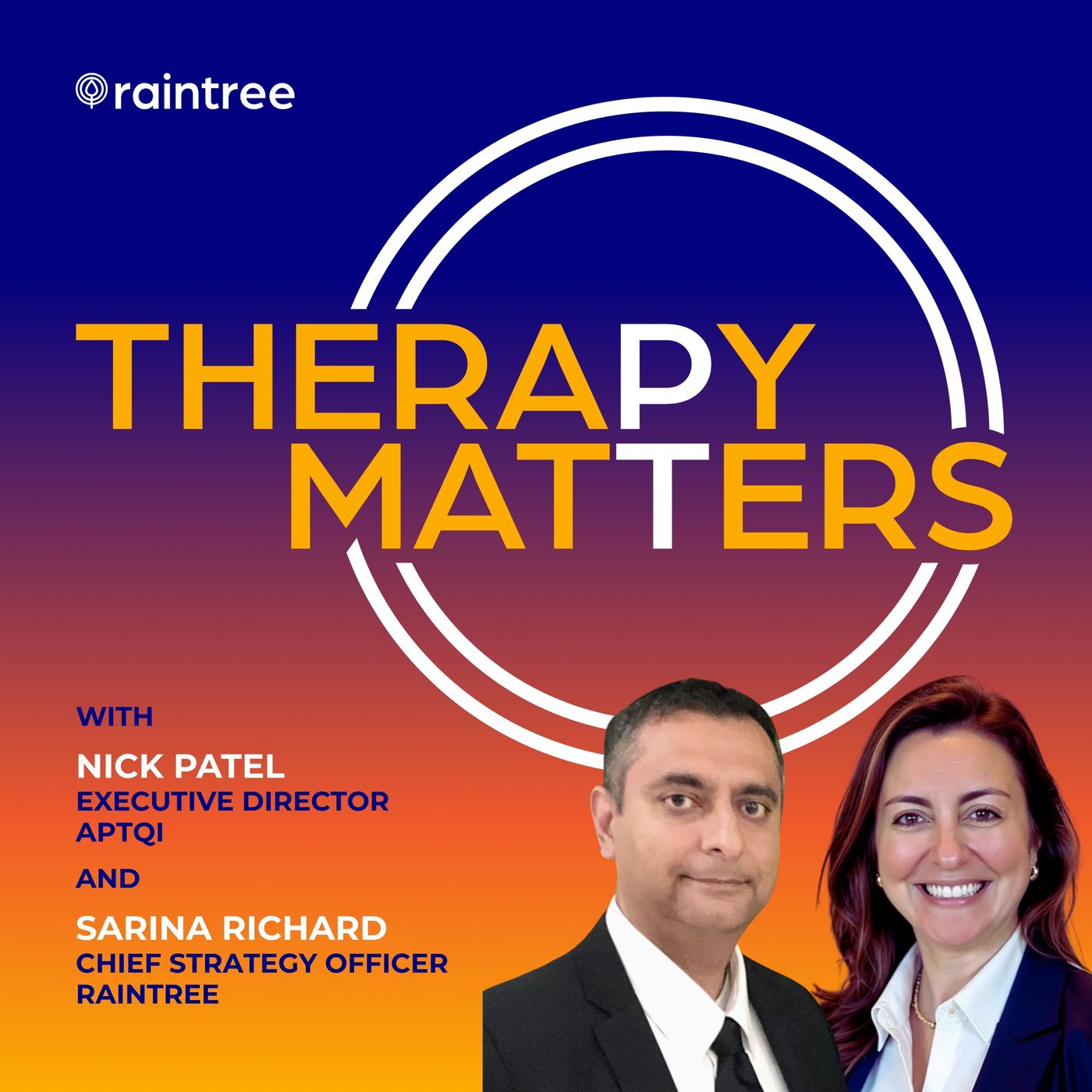


Nick Patel leads APTQI, the alliance of competing community-based rehab practices that used to regroup only when a crisis hit — a Medicare cut, a bad regulation — then quietly fall apart once the fire was out. He helped turn that pattern into something permanent: a standing coalition of 9,000 practice locations that pools research, clinical expertise, and lobbying power year-round.
His path into advocacy started with a torn ACL and an offhand comment from his own physical therapist that changed the direction of his career. In this episode, he traces that path from treating patients to representing them in Washington, and makes the case for why policy work can create impact at a scale clinical practice never could.
Patel recalls the first time he was asked to testify before a state legislature, prepping for the hearing during the short car ride from the airport. That early lesson — that meaningful change requires doing something scary — still shapes how he approaches APTQI's fights today, including a multi-year effort to correct a decades-old formula that has quietly suppressed therapy reimbursement compared to other medical specialties.
He also makes the case for physical therapy as a form of primary care, arguing that PTs already offer faster access than most physicians and should stop discharging patients the way a primary care doctor never would. Tying that ongoing relationship to measurable outcomes, he says, could reshape how payers see the value of therapy altogether.
Much of the conversation centers on the SAFE Act, legislation Patel has championed that would create a new Medicare benefit for falls-prevention assessments — and, more importantly, generate the first clean data proving therapy's cost-saving impact on the healthcare system. He walks through why that kind of evidence could be the domino that finally shifts how therapy gets reimbursed and regulated.
This is a candid look at what it takes to build sustained influence in Washington, and why hearing “no” is just part of the process.
Nick Patel
Executive Director, APTQI
Nick Patel, PT, DPT, serves as Executive Director of the Alliance for Physical Therapy Quality and Innovation (APTQI), where he advocates for laws, regulations, and payer policies that reflect the value of physical therapy. He also serves as National Director of Clinical Services and Regulatory Affairs for U.S. Physical Therapy. Patel began his career as a practicing physical therapist before moving into healthcare advocacy full time, and holds degrees from UT Health San Antonio and A.T. Still University. He has testified before state legislatures on issues affecting the profession and champions federal policy efforts including the SAFE Act, aimed at reducing fall-related injuries among Medicare beneficiaries. Patel is known for uniting competing outpatient therapy organizations around a shared advocacy agenda, building APTQI into a collaborative voice for the industry.
Connect with Nick Patel on LinkedIn
Learn more about APTQI
Follow APTQI on Instagram @aptqi
Sarina Richard
Chief Strategy Officer, Raintree Systems
Sarina Richard has spent twenty years as a Healthcare Technology Executive across the healthcare continuum, from operator to service provider to financier. At Raintree, Sarina oversees corporate strategic planning and leads cross-departmental initiatives to build best-in-class teams, systems, and processes.
Connect with Sarina Richard on LinkedIn
About Raintree
Raintree is the rehabilitation and physical therapy software of choice for enterprise and large therapy provider organizations.Discover why Raintree is the trusted EMR and practice management platform for the largest and most ambitious rehab therapy organizations in the U.S.
Request a demo of Raintree
Sarina Richard (00:03):
I'm Sarina Richard and you're listening to Therapy Matters presented by Raintree. Therapy Matters explores the ideas and innovations reshaping rehab therapy. Well, Nick, it's so great to have you today. Thank you for joining me on Therapy Matters.
Nick Patel (00:20):
Oh, thanks for having me. We've been looking forward to this. It's been a long time coming. I'm glad we were able to do it.
Sarina Richard (00:24):
Very excited that you're here. You are the executive director of APTQI, but before we get into that, you weren't always the executive director of APTQI, you were a therapist. So tell us about how you got started in the industry and why rehab therapy.
Nick Patel (00:40):
Like a ton of other therapists, I got hurt and went to therapy. I blew my knee out in college.
Sarina Richard (00:46):
Was it at least a fun story?
Nick Patel (00:48):
Not really. I playing football and got spun. I was trying to tackle someone.
Sarina Richard (00:52):
That's pretty fun.
Nick Patel (00:53):
Tore my ACL, tore my meniscus, had surgery. And while I was at UT, had a rehab while I was going to school. And I had this great therapist who at the time I was talking to her while I was getting my rehab and said, "I don't know really what I want to do it in my life yet. I haven't really figured out my major." And offhandedly, she said, "You should be a therapist then." And I thought like, "Well, why not? Let's look into it. " And I did and started me on my path. The more I dug into it and the prerequisites and the schools, I thought, "Yeah, I could do this and I'll apply and just see if I get in. If I don't, it's okay." And by applied, I got in and before I knew it, I was well on my way.
Sarina Richard (01:30):
Nice.
Nick Patel (01:30):
Yeah.
Sarina Richard (01:31):
And you haven't looked back.
Nick Patel (01:32):
I haven't looked back since.
Sarina Richard (01:33):
Yeah. So you did make a transition into more of the advocacy space. How did that happen? Were you always interested in advocacy work or was this something new?
Nick Patel (01:43):
Yeah, ironically, advocacy was sort of always my backup plan because again, when I was in school, by this time I was already in physical therapy school. And in the late '90s, the workforce underwent this dramatic change. When I entered PT school, it was, this is a great career. There's so many jobs, your salary's going to be great. And then while I was in school, the script just completely flipped and it was just going to be no jobs. It's going to be really hard to find employment. Salaries are being crushed. And so I started making my backup plan while I was in school. And for me, it was always, I joked about it and said, I'm going to go be a lobbyist and I'm going to lobby on healthcare issues and I'm going to go lobby for like AARP one day. And that was my backup plan in case I couldn't get a therapy job.
(02:26):
And I mean, luckily I did get a therapy job and things worked out okay, but it was always in the back of my mind that's what I like to do. There was a lot of things about politics kind of draw me in. And so yeah, it's always kind of been in my mind since before I even graduated.
Sarina Richard (02:39):
What is it about politics that draws you in? Because it's pretty polarizing. People either are - Oh, people hate it. Yeah. Just completely don't want to be around it, almost allergic to it. And then some people are all in. So what is it about it.
Nick Patel (02:51):
I understand that people hate it, a lot of people do. But what I like about it, it's like two things. One, everything in politics is designed to not get stuff done, but yet some stuff still gets done. And I think there's something appealing to me about something that's really hard to do, but yet there's a way to get it done. It's a little bit hard and you got to figure it out. Well, I like figuring things like that out. So that appeals to me. And then anything that is done via politics has this massive scale and this is massive impact. And I love that too. So if you do work finally through a problem and you do get something done, if you get it done in politics, it could affect not a couple people, not a hundred people. It could affect thousands, millions of folks.
(03:33):
And if you had a great idea, you're making the world a little bit better. And not many other things in our space have the effect politics could have on something. So that's kind of why I like it.
Sarina Richard (03:45):
It's a really hard problem. And when you win, you win big.
Nick Patel (03:49):
Exactly.
Sarina Richard (03:50):
Okay. Interesting. You mentioned something a second ago around how things in politics are not meant to get things done. Why do you say that and why do you think it's like that?
Nick Patel (04:00):
Well, there's just so many natural and made obstacles in getting things done. So first we have a two party system and things are not always like, "Hey, I think that's a great idea. I'm from the other side of the aisle. Let's go work on that. " There's this inherent like, "Well, if you like it, maybe I don't like it and vice versa." There's bandwidth issues. Everyone can have a good idea and maybe people in Congress or people in the government think it's a good idea, but they can only get maybe five or six things done this month or even this year and maybe your idea isn't actually one of those top five yet. That makes it harder because everyone only has a certain limited amount of bandwidth they can work with. And so a lot of this, you're just trying to get what you need done on people's radars and up the priority list.
(04:49):
And so there's just some built-in things that make it a lot harder. And then again, you have to have a consensus that's built in a system that sometimes people don't like consensus, some people don't like compromise. But again, these things are possible. It can happen. And when it does, it has tremendous impact, but there is this built in resistance to wanting to get a lot of things done. So only a few things get there.
Sarina Richard (05:11):
Do you think that's because there's just too much that people are focused on? We're unfocused on a set number of items. Everybody wants their own thing and no one's really aligned. So you've got a hundred different voices all asking for different topics.What do you think is really at the core of the inefficiency?
Nick Patel (05:32):
I think it's part of it. Everybody does have their own pet project. Everybody has their own pet issues that is maybe number one on priority for one person, another person. It's like, I see your point, but it's like number 50 on my list. And to get all those things to align is a chore. But I think the other issue is we have a system where getting things done sometimes isn't the objective, it's getting reelected and staying where I am. And so it's also a matter of where you put your priorities and where you put your energies. And sometimes the energies are placed on, I need to win my next election rather than get something X and Y done today.
Sarina Richard (06:08):
Okay. So Nick Patel, future president of the United States, how would you fix this?
Nick Patel (06:13):
I mean, look, I'm a big fan of term limits. I'll just say I don't think anyone should be in Congress for like 20, 30, 40 years. Again, if you're not worrying about the next time I have to stay here or the next time I get reelected, you're not constantly on the fundraising trail because you know that you're term limited. I think more stuff gets done. I think it's a simple concept, but why not? Why should someone be able to have almost a job for life? I think that's a bit strange.
Sarina Richard (06:38):
Okay. When you're up for election, let me know.
Nick Patel (06:41):
Yeah. And I'll be term limited. Yeah.
Sarina Richard (06:43):
So you're super energized and you can tell you're very electrified by advocacy, which frankly we need a lot more people like you. But what's been the most frustrating thing since you've stepped into this advocacy work with rehab therapy?
Nick Patel (06:55):
And it's nothing about the process that's been frustrating. It's that you find little things that as a therapist you don't realize till later that there's a different set of rules for therapists and that is incredibly frustrating. There's an example that I'm dealing with just recently has to do with our therapy codes and there's a certain formula that comes up with the value for our therapy codes through Medicare, which drives a lot of our payment. Lo and behold, some 20 some years ago there was a change and just the therapy codes were calculated a little bit differently, differently than all the other codes in the CPT.
Sarina Richard (07:33):
Why?
Nick Patel (07:34):
Who knows at this point because it happened such a long time ago and that suppressed our payment for almost two decades and talk about frustrating. So figuring this out now late last year, early this year, have had multiple meetings with CMS and HHS about this and it's like, oh yeah, yeah, we do that. Yeah, but it's like suppressing our payment and no one seems to remember why this happened and can we undo it? And it's super frustrating because it feels like these one-offs seem to always apply to therapy and you kind of feel picked on all of it. And I'm sure if you ask the radiologist or if you ask someone of these other professions, they'll say, "Oh no, there's stuff that happens to us too." And I'm sure they have their own frustrations, but when you're in it, you always feel like you're most frustrated about the things that seem to attack your profession and not knowing why it was in place in the first place, but then you just focus on like, Okay, well, how do we undo it? And then create the impact that way.
Sarina Richard (08:26):
Yeah. And I think that frustration, which then turned into your, which you are a problem solver by nature clearly really was one of the reasons that you guys started APTQI. So walk us through those moments of when you realized that there was a need to create something bigger, to galvanize people in the industry around a single focus.
Nick Patel (08:48):
There was this, and this was probably about 12 years ago or so now, there's this sort of feeling amongst the outpatient providers and really APTQI is all about the office space or outpatient space that we really don't have that big a voice like we need to. And there were problems in the past that would pop up over time and the outpatient companies sort of all get together and say, "Oh, NPPR is hitting us. What should we do? " And they get together and try to come up with ideas and then they kind of fall apart. And then the next problem would hit and they would all get together and then would try to do some things and it would kind of all fall apart. And there was this concept that like, what if we just stayed together? If we come together and actually stay together and create a lasting voice for the outpatient world and for the interests of operators who are trying to navigate this environment and the future environment that we're all going to go through, what if we just created that and solidified that?
(09:43):
Let's pull resources together. And that was the main thing too. It wasn't sort of like, let's just come together and come up with some initials and move on. It was, if you pull all our companies together, we have some of the best research minds, operational minds, clinical minds. Surely there's so much value in this stuff. Absolutely. It can be nothing but positive. So that's really kind of how it came about was let's stop falling apart and see what we can do if we get together, stay together, pool our resources and realize there's this recognition, which I think is awesome, which is whatever is good for one company is going to be good for all of us. So we're competitors, but we cannot check that out the door.
Sarina Richard (10:22):
Yeah. It's so fascinating because in most other industries, healthcare in particular, if you're competitors with one another, you guard your secrets like the Coca-Cola formula. Yeah.
Nick Patel (10:31):
Right.
Sarina Richard (10:32):
There's something about APTQI where you have these direct competitors who are in their markets at home fighting for talent, fighting for patients and they come into the APTQI room and they are sharing their trade secrets, they're sharing information about how they've built their businesses, financial numbers. I have never seen anything like it before. What do you think is it about APTQI that allows that?
Nick Patel (10:58):
I have no idea. If there was a way I could bottle it and sell it, I probably would. We get together once a month on a Zoom call and leaders from all of our members, yourself, we all get on and again, we just talk about what can we do to make therapy better and what we're working on. And I can't think of another... Forget inside healthcare, I can't think of another industry that does that. I think part of it is therapy's a small world and a lot of our execs go way back through maybe different past lives and have crossed paths before. Worked at the same company. Worked at the same companies and maybe came up together. But also, I mean, I'd probably be biased, but we just have some really good quality people in our group, people who can see the big picture and who, again, who know we can compete every day of the week when we're in this room.
(11:42):
It's better for all of us if we work together and collaborate and try to make each other better. I don't know if there's a more quality group of people that I have been around in my life and you've been in the room and I include you with this. We have people that just care deeply that have really immense professional knowledge and then they just want to, again, get stuff done. And that's like the missing ingredients sometimes.
Sarina Richard (12:04):
Yeah. I wonder if it's a lot of those people in the room, all those CEOs and C-suite, they started as operators. So they started from the ground up. They started as therapists, they built their first clinic, then they grew to three, then they drew it right. And it's that same type of story of from the ground up. And it doesn't leave you. And it doesn't leave you. And I think you have to be very mission driven to be in this space too, because you could be making a lot more money with going to be a surgeon, but you choose to do this. So I think there's something very special that if you get that, then you get it.
Nick Patel (12:40):
I agree. Yeah.
Sarina Richard (12:41):
Well, you've done a phenomenal job building and growing one of the very few platforms where competitors are actually aligned, engaged and super collaborative with one another and this unique platform creates some real potential to drive change. There's a big opportunity there, but alignment only matters if it's focused. So what's the one issue the entire industry should be obsessed about? What's the one thing that we should be fighting for or against together?
Nick Patel (13:12):
I mean, again, you could always take your pick and I know whatever you pick, there's going to be someone else says, "No, no, X is more important or Y is more important." But to be honest right now, again, for us it's payment is probably one, you want to call it 1A or whatever, it's fine, but payment drives so much of everything else. I think to a T, every one of our members firmly believes that therapists are underpaid and that in itself is a tragedy, but look at what it's causing. And you talked about people could be physicians and they could be surgeons, they make more money, but we still choose to do this, but that choice is becoming much harder over time because of the commitment and time you have to put in the school to do your training. If you're going to come out the other end with 100, $150,000 - So much debt and you can't service that with the degree that you have, you're going to end up over time having people who just choose not to go into it in the first place.
(14:05):
And so the payment directly leads to what other people complain about, which is workforce, leads to other people talk about is access in the rural areas. Well, if you can't really make it a go, I can't open up that clinic in that rural area. So to me, when you talk about focus, when you talk about where your attention is -
Sarina Richard (14:20):
It's the beginning of the domino.
Nick Patel (14:21):
It's the beginning domino that everything else kind of stems from. So I want therapy to be at a point where it's not the worst risk reward degree in the healthcare space for someone who is 21 years old about to try to go to grad school. And I think that part of it making it more appealing to that person is to say, no, your salary is X and yes, you can support your debt by pursuing this path. Obviously, I do think that the cost of attending school is kind of outrageous too, and that probably should come down, but also the reimbursement and the payment needs to go up to find some kind of happy medium.
Sarina Richard (14:56):
Yeah, to incentivize people to go into the profession but stay.
Nick Patel (14:59):
Exactly.
Sarina Richard (14:59):
Yeah. So how does that get fixed? So you spend a lot of time on the Hill and it feels slow. Is there a fast path or is this just the way it's going to be?
Nick Patel (15:12):
If there's a fast path, I haven't found it yet. It's not for lack of trying. There could be, but like I said, it's multi-pronged. So a lot of it is trying to dig into 20 variable equations and figuring out where along the path is therapy treated differently, or it's changing inputs into the system to say, "Hey, if we change these inputs that haven't been updated in 20 years, maybe we end up with higher payment." But that's one side and that's like advocacy through Medicare, which I know drives a lot of fee schedules, but then think about the other path of private insurances. And we have a lot of therapists now that more than I have seen ever in my lifetime start to just say, "I'm not taking that contract." And in APTQI, we don't encourage or discourage people from anything, but I'm just saying as an observation, what I'm seeing right now is saying, "Hey, that $60 rate, I'm losing money on every visit." Yeah, I'm not cutting it.
(16:07):
I'm not doing that. And you know what a lot of them are saying when they come back, they say, "The minute I said that, all of a sudden they come back with a higher rate than what two months ago they told me it was impossible and they can't do it, but now I'm threatening to leave and come back." And that's just increased your payment from just kind of taking a stand. So there are some things that can be done, but to be honest, some of them will just walk away and say, "Fine, you don't want it, leave it and we'll find someone else to take it and that's fine." But I think there's things that on every side of the issue that a practice owner can look at and say there are some things that are in my control that doesn't require quote unquote an act of Congress to make things better.
Sarina Richard (16:43):
Yeah, that's a good point. It's setting the right precedents with the contracting and not taking the lower rate just because you think that's your only option.
Nick Patel (16:51):
Yeah, because it's scary.
Sarina Richard (16:52):
That is really scary because if you say no, are you going to lose a certain group of your patients? Is that going to cut into your revenue that you could be making because now patients won't go to you, they'll go to Joe across the street because they do take their insurance. And I'm sure it happens, so you just have to be a little bold, sounds like.
Nick Patel (17:09):
Exactly. You have to do something scary. Everything that you ever want out of life is just on the other side of fear. Oh, I like that. That what I tell myself every day. And sometimes the most scary thing is the thing that you need to do because just on the other side of it is exactly what you want.
Sarina Richard (17:24):
Yeah. What's the scariest thing you've done in this profession?
Nick Patel (17:28):
I think probably tons of stuff clinically that probably shouldn't have done.
Sarina Richard (17:34):
That's another time.
Nick Patel (17:35):
But that's all there. In my second life as an advocate, the very first time I was told, and I think this was maybe 2004 or so, my boss called me and we were in Texas at the time and Texas had completely blown up its work comp system and they were just starting it from scratch. And I get a call and they said, "By the way, can you go to Austin tomorrow? I need you to testify in front of this house hearing on therapy's place and work comp." And I was like, "Okay."
Sarina Richard (18:12):
So many words in that are scary.
Nick Patel (18:14):
And I'm literally in the clinic. I remember getting the phone call. I'm in the clinic and I hang up the phone. I'm like, "Okay, I'm going to Austin tomorrow and I don't know what to say." The lobbyist picks me up from the airport and my prep is the drive from Austin Airport to the capital, which as you know, is not that far. And the whole time she's shoving all this information in front of me and I'm like, "I think I got it. I think I got it. I think I got it. " And I go there. And it was very scary, but what I wanted was just on their side of it. All of a sudden I started doing this more and more and that was for that first step in to professionally advocating and pushing therapy and pushing for changes in therapy.
Sarina Richard (18:50):
So PT as primary care is compelling, but it's a pretty controversial topic. Could it ever be real that PT would be considered primary care for musculoskeletal or will it always just be an aspiration? And why should the system believe it and what would we need to change, particularly around outcomes and value to make that claim credible?
Nick Patel (19:15):
It is controversial, whether it's realistic or not, there's going to be a great paper. I think it's already out or it's about to come out, which I'd recommend folks read on defining primary care for PTs, but here's how I look at it. There's certain things you need to be a primary care provider and some of that stuff therapy has already in spades and some of the stuff we don't have yet and we have to make that decision if we want to be able to do that. So on one side of it, you have to be able to serve as the initial contact into the healthcare system for a patient. Can we do that? Well, legally, I think we can right now and almost pretty much every state there's direct access for a patient. You can come in, you can see them. And so we can check that box sort of.
(19:55):
Maybe it's a question whether or not whether your insurance will cover it. And I don't believe that if you do something, it should only be for cash pay folks, so maybe that's a box that hasn't quite checked yet. But then here's one that I think we have in spades is are you easily accessible to the patient for when they need you? I think we excel in this area for as busy as therapists are. I know that when you pick up the phone, APTQI represents 9,000 practice locations, you probably call any one of them and you say, "Can I get an appointment? I have a problem." You're going to be given, if not the same week, an appointment slot at least offered to you within 48 hours. If you call a primary care physician and say, "I have a problem and I need to make an appointment," I don't know weeks, months is not out of the question.
(20:37):
I mean, what's the point of going to someone two months from now if you have a problem right now, right? So to be a true primary care road, I think you have to be easily accessible, but I think we can check that box. And then you got to see patients with conditions that they've already hurt themselves or they need something that's going to prevent them from hurting themselves. Well, I think we do great. Again, we have a great track record of see patients after they've already encountered difficulties or dysfunction or hurt themselves. I think we need to do more promotion on our preventative abilities. And I'm not saying we can't do it, but I'm saying people and no one knows that about us. And so why SAFE ACT I think falls into that preventative screening assessment type stuff. I think we need to be able to do that a little bit more.
Sarina Richard (21:17):
What is the SAFE Act? Tell us what that's all about.
Nick Patel (21:18):
SAFE Act is a bill that APTQI has championed that simply put, creates a new benefit for Medicare folks that says once a year you're eligible for a fall risk assessment done by a physical or occupational therapist that's aimed directly at not only seeing what your risk is for fault, but actually providing you with something that will decrease your fall risk. Maybe it's a home program, maybe it's starting a whole plan of care, whatever it is, but to address that for Medicare beneficiaries because it is an enrollment cause of death and injury for people who are 65.
Sarina Richard (21:47):
And just is a gateway into so many other issues.
Nick Patel (21:51):
It's losing your independence. Yeah. It's being prescribed opioids that possibly you get addicted to. Yeah. The dollar cost that we put into this and everyone's saying that we spend too much on healthcare and everyone's saying that we spend way too much on treatments that don't need to happen and duplicative services and things like that. But think of putting a dent in the $50 billion a year we spend on falls. That's every year. Just from falls. Just from falls. So instead of like cutting the fee schedule to save money on what we spend, we could just like prevent some of the falls and we'd all be better off.
Sarina Richard (22:25):
And the patient will also maintain their independence, right? Extend their life potentially.
Nick Patel (22:31):
Exactly. Or just the quality of life be much better. I mean, there's no patient I ever saw who was over 65 who's, you get to know them a lot as a therapist, but the number one fear for people over 65, it would always be one of two things. I want to age in my house and I don't want to be a burden on other folks. And the fall is usually the gateway to unfortunately both of those not being achieved.
Sarina Richard (22:51):
Yeah. Fascinating. Okay. Well, back to primary care.
Nick Patel (22:55):
Yeah. So the other thing that I think we need to do a better job of is the primary care provider has to be a little bit more like collaborative and integrated into the system a little bit. I think we need to do a better job of communicating. If you're going to be the initial point of contact, you've got to be able to communicate to other members of the healthcare team, "Hey, I need you to see this patient or whatever."
Sarina Richard (23:15):
So interoperability is required there.
Nick Patel (23:17):
Yes, absolutely. We just don't have a track record of that. Not that we can't do, just haven't. And then the last one, and I'm going to evoke, you're not good friend, Anthony Gukaferni, this concept of like you never really discharged patient, right? Yeah, that concept. You have this relationship with your patient that is not based on a single case that happened once in some span of time and then I discharge you and you're gone away. Your primary care physician never discharges you. If you want to be someone's primary care provider for musculoskeletal dysfunction, you shouldn't really discharge them either. So you should have sort of this perpetual relationship with your patient that is whenever you have an issue, main appointment, come see me. I'm not going to open up a case and discharge a case. I mean, every operator out there knows that their biggest hassle when a therapist leaves and three months later figuring out they didn't do their discharges and then you have to go to another provider who works in that clinic and say, "Hey, by the way, Serena left and she left 300 discharges.
(24:12):
Can you go into Raintree and do all those discharges for me? " And the patient hasn't been seen in like six months and it's paperwork, right? Why are we doing it?
Sarina Richard (24:19):
Yeah, that's interesting, especially because that relationship is so intimate and you're seeing them more than once. So with a primary care physician, maybe you see them once a year - Once a year, maybe. That's fine. But you're seeing your PT eight to 12 times at least once a week.That's a real relationship where-
Nick Patel (24:38):
And you don't discharge it. I don't stop being your provider when you leave because I've signed a piece of paper because you should know when you leave, you can come back. Last time was your shoulder, but now it's your low back. Call me.
Sarina Richard (24:50):
But even before something happens, right? So you know so much about that patient's life because they're sharing so much in those eight to 12 visits. Oh yeah. So you know if they're going to go on vacation, if they're about to go do something that could end up in an injury and you could say, "Okay, well let's prepare you. " There's so many different use cases and you're also really close with their family and their support system. So it's not just this person on an island, it's their entire ecosystem that you've gained the trust of, which is very unique.
Nick Patel (25:18):
Yeah. It's the one reason that I think the episodic nature of therapy really lends to you building very healthy relationships with folks. And I think that's why therapists in general, we have very high satisfaction scores. We have very high net promoter scores in a lot of our clinics because people just build a long lasting relationship.
Sarina Richard (25:37):
Personal relationship. Oh yeah. No, my mom, who she will describe herself as a workout dropout, she goes to PT and she feels guilty if she doesn't go because she's like my therapist. She makes me feel so good about myself and I don't want to make her sad because I don't show up. I don't want to disappoint her. Well, I don't think that she'll be disappointed, but this is really for you, but they have built such a special relationship and for someone who never likes to do anything, like the fact that she's maintained this relationship with her PT is just brilliant and so special. Okay. So this concept of you should never have a discharge in PT, is that industry driven or is that like at a national level? Who really drives that concept?
Nick Patel (26:20):
Again, you ever had the thing of it's always been that way, right? I mean, I have to crack open every State Practice Act to see if there's like a discharge requirement in a state practice act. But if there was, how hard it would be to say that's kind of outdated, right? We should probably try to look at removing that. But it's one of those, it's a habit that has not been broken for X number of years. It's sort of been that way, which is fine, but if you want to move into a new world or a new paradigm, again, you have to do some things that are scary and it might be scary to give away that discharge or do something different or come up with some workarounds, but it is how you adapt and it's how you grow as a profession. And even though you would like to say that things never change and you're comfortable if you want to achieve everything you're supposed to, you may have to look at what you can change internally.
Sarina Richard (27:12):
I wonder if there is a connection to the outcomes and the improvement in the patient that would help, because I think with PT, because it spans over a certain number of treatments, so eight to 12 or whatever it is, you can see where the patient started and you are tracking their progress across each of those days and most of the time it goes up, right? It improves. And so I wonder if you have a certain baseline, if you have a certain goal, even if you do meet that goal, there's always another goal, right? There's always more improvement you could make in a body. So I'm wondering tying that more to outcomes if that would help quantify the value of no discharge.
Nick Patel (27:55):
I mean, I think you're onto something. I think why not? I mean, you're putting down into numbers and objective data what the patients usually tell you how they feel, but now we just have the ability to collect so much better data on it. Why not?
Sarina Richard (28:07):
Interesting. Okay. So we're advocating for PT to sit across the full patient journey and we're also frustrated that payment does not reflect the value that we provide. So the disconnect is that payment doesn't reflect our value, but the system won't pay for value until it sees that value. So we're stuck in this continuous loop. So help us break it, connect the dots. What's the bridge between seeing and then valuing PT differently? Is there a call to action here that we should be pushing for?
Nick Patel (28:39):
Now I'm going to throw back to SAFE Act a little bit because that is the exact, one of the reasons besides solving this problem of falls that we actually started going down with SafeAct because you have to recognize, yes, do we save money to a system? Absolutely. Every time someone who sees their therapist who ends up saying, "You know what? I don't think I need surgery is a savings." And we know that happens every day across the country, but those savings are now built into the baseline, like it's happened. And so the current bag of cost that our healthcare system incurs includes all those things that you've done. So you're trying to show that you save money, but the pie is sort of already calculated. And so the best way to show that you are a value driver is to introduce something new that is not in the baseline already, that has not been already enjoyed by the fee schedule.
(29:34):
So the SAFE Act introduces a completely new therapy benefit that is just for therapists, only PTs, OTs would do this assessment and the bill actually has a second clause in there after it talks about instituting this new benefit. The second clause in it is, "Oh, by the way, you'll be able to figure out which patient's got this assessment. They'll put a claim like modifier on it or whatever." And so the government, after this has been put into effect, my Must on a yearly basis, HHS must furnish Congress the report on what happened to the folks who got this fall risk assessment and compare them to the ones who didn't. And let's say, were you readmitted to the hospital? Did you have ER visits with diagnosis codes that are associated with falls? Were you prescribed and filled prescriptions for opioids and et cetera, et cetera. You and I both know what's going to happen when we start doing that.
(30:27):
And when you can create a delta between, okay, the folks who got this new benefit from therapy and the only benefit was a therapy benefit and we did have savings. Those savings can be directly attributed to the therapy intervention. It's not rolled into baseline yet. These are new savings that have never been enjoyed by the system before. And so that is another reason that we're pushing SAFE Act so much because now you're getting data that shows that when you have an expansion of a therapy service that has never been used before, you are actually going to spend less dollars and that can be calculated. More importantly, that can be booked as savings. And it will hopefully just be a hop, skip and a jump from that too. Well, what else can we do with it?
Sarina Richard (31:09):
Right. There you go. And the outcomes of the patient are also going to look better.
Nick Patel (31:13):
Exactly.
Sarina Richard (31:13):
You can just tie all of those things together.
Nick Patel (31:16):
Yeah. One fall, the average fall costs our system and medical costs about $10,000.
Sarina Richard (31:22):
That's crazy.
Nick Patel (31:23):
That's ambulance rides, prescriptions, physician visits, potentially up to surgery. The whole gamut's available. So being able to show -
Sarina Richard (31:32):
And how often does a fall happen?
Nick Patel (31:34):
Yeah. One, three, four seconds.
Sarina Richard (31:36):
I mean, so that's why that $50 billion, that's how you get there.
Nick Patel (31:39):
It happens a lot. And it doesn't take much for you to say, "Well, we stopped 5% of falls," or whatever. It's going to be a huge financial impact.
Sarina Richard (31:47):
Yeah, I love that. And so do you think that that is going to be the starting domino to then create real change when it comes to reimbursement and how therapists are valued eventually?
Nick Patel (31:59):
I think it's as good as place as I need to start because again, the data will be clean. You have the data. The only new thing we interjected into this system was a new therapy benefit and now let's look at the cost.
Sarina Richard (32:09):
What else can we do?
Nick Patel (32:10):
Exactly. And now it's like, okay, well, anything that comes through is attributed to therapy. What else might happen here? What if we let them do this and what if we let them do this? And what if we gave them some more autonomy here or maybe we took off a restriction here. Maybe we shouldn't have pre-auth requirements for therapy if it's actually the lowest cost value driver. We should have pre-auth for the more expensive treatments, not the treatments that are actually more value oriented.
Sarina Richard (32:33):
Yeah. Is that where you would go next? What would be, let's say when you get the Safe Act passed, because you will, I believe in you, what would be your next thing to go for?
Nick Patel (32:43):
I mean, yeah, if you get that and you get data that shows what we believe it will, the sky's the limit. But yeah, it would be what obstacles do either payers or insurance companies place in our way that if you remove them and encourage the use of therapy rather than always trying to gate keep it and discourage it, can you remove because you can show that when you decrease the barriers to therapy, you're going to get better results. I think that that is going to be a huge point of it. Not necessarily because we're hurting for patients or because, oh my God, we have clinics that are dying. Honest to God, volume at most clinics is healthy right now. And that's great and I love it. But on the providers and the burden for things like pre-auth, for things like filling out portals and getting permission and having someone who is total hip replacement post and you get like authorization for three visits at a time when you know they're going to be there for more than three visits, it's just -
Sarina Richard (33:37):
Nonsensical.
Nick Patel (33:38):
Nonsensical and it wastes time. It takes time away from patients. You spend money and time for someone to sit on the phone and call and check that and do portals that they could be doing other things. Why are you wasting resources on that?
Sarina Richard (33:49):
Well, Nick, we are so lucky to have somebody who leaned into the difficult conversations, the fear of being on the Hill, the advocacy work because somebody with your energy and enthusiasm who doesn't get bogged down by people saying no, who's always trying to find the new path, who's a problem solver at heart, that is who we need leading the charge for us. And I couldn't think of a better person who also is a therapist that understands deeply why this is so important. Thank you for sharing all of your ideas and values with us. It's been super inspirational and eye-opening for me to have you on here. So I really appreciate your time.
Nick Patel (34:31):
Well, that means a lot because you belong at DC. I've taken some note to DC multiple times and you're very good at it.
Sarina Richard (34:39):
It's really scary.
Nick Patel (34:39):
No, but you're very good at it.
Sarina Richard (34:42):
Thank you.
Nick Patel (34:42):
And we just need more people like you who can go there, can articulate what they're trying to say and make a connection with folks. And I know you said you hear no a lot and you definitely do if you're an advocate. But one thing I say is in my head, when they say no, in my head it just turns into like no today, not today. Doesn't mean no. It just means like, okay, but tomorrow might be different. So in my head, I just take it as just means no for now.
Sarina Richard (35:08):
That's exactly why your perseverance is perfectly set for it. Well, thank you for leading us in APTQI. I really feel like we're getting somewhere and it really is thanks to you and your dedication and devotion. So appreciate you having you on today.
Nick Patel (35:21):
Thanks. Appreciate it. It was fun.
Sarina Richard (35:22):
Thanks, Nick. Links to learn more about Raintree Systems and anything else mentioned on today's show are available in the show notes. To learn more, go to therapymatterspodcast.com. Follow Therapy Matters on YouTube, Apple Podcasts, Spotify, and anywhere you listen to podcasts.
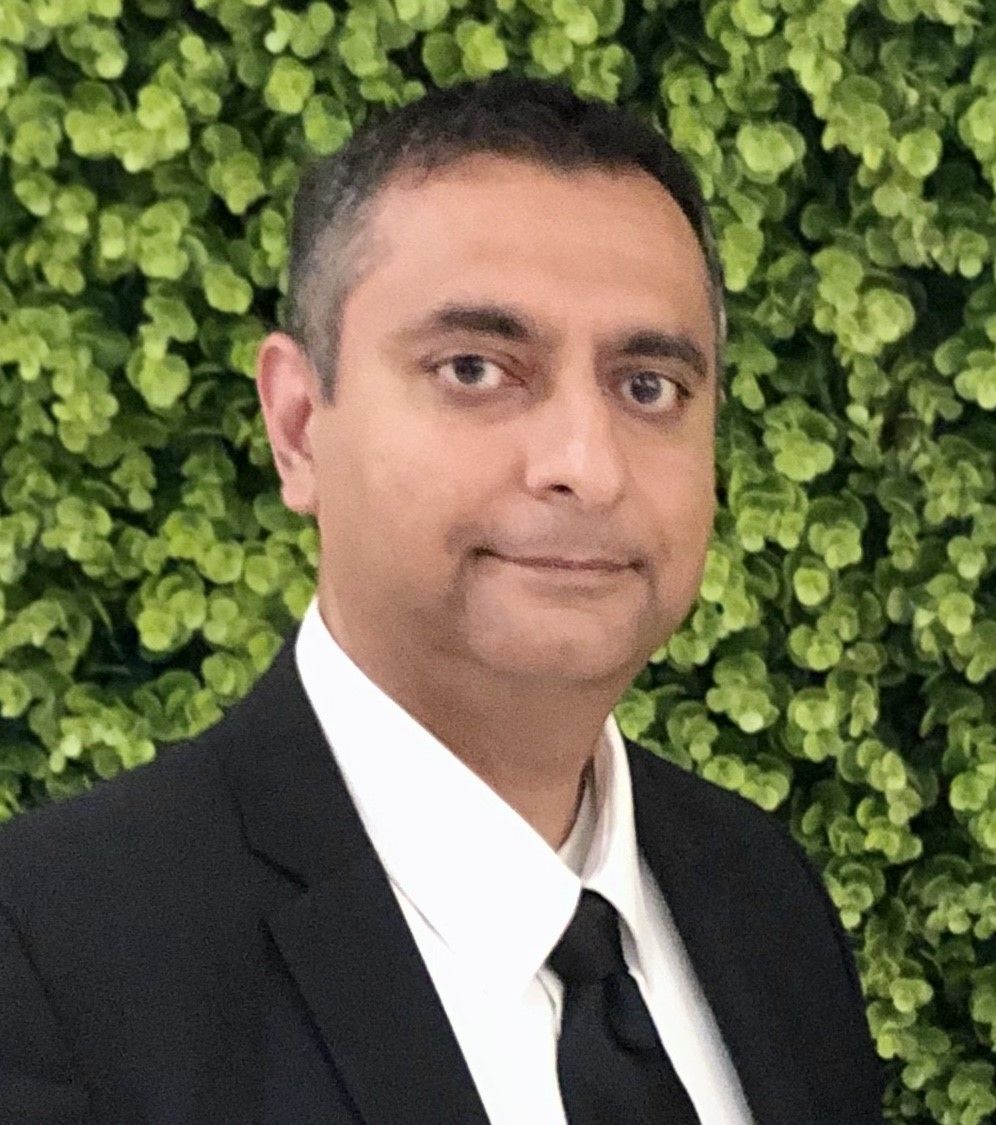
Nick Patel, PT, DPT, serves as Executive Director of the Alliance for Physical Therapy Quality and Innovation (APTQI), where he advocates for laws, regulations, and payer policies that reflect the value of physical therapy. He also serves as National Director of Clinical Services and Regulatory Affairs for U.S. Physical Therapy. Patel began his career as a practicing physical therapist before moving into healthcare advocacy full time, and holds degrees from UT Health San Antonio and A.T. Still University. He has testified before state legislatures on issues affecting the profession and champions federal policy efforts including the SAFE Act, aimed at reducing fall-related injuries among Medicare beneficiaries. Patel is known for uniting competing outpatient therapy organizations around a shared advocacy agenda, building APTQI into a collaborative voice for the industry.