Building a Forever Company in Physical Therapy


Forty-one years in, the chairman of one of America’s largest publicly traded rehab operators still runs his playbook on a single principle: people. Chris Reading leads U.S. Physical Therapy from Houston, oversees more than 800 clinics across 40-plus states, and started his clinical life treating ACLs and complicated shoulders in Virginia.
What separates USPH from the rest of the consolidation conversation is structure. Where private equity buys with the intent to sell in three to five years, Reading describes his company as a permanent home for the local entrepreneurs it partners with — same ticker, same balance sheet, no recap on the horizon. Sarina Richard asks him what that model actually changes for a partner, and what it asks of the leader sitting in the chair.
Reading walks through how he scaled culture across hundreds of markets without flattening it. Local partners shape what their market culture feels like; the foundation stays consistent enough to avoid friction. He is also direct about the cost of getting it wrong, including why he eventually left HealthSouth and brought the best of his old team with him.
He also tells the origin story of APTQI — a single phone call about an AMA/APTA coding initiative that would have rewritten how outpatient therapy bills and codes. The meeting at NCAA headquarters in Chicago that followed became the seed of an industry coalition that now keeps fierce competitors at the same table for the greater good.
On reimbursement, Reading argues that small practices accepting low commercial rates set the floor for everyone, and shares the Richmond case-rate story where he kicked out the negotiator and his biggest competitor took the deal and nearly broke itself trying to honor it. He also makes the case for physical therapy as musculoskeletal primary care, and for why the profession cannot wait another 41 years for the system to catch up.
If you are weighing whether to sell, partner, hold the line on a contract, or rethink how your clinic shows up in the local healthcare ecosystem, Reading’s 41-year view is an hour well spent.
Chris Reading
Chairman and CEO, U.S. Physical Therapy, Inc. (NYSE: USPH)
Chris Reading is chairman and CEO of U.S. Physical Therapy, Inc. (NYSE: USPH), one of the largest publicly traded operators of outpatient physical therapy clinics in the United States. He joined USPH as chief operating officer in 2003, became president and CEO in 2004, and was named chairman in 2024.
Under his leadership, the company has scaled to more than 800 clinics across 40-plus states through a partnership model that keeps local operators in control of the businesses they built.
Before USPH, Reading spent more than a decade at HealthSouth in operations and senior leadership roles spanning rehab, ambulatory surgery, imaging, and rehab hospitals. He graduated magna cum laude from the Medical College of Virginia in 1985 and is a co-leader of APTQI, the industry coalition he helped form to advocate for outpatient rehab providers in Washington.
Connect with Chris Reading on LinkedIn
Learn more about U.S. Physical Therapy
Sarina Richard
Chief Strategy Officer, Raintree Systems
Sarina Richard has spent twenty years as a Healthcare Technology Executive across the healthcare continuum, from operator to service provider to financier. At Raintree, Sarina oversees corporate strategic planning and leads cross-departmental initiatives to build best-in-class teams, systems, and processes.
Connect with Sarina Richard on LinkedIn
About Raintree
Raintree is the rehabilitation and physical therapy software of choice for enterprise and large therapy provider organizations.Discover why Raintree is the trusted EMR and practice management platform for the largest and most ambitious rehab therapy organizations in the U.S.
Request a demo of Raintree
Sarina Richard (00:03):
I'm Sarina Richard and you're listening to Therapy Matters presented by Raintree. Therapy Matters explores the ideas and innovations reshaping rehab therapy. Chris, thank you so much for joining me today on the Therapy Matters podcast. It's really good to have you here.
Chris Reading (00:23):
Thanks, Sarina.
Sarina Richard (00:24):
Love to talk to you about your background and there's so much about you online. You're a pretty famous person, chairman and CEO of US Physical Therapy, but I'd love to know how you got started. Why rehab therapy?
Chris Reading (00:38):
Gosh, this story goes back a long time. So this is actually my 41st year.
Sarina Richard (00:46):
Congratulations.
Chris Reading (00:47):
A long time. I grew up in a small town and I was in high school and working at a gym. I loved to work out. I was in a gym from the time I was just a kid and I loved sports and I loved athletics and physiology and anatomy. I had a friend who was actually a really young guidance counselor and we worked at the same gym. We worked out together. His name was Dan Bender and really good guy. I made a list of all the things I like to do and I said, "What's a job where I can do all these things?" And he looked at it and the first thing he told me was athletic training, which I got an opportunity to do too over time. I said, "That sounds perfect." And then I found out that back in 1980, 81, athletic trainers could make $12,000 a year.
(01:41):
I said, "Okay, that's not going to work." I said, "What's something else?" And he said, "Physical therapy." And I said, "I don't really know anything about it. " But I knew somebody who was a therapist and so I got in touch. I found out you needed to do volunteer work so I did that and I fell in love with it and that's all I wanted to do from that point forward.
Sarina Richard (02:04):
What is it about rehab therapy that keeps you motivated and excited and inspired?
Chris Reading (02:11):
Sarina, the part that I always loved was the impact it has on people. Some of my best friends in my life are an extension of people that I treated in the clinic. In some cases I treated them personally, in some cases I treated their parents or I treated kids and then got to know the parents. It's just been really special. And so that's the part, the relationship part where you really spend time with people that always gravitated to. And for me, the science was cool and the intervention was cool, but the connection with people was always the part that drew me in probably the most.
Sarina Richard (02:58):
And was there something that wanted you to move into the operations, the business side?
Chris Reading (03:03):
There was nothing in me that wanted to move into the operations and business side at the time. It's kind of a funny story. So again, this goes back a long ways. This was back in 1990. The clinic that I was part of and I was a partner in was sold to HealthSouth and we were I think the 23rd clinic in HealthSouth ultimately in their 2000 clinic networks. It was really early. I'd never even opened a computer before back in 1990. I don't think we had one at home yet. I didn't know much about business other than grew up around the family business, but I wasn't the person driving the train in that sense. What I was good at, however, was surrounding myself with really good people and I had great team. And so I figured I could learn the rest of my own. I loved being in the clinic, but there was a point in time where I began to be a little bit bored and I had a boss who didn't like to travel at the time and we were buying a lot of things and he asked me to do him a favor and go to the Northern Virginia and turn this business around that we had bought that wasn't doing very well at the time.
(04:28):
And it just came at the right time. And I said, "Well, I don't know if I can, but I'll try." He said, "Just do what you've done with your practice." And I said, "Okay." And so we got that turned around in pretty short period of time. And then some months later he came back and there was a big acquisition we'd done in Baltimore, lots of clinics right around the time that capitation started. And these clinics went from at the time we bought them making a lot of money to losing a million dollars a year. Dan asked me, he said, "I need you to do me another favor." And at the time we had had young kids, we had a couple at home I think at that point. And I said, "I really don't want to be away. I don't think I want to do it."
(05:22):
And he said, "Look, this will be the last time." He said, "But if you can do this, this is really important."
Sarina Richard (05:27):
Famous last words.
Chris Reading (05:28):
Famous last words. And so I went up, I met Gary Katz there. Gary was a very young man, but very, very talented. I met Darryl Gotwalt there who's on my team today, 30 years later, 35 years later. I made a bunch of changes, put Gary in charge at a very, very young age and he was phenomenal even back then. We got it turned around and it went from losing a million dollars a year to making a million dollars a year and being stable. And it was somewhere in that period of time where it became interesting and fun.
Sarina Richard (06:09):
You got the bug.
Chris Reading (06:10):
Yeah. And I said, "I think I can do this. " And so I said, "What else you got? Give me something else that's hard." And they did and it just began kind of the journey. I guess God had a plan and I didn't have a very good plan other than I wanted to be a therapist, but the rest kind of came organically.
Sarina Richard (06:36):
Yeah, there's definitely a natural leadership drive that you have and that turned into a playbook that worked and a lot of leaders like yourself will breeze over. Well, I did a couple and then I look back and now I'm CEO and there's so much that happens in that interim. Do you have any highlights of your playbook over those years of things that you know worked really well or things that you know don't work well when you're going into a new clinic to turn it around?
Chris Reading (07:07):
For me, it's all about people and culture. It's always been that way. And it was interesting because I worked for a company where they had figured the people part out. We had fantastic people at HealthSouth. They got the culture part wrong, very, very wrong. Now it was interesting at that point that good people could still navigate. The company was moving so fast that they let those of us who were doing well, they left us kind of alone, which was great. The corporate culture was very toxic, but we were able to create our own individual cultures in our region. So I had about a 10 state region and ultimately had everything from rehab to ambulatory surgery to imaging and had a couple rehab hospitals. For me, it was always about having the right people in the right place and creating relationships that were built around trust and just getting after it and taking care of those people over time, even when it was difficult.
(08:17):
The reason I left was because I could no longer count on being able to do what I said we were going to do or to take care of people the way that I knew we should take care of people. And I got to the point where I just said, "I can't do this anymore." Ultimately, we brought over the best of the best people I brought to US Physical Therapy over a period of time. That in and of itself was a journey because a lot of people scattered and then they had non-competes and then you have to wait until you can figure that all out. But it worked out great and I've been very blessed.
Sarina Richard (08:57):
Do you think culture drives people or people drive culture?
Chris Reading (09:02):
I think it's both. People influence culture and I think culture draws certain people to it, but culture in and of itself is something that doesn't just happen by accident. It has to occur thoughtfully. It has to be based on things that foundationally are important. Even bad cultures are based on something that's really important to someone. But then I think it's kind of a magnet for people that want to be around that, whatever that is, whether it's driven by money or it's driven by power, it's driven by trying to make a difference with the best people. I think those are all choices that people make.
Sarina Richard (09:54):
Yeah. And with your organization at such scale, so you're in over 40 states, over 800 locations, that culture, when you mentioned your previous location that you worked at, you had scattered cultures based on the regions. How do you maintain a strong forward-thinking cohesive structure and culture across so many states and locations?
Chris Reading (10:17):
Yeah, I'll give you two different parts of the same answer and one part is honestly is that we don't have exactly the same culture everywhere. Now I'm going to take a step back from that. Let me explain it. So because we have our partnership model, our partners locally influence in a very significant way the culture that happens in that local market. Now they don't become our partner unless there's a lot of overlap and synergy in terms of what we believe is important, what we believe is the right way to do things, those kind of things, but they influence their culture, which I think is very appropriate based upon what's important locally. We're in Long Island, New York and in and around the boroughs of New York, that's a very different market than it is in rural Oregon. It can't be the same, right? There have to be differences yet the values and things that are really important to us we make sure are the same or similar enough that we're not going to have cultural tension and so that we do thoughtfully and that makes us say no to opportunities that are financial opportunities and EBITDA opportunities, but maybe not long-term, good long-term fits.
(11:50):
We really try to think about things for the long-term.
(11:53):
So culture's a big part of that.
Sarina Richard (11:54):
So making sure the foundation like Maslow's hierarchy of needs, making sure that you guys are all aligned on the foundation and then how they run their business, that's up to them. You can't really control that, but you need to all be at least the same foundational history.
Chris Reading (12:08):
We can control a little bit. I mean, it's not the total Wild West out there and your company is a good example of that. I mean, the vast majority of our facilities are on single EMR. Raintree's done a great job. They've been a great partner for a couple decades. And I would say, well, there's a little variability here and there. It's not as great as you might think. And so more similarities than differences, but culture is one where there are little cultural nuances and you could see that when you walk into facilities.
Sarina Richard (12:44):
Yeah. So switching gears from the touchy feely culture side to the more financial, tactical black and white side, your company is unique in that it's one of the largest but also publicly owned. So when leaders are choosing between private ownership, going public or partnering with private equity, there's obviously a lot of factors that go into that decision. What strategic factors or trade-offs beyond just the capital needs drive that decision?
Chris Reading (13:13):
I think it's an important decision that more and more people are beginning to understand. I obviously have a bias toward being part of a public company. Our company's 35 years old. We're really built to be a forever company. There's no plan ever not to continue on as we have. Now I'll be gone and others will be gone and the board will change over time, but the goal is to continue. So when we bring a company that's been a homegrown entrepreneurial driven company into our family, that's forever with us for better for worse. And so with a private equity company, it's totally different. By virtue of the constructs of private equity, that company will be sold in three to five years and it will have a different owner by virtue of how private equity monetizes or creates a return for their shareholders, that company will have a lot of leverage, meaning a lot of debt, significant amount of debt probably.
(14:24):
That owner will probably own whatever rollover equity in the whole of the company rather than in the part that they control. It's very different from us. They'll own what they own, which is their local company and how we do or don't do at any given point in time will not affect in any way their outcome. They're in much more control with us given our structure. The fact that we're public just is an event that happened 30 some years ago where we raised money, we were able to do it. We couldn't do it today the same way and then we didn't need money anymore and then we just continued forward. And so there's not a lot of mystique in it. You report earnings and you give an update, you kind of have a public scorecard every quarter for better or for worse, but it doesn't change how our partners function or practice.
(15:24):
And so with us, there's very little that changes other than they get a lot more support and they have unlimited capital needs because we have a good balance sheet. So the whole private market leverage and transition and sale and recaps, those don't happen with us.
Sarina Richard (15:48):
Yeah. It's a different type of pressure. What are the unique types of pressures you face with public ownership?
Chris Reading (15:56):
I actually think it's easier on our side. I always know what to expect. I know what questions are going to come. It's really not as much pressure as you think. It's execution around what you expect to do and then it's communication. A lot of times things go as planned, but sometimes they don't. And then it's just about being honest and forthright and allowing people to see exactly what's happening and how you think it's going to change or be different. And not everything's in your control. I mean, 2020 happened and Medicare cut rates and that wasn't in our control yet. We had to adjust and it made for a couple challenging years, but our shareholders are mostly buy and hold people and they hung in there with us and it's been okay.
Sarina Richard (16:50):
I think it's a really unique perspective and I think you take for granted how comfortable you are in that environment because a lot of people would say having that kind of pressure of you've got public institutions who are managing money for individuals for mom and pops and that kind of pressure, a lot of people would not want that on them. And it's interesting. I mean, you're just such a confident, calm, charismatic leader and it's easy to say, "Oh, we just are honest and transparent." But for a lot of people, that's really hard to do or it's scary and there's something about you that allows you to lean into that position more easily.
Chris Reading (17:31):
When I did my first public company earnings call and I met with shareholders, I decided right then there's really only one way I can do this and that's for me to be me. And sometimes my shareholder letter, my faith comes through, other things come through. I just decided if I'm going to do this and have any chance of success, I've just got to be who I am. And thankfully it's worked out for the most part, I think. There's a lot of mystique around being public company CEO that I think is created by public company CEOs that I think is unnecessary. It's not that hard really.
Sarina Richard (18:16):
Well, I think you don't give yourself enough credit because I do think it's really hard and I think people that got to stand up there every quarter and talk about what went well and what didn't go well in such a public setting, it's definitely not easy. So I want to switch gears and talk about APTQI. So organization that you helped co-found and that you lead with Nick Patel and it's an incredible organization made up of really incredible institutions. Love to hear about the story, genesis of how it got started, why you started it.
Chris Reading (18:46):
I didn't start it really. I actually talked to the guy that I give credit to just a couple days ago, Luke Drayer, who's a good friend. Luke was the CEO of Drayer Physical Therapy based in Pennsylvania. I got this call from Luke and he said, "Hey, what do you know about ... " There was something that he had heard about some coding initiative and I made some calls and I got a little bit of information and a little bit of information that I got was really concerning and it was this coding initiative that the APTA was doing with AMA and they were doing it with confidentiality so they hadn't shared it with the rest of us in the world as providers. And we got them to agree to do a meeting in Chicago. There were about seven of us in the room and they laid out what they were planning, how they were planning to change everything that we did in outpatient physical therapy in terms of how we would bill and code.
(19:57):
And at that point in time, it was on an X and Y axis on one of the axis was a severity code severity related to the person's condition, nine different levels and on the corresponding axis it was an intensity code, intensity of treatment,
(20:23):
81 different intersecting boxes-
Sarina Richard (20:26):
Yeah, seems pretty subjective too.
Chris Reading (20:28):
Grid, Massively subjective. No way that two therapists with different experience would grade and code a treatment interaction the same way. And so we all had a heart attack frankly and said, "This can't happen. This will kill our industry from a lot of different perspectives." And that was what created the energy that brought APTQI to life was that call from Luke to me and the work that we then did to bring our original small group together to form what has been a very, very cohesive, very important part of the industry over now more than a decade.
Sarina Richard (21:19):
Yeah. On paper, APTQI shouldn't work because it's a group of-
Chris Reading (21:25):
A lot of competitors. ...
Sarina Richard (21:25):
Direct competitors, right? I've been in healthcare a while and I've never been in an industry where competitors who are, and I've heard from some people say it's like a Shark Tank in their market where they're fighting for patients, they're fighting for people to work for them. But for some reason in APTQI, I have seen direct competitors share playbooks, share financial information, operational efficiency ideas. What is it about APTQI that makes such a competitive group of people so cohesive and collaborative?
Chris Reading (21:57):
At the beginning we were very, very intentional about it. We were intentional with who was in the room. We were intentional about understanding that we were all competing and yet the greater good was so much more important than ... I mean, many of us played sports and did different things and you can have friends on the other side and go out and compete really hard and then go drink a beer afterwards. And so we decided that if we were going to do this, if it had any chance of success, we would have to make sure that it stayed very collegial and cooperative and that we couldn't allow any cracks in the foundation. I remember the first time that we ultimately decided at that point in time, because Mark's company, Athletico, was a very fierce competitor with the next biggest company in the space, which was ATI.
(23:04):
And it took a while to say, "Okay, can these guys sit at the table together and be okay?" And eventually we got there and ATI joined and we actually, as kind of a funny point, we used to seat Mark and Dylan next to each other and just kind of laugh because there was some discomfort in that, but two great human beings that put aside their competitive differences. And that was a great example for the rest of the group that if in this market where it's so brutally competitive, these two fine gentlemen can get along and cooperate again for the greater good, then everybody should have no problem. And that was kind of an important early decision. And then over time, I think the ongoing cohesion has prevented anybody from coming in and breaking glass. So it's worked out.
Sarina Richard (24:08):
It sounds very similar to how you grew and scale your company, which is you have to make sure that that base foundation of a culture is there, that you're all swimming in the same direction, but you have very unique personalities, unique leaders who run their businesses very differently from one another who are capitalized in very different ways. But at the end, the foundation, the culture of what's important is the same and sounds very similar to how you build a business.
Chris Reading (24:35):
It's evolved over time. Early on, there were a few of us that did a lot of the whatever work needed to be done, got done by a few people. And now as we've grown, we've enabled people to use their personalities and their intellect and their passion as you sit on the recruitment side of our vendor committee and others are in payers in the payer group or in the diversity group or in other areas that are important to them. It allows them to then inject who they are in the process. It actually gets more work done and it gives people the freedom to kind of move around a little bit more without just having to be part of just one big group that only moves a certain way and it's made us better over time.
Sarina Richard (25:33):
Yeah. And at the end of the day, we're all fighting for the same thing. And one of the things that I love about ABTQI is that we can get together, go to DC and stand together as one big group, even though we're very different entities and talk and drive the same mission. So from your perspective, one of the reasons we go to DC is because we believe that the reimbursement model is broken. What are your thoughts on that? Why and how did it get broken?
Chris Reading (26:02):
That's a story that goes back a long, long way. And I'm around long enough to see when it wasn't broken as much. Part of that is the AMA and the control they have around what each of the codes say and how everything's based only on time. I mean, let's face it, the rest of healthcare has tried to focus on how to be more efficient and we're stuck with time-based codes where you can't do more a minute, a minute, it's a minute, it doesn't ever change. And it stifles creativity, it stifles efficiency
Sarina Richard (26:47):
And relationship building with patients.
Chris Reading (26:50):
It's just a hindrance on so many levels. It's unfortunately, healthcare spend has grown so fast and we have had unfortunately a weak voice for a long time as a profession. We've allowed ourselves to be in this position so we're digging out of a pretty deep hole, unfortunately.
Sarina Richard (27:11):
What's the fix?
Chris Reading (27:13):
The fix is continued efforts in DC. It's helping people understand that this isn't a small company versus big company issue. We're all in the same thing together. Small companies have actually beared disproportionate share of the burden because they don't have the resources to aggregate and negotiate as well as they might otherwise do. So we're all in this together. So we need to find a way to continue to tell the story, which is a great story, which is physical therapy saves cost, gets people well. It helps people avoid bigger, badter, unnecessary things and it returns people to the things they love to do to work, to being a grandparent, to being a parent, to be able to function, to do the things that aren't necessary to do, but the people love to ski and to climb and to be in nature and to be socially connected.
(28:20):
And so that has value and there are a lot of studies that indicate the value. We just have to get the time and attention of the right people and continue to drive the message home.
Sarina Richard (28:32):
One of the polarizing concepts in ABTQI, and this is where you have these unique individuals and personalities, is the concept of rehab therapy is primary care. Where do you sit on that side of the aisle?
Chris Reading (28:42):
Yeah, I'm squarely in that camp 100%, not primary care for primary care, but primary care from a musculoskeletal standpoint. There's no question. We had so much more training in musculoskeletal evaluation and treatment compared to, and I'm not picking on primary care doctors or any other doctors for that matter. Any other subgroup other than I would say DOs. My daughter went to DO school. I was amazed at what a great musculoskeletal program. She went through manual therapy, all of it. Aside from that, there's nobody else that has this well rounded of a musculoskeletal approach as we do and yet for the longest time we've been having to wait until somebody else refers us a patient that's so inefficient and so unnecessary. I did direct access 20 years before direct acces was a thing. I didn't bill for it, but I had people who knew they could reach out to me if they had an issue and we would look at them and we would make an informed impression diagnosis about what was going on.
(29:58):
And then we got them to the right doc And then we eventually, if they were a candidate for rehab, we got them back, but we did that as a service. It's where the market should be and it would save the healthcare continuum a lot of money if it moves in that direction. We know that the EQIP study in Maryland saves money when PT is in a primary care position. That's for our oldest population of patients, that's in a Medicare population. So it works for everybody. We just need to get there and focus on the outcome rather than the process because the process doesn't work, but the outcome can be great, particularly if we're allowed to have the creativity and the latitude that we should have, frankly.
Sarina Richard (30:47):
Yeah. One of the reasons I think that primary care, that concept works is it's preventative medicine. So you have a relationship with your patient. It's a very intimate relationship. You're touching the patient, you're seeing how their arms, their legs, pelvic PT, very intimate practice. And you're talking to your patient as you are helping them improve their body. They're telling you about their family. They're telling you about their upcoming vacation. They're telling you about personal things in their lives. And you know more about what they are doing on a day-to-day than pretty much anybody in their ecosystem other than their family and friends. So if you know that they're having a ski trip coming up in two months, guess what? You as their therapist can say, "Okay, let's work on certain mobilities techniques so that you don't put yourself in a situation where you get a break or something." So there's so much of preventative care that can go into that experience and being able to quantify that I think is where the jump that we need to make.
Chris Reading (31:53):
Yeah. And it's an awesome position to be in. I used to see a lot of athletes, a lot of kids who were overwhelmed and overtrained and they had physical issues, but they really also had mental health issues and psychological issues. And you get to know these people and you get to kind of experience where they are and your goal is to help make somebody's life better, not just fix the tissue. And so we are under the tent on so many different aspects of health and it's not just purely isolated to a musculoskeletal sense.
Sarina Richard (32:37):
Yeah. And connected to their support system too. So people bring in their family, kids, parents. Obviously, I get it. I think a lot of people get it, but insurance hasn't caught up with that. What do you think really needs to happen besides this going to the hill every couple of months? What really needs to happen to make a change in the way rehab therapy is valued?
Chris Reading (33:04):
I think insurance companies know. I don't think they care. I'm going to say something that's going to be ultimately really unpopular, but I have a filter that I think it's more important to be honest than liked. And so one of the things that has to happen from our profession's perspective is that small companies need to stop thinking about every crumb that somebody's willing to throw them as incremental. So what I mean by that, and I'll give you a really good example that happened to me a long time ago, but I practiced in Richmond, Virginia and a certain national insurance company decided they were going to do case rate and nothing wrong with case rates per se. They came to me and they came to our biggest competitor who was a private operator at that time, solely owned. And the case rate was $250 to get somebody well.
(34:19):
And we saw a lot of surgical patients. We saw a lot of ACLs. We saw Bankhart shoulder reconstructions and rotator cuff repairs and a lot of things that took a lot of time. I remember the guy's name was Chris, same as me. I said, "Chris, I'm going to be as polite as I can and then I'm going to kick you out of my office, but nobody is going to take this. This is absurd." If you see somebody only five times, you're talking about $50 a visit.
Sarina Richard (34:50):
Yeah, it's offensive.
Chris Reading (34:51):
It's completely offensive. We didn't do that deal, but our competitor did. They took it. Now they had it for less than a year. It actually so hurt their business that we were able to hire people and move business from them because they had to change the way they cared for people. It was just wrong. But so many small practices think that, and this was true of our company when I got there, we had never negotiated a commercial contract in the 12 years that led up to me getting to the company. We hadn't negotiated the first one. We either signed it or we didn't sign it. And so when I got there, I said, "This stops now. We're going to negotiate everything everybody thought I was crazy." And little by little we showed people that it was possible. We took people through negotiating courses and we applied science around it.
(35:57):
We have to quit taking business that's below our cost to provide care.
(36:01):
That's the first order of economics.
Sarina Richard (36:03):
So as long as they can get away with it, someone says yes, it sets that precedence, it sets the floor. Why do you think that the cost of therapy is different depending on the setting? So in a hospital setting versus a private clinic, how can you get different rates for the exact same kind of therapy?
Chris Reading (36:23):
It's been that way in all of healthcare, not just for therapy for the entirety of my 41-year career. If you had surgery inside of a hospital, it would cost more.
(36:38):
If you had surgery in an ambulatory surgery center, it would cost less. And when I say cost less, it doesn't really cost more or less, but it's reimbursed more or less. It's always been that way. Hospitals have certain critical functions which they're able to lever that are important for communities, emergency care, obstetric care and certain emergent high level surgical care, open heart things and organ transplants and other things that they're able to use to lever rates into other areas. But I don't think it's going to change. I don't see it changing. It's been that way for the entirety of the career. I just think that's the universe that we live in.
Sarina Richard (37:33):
Yeah. There's something really unique and almost patient driven about it too, because I mean, even from a personal standpoint, I had to get a elective surgery and I knew enough about the system to ask the question, how much is this going to cost? And when I got the bill, the itemized bill from the hospital versus the ASC, it was night and day versus- They're totally different. And it's the lights, it's the anesthesia, it's the other people in the room, but I know healthcare and so many people don't. And that's a shame because you really have to fight for yourself when you're getting into these situations and combat that with the power that so many institutions, larger institutions have from a lobbying standpoint to get better rates. Do you see any future win here? How can this mess get untangled?
Chris Reading (38:25):
I think we have to decide whether at least in what's left of my career, whether and how we participate in certain things. I'll give you an example. In New York, New York City, one of the most expensive places to live in the country has the highest Medicare geographic index factor addition to the standard Medicare rate of any place in the country. The average private practice on a blended basis for commercial business in New York City is about $73 a visit. That's their rate. There's no way that you can make that work.
(39:13):
In a compliant way. There's just no way. So you have to figure out, do I close? Can I get $100 a visit, which is kind of the beginning of the watermark for where you could make a living, or do I somehow create alignment with other providers so that I can make a reasonable living?
Sarina Richard (39:40):
It's pretty existential.
Chris Reading (39:42):
It's completely existential, particularly as compliance for us and for large providers and really should be for everybody is so important. If you're going to do it right and play by the rules, you can't take that low of reimbursement because you can't see enough patients because you're limited by how many minutes are in a day, right? And you can't do it. And so you have to figure out what the different path is forward. For us, really we've decided we're going to create more alliances and partnerships with hospitals. They control volume, they employ physicians and they have better rate and we'll work over time for physical therapy to be elevated the way that it should be, but we can't just be on the sidelines while could be another 41 years happens and we're talking about the same thing.
Sarina Richard (40:41):
Yeah. So while we're waiting for reimbursement to catch up, there's a lot of things you could do inside your business to help on the expense side. And last question, you can't end any sort of interview without those two little letters AI. There's so many places where AI can be put in an organization from an efficiency standpoint. There's the people side, there's front desk, there's the billing automation, there's the way therapists treat. Where do you see the biggest impact of AI in rehab therapy businesses?
Chris Reading (41:21):
I think it's going to be exponential, but as a provider, we know that we have to try to create marginal efficiency where we can. And so we know we want to make young therapists' lives better by giving them tools like you guys are developing and buying that use ambient listening and AI-like technologies to be able to help with transcription and documentation and coding accuracy and efficiency and things like that. That in another year or two, if you don't have that, it's going to be like having a paper and pencil system versus an EMR. You're not going to be able to hire people. But other technologies that allow us to limit or eliminate in some cases certain aspects of what we have to do at the front desk and allow that to be more virtual or supported through technology.
Sarina Richard (42:24):
Yeah. And I think the expectation of team members of patients is changing too. It's so easy to sign into Netflix. It's so easy to find where you need to go in a car. The car can drive itself and-
Chris Reading (42:37):
Which I like.
Sarina Richard (42:39):
Who doesn't like that? But the expectation is going to translate into healthcare too. Healthcare has got to be easier than it is now in the same way as the rest of our lives have gotten easier. And so we just have to keep pace with that.
Chris Reading (42:51):
Change is hard in healthcare. Healthcare providers, generally speaking, as a personality type and trait, they don't love change. We need to embrace change.
(43:05):
And if we do, I think there's some really cool things on the other side. And if we don't, I think things only get more difficult in terms of having a sustainable profession. And I think what we'll see is on the margin, people will work their way into the equation, personal trainers and other, I won't say less important, but less trained people will fill a niche and meet a need and digital healthcare I think we're late on in terms of as most of us as a provider group, I think that's incredibly important. We only see about 10% of people with musculoskeletal problems, 10%. That's a low number. A lot of that's friction driven. If you can eliminate the friction of having to go somewhere and check in and go through the arduous process of filling out all the paperwork and doing all the things, we could see so many more people.
(44:14):
We could help so many more people.
Sarina Richard (44:15):
Yeah. Well, I think embracing the change is really the theme of this conversation, but also really you from starting your career and trying to find a career that you just enjoy and like to really creating this change and getting people comfortable with it through humility and through honesty, you lead with such intention and it is really inspirational. So Chris, thank you so much for sharing your story, for sharing your journey, for giving us more insight into how you function and tick. It's been a real pleasure.
Chris Reading (44:49):
Thanks, Sarina. I've enjoyed it. Thanks. You made it real easy and I appreciate it.
Sarina Richard (44:53):
Thanks so much.
Chris Reading (44:54):
Thank you.
Sarina Richard (44:57):
Links to learn more about Raintree Systems and anything else mentioned on today's show are available in the show notes. To learn more, go to therapymatterspodcast.com. Follow Therapy Matters on YouTube, Apple Podcasts, Spotify, and anywhere you listen to podcasts.
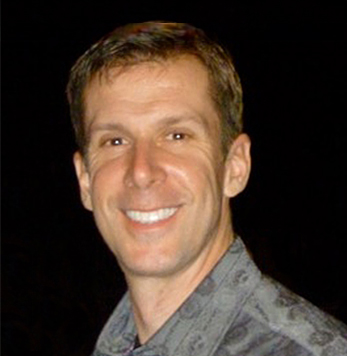
Chairman and CEO, U.S. Physical Therapy, Inc. (NYSE: USPH)
Chris Reading is chairman and CEO of U.S. Physical Therapy, Inc. (NYSE: USPH), one of the largest publicly traded operators of outpatient physical therapy clinics in the United States. He joined USPH as chief operating officer in 2003, became president and CEO in 2004, and was named chairman in 2024.
Under his leadership, the company has scaled to more than 800 clinics across 40-plus states through a partnership model that keeps local operators in control of the businesses they built.
Before USPH, Reading spent more than a decade at HealthSouth in operations and senior leadership roles spanning rehab, ambulatory surgery, imaging, and rehab hospitals. He graduated magna cum laude from the Medical College of Virginia in 1985 and is a co-leader of APTQI, the industry coalition he helped form to advocate for outpatient rehab providers in Washington.